
Think and Grow Rich: The Landmark Bestseller Now Revised and Updated for the 21st Century (Think and Grow Rich Series)
Napoleon Hill and Arthur R. Pell
4.7 on Amazon
62 HN comments

Drive: The Surprising Truth About What Motivates Us
Daniel H. Pink
4.5 on Amazon
61 HN comments
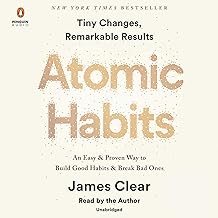
Atomic Habits: An Easy & Proven Way to Build Good Habits & Break Bad Ones
James Clear and Penguin Audio
4.8 on Amazon
60 HN comments

Extreme Ownership: How U.S. Navy SEALs Lead and Win
Jocko Willink, Leif Babin, et al.
4.8 on Amazon
59 HN comments

Blink: The Power of Thinking Without Thinking
Malcolm Gladwell and Hachette Audio
4.6 on Amazon
55 HN comments

The 7 Habits of Highly Effective People: Guided Journal (Goals Journal, Self Improvement Book)
Stephen R. Covey and Sean Covey
4.6 on Amazon
55 HN comments

The Happiness Hypothesis: Finding Modern Truth in Ancient Wisdom
Jonathan Haidt
4.6 on Amazon
50 HN comments

Nonviolent Communication: A Language of Life
Marhsall B. Rosenberg
4.7 on Amazon
48 HN comments

Quiet: The Power of Introverts in a World That Can't Stop Talking
Susan Cain
4.6 on Amazon
45 HN comments

Waking Up: A Guide to Spirituality Without Religion
Sam Harris and Simon & Schuster Audio
4.4 on Amazon
42 HN comments

Nudge: Improving Decisions About Health, Wealth, and Happiness
Richard H. Thaler and Cass R. Sunstein
4.4 on Amazon
40 HN comments

No More Mr. Nice Guy: A Proven Plan for Getting What You Want in Love, Sex and Life (Updated)
Dr Robert Glover and Recorded Books
4.6 on Amazon
39 HN comments

The 48 Laws of Power
Robert Greene
4.7 on Amazon
37 HN comments

Be Here Now
Ram Dass
4.7 on Amazon
33 HN comments

Who Moved My Cheese?: An A-Mazing Way to Deal with Change in Your Work and in Your Life
Spencer Johnson, Kenneth Blanchard, et al.
4.6 on Amazon
31 HN comments

woodandsteelonJune 5, 2017
mleonhardonSep 21, 2020
woodandsteelonJune 30, 2016
tomcamonSep 12, 2018
crawfordcomeauxonFeb 5, 2017
The idea is to create a human programming language to encode activities for learning/practicing principles found in the book Nonviolent Communication and publish that before publishing the language as a way to protect oneself.
andrei_says_onJuly 9, 2020
schultklonDec 21, 2013
nathellonDec 22, 2016
Also:
Irvin Yalom, Love's Executioner
Gavin Extence, The Universe vs. Alex Woods
woodandsteelonSep 16, 2018
mleonhardonMar 21, 2021
a_conFeb 19, 2019
OldSchoolJohnnyonJune 12, 2018
chingvonFeb 23, 2020
That’s our company’s book, written by our managing partner, Jay Sullivan. I was pleasantly surprised to see it pop up while browsing HN.
What’s one thing you learned from the book that’s been helpful for you?
(Nonviolent Communication is also a good one that’s on my reading list)
mleonhardonJune 13, 2018
woodandsteelonFeb 17, 2017
rrecueroonAug 1, 2015
Also, I found that the Pathwise Leadership Program (http://pathwisemanagement.com/) has helped me a great deal in knowing myself and finding out how to frame your communication in the best way possible.
groby_bonJune 6, 2020
As you say, empathy matters for communication, and considering the other person's feelings isn't manipulative. On the flip side, I've experienced the danger of explicitly choosing how I want the other person to feel - that part crosses over, for me.
NVC is really helpful in that regard, because one of the core tentets is that you communicate your own state. So, if I'm afraid I might use the wrong words, "Hey, I'd like to talk to you about X, but I'm afraid I might not use the right words. I would like outcome Y of this conversation, please let me know if I'm straying from that goal".
XKCD1028 makes that point beautifully - the goal of the communication is "I want you to know about something", not "there's a hole in the ground!".
And thank you for the Four-sides model. I hadn't heard of it before, and at the same time it maps nicely to NVCs four components: observations (fact), feelings (self-reveal), needs and requests(appeal).
I do see that at least my understanding of NVC doesn't directly map on the relationship aspect of the four-sides model. (It's implicit, but not called out)
Food for thought...
leafmealonOct 19, 2020
I highly recommend this book to everyone. It's a little cheesy at times and reads like a self-help book, but the content is insightful and applicable everywhere.
ehsanu1onFeb 5, 2019
actfonMar 13, 2015
I picked it up after hearing a number of very positive reviews, and despite my skepticism, I now understand why it's so highly praised.
I'd try to provide a brief summary, but I know I wouldn't do it justice. I will however say that it's almost certainly one of, if not the best, book I've ever read on improving interpersonal communication and relationships.
The author has a phd in psychology, so the advice has some real science backing it up too.
klodolphonMar 22, 2021
There are strategies to challenge accusations of "toxic behavior" without coming across as nitpicking. These strategies can be learned, and if you are worried about this scenario, I suggest you learn them. It is a great tragedy that dispute resolution and effective communication are poorly taught in school. These strategies are not difficult to learn, but it is much more effective to learn them in person. If you know someone who is effective at mediation and dispute resolution, see if you can ask them to demonstrate techniques and strategies for you.
There are also books. I personally recommend Nonviolent Communication by Marshall Rosenberg and Crucial Conversations by Patterson, Grenny, et al. Nonviolent Communication may seem a bit hokey and the book is a bit padded out but I vouch for its effectiveness.
In the context of organizations like the GNU project, one of the ways to keep discussions about behavior sane is to have some kind of formal dispute resolution process. This can be done with a code of conduct. Here is the Python project's code of conduct as an example: https://www.python.org/psf/conduct/
Asking whether people should get in trouble for "toxicity" is kind of vague, because the term "toxic" is vague and mired in opinion. That is okay. We need vague words because we need the ability to communicate vaguely. "Vague" is not the same thing as "meaningless".
mk89onApr 29, 2019
1) Leave ASAP
2) Take this as an opportunity to learn something which is really common with (senior) SW developers
I am not gonna tell you that (2) is easy. It's actually extremely hard, it can get even harder than what you think right now. However, time-box your learning experience: how long before you leave? how long before you have a nervous breakdown? In the meantime, try to learn as much as possible about communication with this difficult colleague. Some resources you might want to use are
- Nonviolent Communication: A Language of Life
- Getting to Yes: Negotiating an agreement without giving in
- Difficult Conversations: How to Discuss What Matters Most
Then you can follow any other advice given here, like talk to your manager, etc. However, be cautious there, especially when talking about someone that has already some sort of power.
kilianticsonJuly 23, 2019
unotionNov 18, 2020
2. The Fast AI for coders course and associated book. (Maybe this shouldn't be on this list, because it's free, but it's still the absolute best place to learn machine learning from scratch.) This is a book and a set of videos that go over the same material. I work on a team of data scientists, and using information from the first few chapters of this book I've done things that are far beyond the capabilities of my teammates. Unlike most courses, this starts with practical knowledge you can use to do useful work on day 1. Then later it moves into the theory of how it works. You don't need more than high school math to get going.
3. The Coursera Deep Learning Specialization, a set of 5 AI courses. Has a certification you can use on your resume and LinkedIn.
macawfishonMar 6, 2017
The Phenomenon of Science: A Cybernetic Approach to Human Evolution by Valentin Turchin
Paul's 1st letter to the Corinthians
History, Guilt & Habit by Owen Barfield
The Prophet by Khalil Gibran
Dawn by Octavia Butler
Snow Crash by Neal Stephenson
You Are Here by Thich Nhat Hanh
The Art of Loving by Erich Fromm
Nonviolent Communication by Marshall Rosenberg
The Little Prince by Antoine de Saint-Exupéry
BeetleBonJune 5, 2021
- Crucial Conversations
- Difficult Conversations
- Nonviolent Communications (aka NVC)
The first two books are great at explaining the dynamics at play, but poor on actionable advice. The third book is great at actionable advice, but poor on explaining why the advice is good. So I'd recommend reading at least one of the first two books as well as the NVC one.
There is also, essentially, an NVC cult out there (reminiscent of agile cults or TDD cults) - in the form of NVC chapters in each city.. Ignore them - just focus on the book. In my experience, local NVC chapters always seem to add more to the material in the book, and often follow a world view not particularly espoused by the book - one which often repels people.
ianaionFeb 11, 2018
Kant's CI for ethics.
Tao Te Ching for perspective and focus.
Nonviolent communication by Marshall Rosenberg for confrontation and interpersonal communication. The concept of NVC and, through its negation, violent communication underscores so much of what's currently going on in the world.
cstantononSep 29, 2018
No one else in my life has my back, protects my confidence, and shares this wild adventure like my wife does. We have invested a LOT of time and money into getting better at overcoming disagreements, digging deeper into what is actually causing a rift between us, defining the company we want to keep, etc.
We are both athiests, so we didn’t have access to church or religious marital counciling (probably for the best). We took it upon ourselves to study all we can, to treat our marriage as a foundation to improve our self-awareness and help each other see their blind spots.
Some education that has been helpful:
- Nonviolent Communication by Marshall Rosenberg. Great foundational book. His other book “Speaking Peace” is a how-to manual for conflict resolution between warring communities/tribes/nations. Both are VERY powerful and cheap. Both have audiobooks.
- Wired for Love by Stan Tatkin. Great book about building a foundation in a partnership.
- “Deep Psychology of Intimate Relationships” course (DPIR) from RelationshipSchool.net and the free “Smart Couple Podcast.” DPIR is a “masters degree” in building a rock solid partnership, and the podcast offers some great ongoing commentary.
What secular relationship books or courses or events do you recommend?
tlbonFeb 1, 2018
staredonAug 26, 2020
I say "we" because, in many cases, it is not a single individual but a community or any social group.
Jewish and Catholic cultures are famous for their guilt-driven development approach to upbringing:
https://thetylt.com/culture/catholic-guilt-or-jewish-guilt
To be clear, guilt sometimes makes sense as a deterrent. But let's not use it lightly.
scottlambonOct 15, 2019
I _hate_ the name, though. I don't want to suggest to someone that they read about non-violent communication because that suggests they're being violent when they're not. I'd prefer almost any other name. Some better names: "observational communication", "non-judgmental communication", "empathetic communication", "structured communication". I could keep going...
pftburgeronMay 12, 2020
Basically a unified theory of consciousness. 100% must read.
* (Theory) The Origin of Consciousness in the Breakdown of the Bicameral Mind by Julian Jaynes
A bit long winded but it really changes the way you think about the voice in your head, about consciousness in general. Pairs well with Surfing Uncertainty
* (Self Help) Nonviolent Communication by Marshall Rosenberg
Really wakes you up to the domination language that rules our interactions and provides an alternative framework. Its even great if you don't plan on implementing NVC, just to understand what non nonviolent langue is. Pairs well with Julian Jaynes The Origin of Consciousness for understanding how language formed our minds and our societies.
* (Theory) The Force of Nonviolence Judith Butler
Wakes you up to the highly dominant and persistent narrative of violence. Provides frameworks for something else.
If this doesnt blow your mind im not sure what will.
* (Theory)Staying with the Trouble by Donna J. Haraway
The name says it all. Ways to stop trying to wipe the slate clean, to start from scratch, but instead to "stay with the trouble" and make new things WITH. Wakes your mind up to disrupting in whole new ways.
* (Theory) The Shock Doctrine: The Rise of Disaster Capitalism by Naomi Klein
Another book that helps you see the world through different eyes, or even if I dare, to see the world more clearly.
Pairs nicely with the unnecessarily long winded "Fall" by Neal Stephenson for understand a post truth world, specifically the idea of "Edit Streams"
* (Scifi )The Reality Dysfunction by Peter F. Hamilton
This one game me a framework for science and spirituality to coincide
* (Scifi ) Ancillary Justice by Ann Leckie
Questions everything, blows your mind on multiple levels.
* (Self Help) She Comes First by Ian Kerner
Wakes you up to the massive comfort imbalance in sex between genders and provides simple ways to help fix it (for heterosexual)
defertoreptaronDec 31, 2019
"How to Win Friends and Influence People" really helped me understand where I was running into problems when interacting with people. It was written mainly for those who are in sales and need to learn how to persuade, but I've found it overall helpful in my career (not sales). It's one of the three books I would recommend for those who either manage people or are customer-facing (the others being "Nonviolent Communication" and "Carrots and Sticks Don't Work").
That said, I don't really observe the book's dogma in my personal life. To an extent, it has basic advice that's good no matter what. On the other hand, carefully speaking to make someone like you and to persuade them can be awfully inauthentic. I've learned to be careful about being rude or pedantic, but I'd be lying if I said I didn't enjoy a good argument. I like it when I disagree with people. I like to dig down into it with them to uncover the truth. I like to share the truth that I know with others, and I really like it when someone helps me discover a truth I didn't know before, changing the way I see things.
Unfortunately that means that, while I try to avoid it (without sacrificing authenticity), I will be perceived as unlikable to some. This tends to be people who hate confrontation, those who are maybe a bit insecure about their beliefs, and those who tend toward valuing what the group thinks opposed to what the individual thinks.
fulafelonNov 13, 2019
It's in vogue to use the ideas from the Nonviolent Communication book to make this work better. But those ideas are of course politocal.. as is the debate on whether to allow political discussions.
Also it's pretty hard to separate political discussions from work if you're doing something that impacts people's lives.
(I'm leaving out jobs where the societal impact is clearly negative, there discouraging discussion might be rational for the employer)
6gvONxR4sf7oonNov 18, 2020
7 books on general ML (highlights: Murphy’s Machine Learning, Hastie et al’s ESL, Koller&Friedman’s PGMs)
5 on more specialized ML (highlights: Agarwal&Chen’s statistical recommender systems book, Manning&Schutze’s statistical NLP, Settles’ active learning)
13 on stats (highlights: Wooldridge’s econometrics of x-section/panel data, Angrist&Pischke’s econometrics)
4 on numerical methods (highlight: Absil et al’s optimization on matrix manifolds)
4 on CS (highlight: CLRS’s intro to algorithms)
10 on calculus/geometry/topology/algebra (highlights: Bachman’s geometric approach to differential forms, Hestenes&Sobzyk's
Clifford algebra to geometric calculus)
8 on fiction writing (highlight: Bickham’s Scene & Structure)
And Rosenberg‘s Nonviolent Communication (not a textbook, but still a highlight worth mentioning).
It amounts to between 3 and 4 per year. Looking back and counting them up, my reaction is holy crap that’s a lot, but that’s kinda the point. Each year it is a reasonable amount of self study. Not nothing, but not anything crazy. Over the course of many years, it adds up to a hell of a lever.
reducesufferingonJune 5, 2021
Quick Summary:
"1. Observe what's happening - what's really going on? What is happening or being said that you either like or dislike?
2. Identify your feelings about it - anger, joy, hopeful, inspired, lonely?
3. Figure out what need you have that is driving that feeling
4. Ask for what you need (explicitly)"
https://www.goodreads.com/book/show/71730.Nonviolent_Communi...
angmarsbaneonDec 10, 2020
Boundaries by Dr. Henry Cloud helped me to step back from taking responsibilities for people & things that are not mine. It also helped me to face choices I’ve made. Note: this book is tied to Christianity.
nicpottieronMar 26, 2019
I think as a programmer I am not atypical in that I sometimes struggle with empathy or how people reacted to things I said, but NVC gave me a framework to communicate in a healthier way. This wasn't just something that helped at work, it had an enormous effect on my personal life as well and I credit it to having strong relationships now.
I think the only frustrating piece is sometimes dealing with other who have not read (or do not subscribe) to the same philosophies. It can be very trying to respond to attacks with empathy but in the end that's still always the best strategy.
Highly recommended and not just if you are a manager, if you deal with other human beings at all, read it.
josephmosbyonNov 20, 2018
I also received some pretty sound advice around three years into my career: "just assume that people mean nothing more or less than the literal words they said to you. Don't read more into it than they actually say." I found that if I felt awkward about a situation, I was trying to read in between lines to find some reason that a person secretly hated me or were annoyed by me. They had never actually said or done anything to indicate that they even thought twice about me once I walked away, but I made up all sorts of stories about them in my head.
ianaionJan 7, 2018
Violent language like your examples hurt people. Those hurts sum to resent and ultimately more violence. The following book goes into this in depth: Nonviolent Communication: A Language of Life: Marshall B. Rosenberg, Arun Gandhi
gjsteinonDec 28, 2019
Also on my list are the already-mentioned "Getting To Yes" and "Nonviolent Communication". I also really enjoyed "Good for You, Great for Me" by Lawrence Susskind, which is a slightly more real-world take on the ideals put forth in "Getting to Yes".
I also studied Physics in College and my course on Classical Mechanics was really the impetus to continue down that path for a while. Textbook was "Classical Dynamics of Particles and Systems" by Thornton and Marion.
ceolinonMay 28, 2018
The first one isn't actually an advice but a friend once told me this: "We start dying when we stop being a child."
There are many things behind that advice. When we're kids we're always curious, we ask questions, we seek answers, we don't care about making mistakes, we're spontaneous, etc. I could list dozens of things. At some point in life, we stop doing those things. We stop being a kid. We stop having all those dreams we once had. That's when we begin to slowly die. In this world of grow ups fighting each other because of stupid things, I'm always trying to remind me myself to never stop being a child.
The second one is related to the Nonviolent Communication approach by Marshall Rosenberg. There's always a big difference between what someone tells us and what we understand. Most of the time we implicitly make a judgment about others' actions and that judgment is just something from our mind. Many times we get offended (or upset) by something we don't realize the other person had no intentions whatsoever to offend or upset us. In the end, it's actually an exercise of empathy: if something is upsetting or offending you, figure out why before engaging in a useless fight with someone else.
dmos62onNov 9, 2019
crawfordcomeauxonFeb 2, 2017
"Nonviolent Communication" - Marshall Rosenberg
"Mindsight" - Daniel Siegel
I've also been working on a new mathematical model (rooted in category theory) for how our brains, bodies, and minds work together with the goal of developing a natural language based way to generate practices for the sake of improving myself in targeted ways. I only just finished reading Mindsight & have been practicing some of the techniques in the book by accident for months prior after coming up with the practices myself through my model. I've found my other attempts at programming myself using the model also develop my ability to focus & direct my attention, as well. As a result, I've had initial successes with learning echolocation and learning a form of synesthesia I haven't heard of (seeing a stick figure that moves with my body), both in under 10 minutes of my first attempts.
I'm not an expert in any of this stuff. I'm an information addict in recovery who saw connections among various recent research findings in different fields and started making connections. If love to collaborate with any Neuroscientists or Category Theorists. My contact info is in my profile.
woodandsteelonSep 12, 2018
On listening to your gut when you are a brain person, this is actually trainable, check out the book Focusing by the University of Chicago psychologist and philosopher Eugene Gendlin.
On deciding, it seems to me the two most important things are if the two of you have reasonably common values about how you want to live your lives, and if you trust the other person's moral character and ability to act rationally, at least when it comes to something really important. If the two of you have these, then you can probably work out the difficulties.
Thirdly, you stand a much better chance of settling problems small and large if you take a course in interpersonal relationship and conflict resolution skills. See for instance Nonviolent Communication by Marshall Rosenberg.
Lastly, you need to have some larger philosophy or religion to keep things in perspective and as basis for personal value beyond how much your mate loves you, otherwise you will either be their puppet or try to be their master.
6700417onDec 28, 2019
Actually connecting with people rather than just talking past them and having them talk past me is something that I find very appealing at this point in life after realizing how much people seem to ignore what I am actually saying (and realizing I am almost certainly doing the same to them).
heuristonDec 23, 2018
Why We Sleep by Matthew Walker
Genius Foods by Max Lugavere
Nonviolent Communication by Marshall Rosenberg
The Framers Coup by Michael Klarman
Leadership by George MacGregor Burns
Strategy by Lawrence Freedman
Several books by Joseph Campbell or Peter Drucker. Can't go wrong with either.
tptacekonDec 20, 2015
Rather, I think the issue is that with just a few exceptions, this is exactly the book list you'd expect from a cohort of 25-35 year old startup founders --- batteries, Elon Musk, data science, the energy industry, The Martian (really?), and business history. These are topics with, let's just say, a particular demographic concentration.
I physically winced when I saw the Wodehouse recommendation.
Some possible recommendations, if we're going to stick with "relevant to HN readers":
* Annie Jacobson's DARPA book, The Pentagon's Brain
* the Brene Brown book on mentally overcoming adversity, which might complement Nonviolent Communication (and might also be a more humane recommendation than David Brooks)
* Between You And Me (more writing books, please! Also maybe Mary Karr's book on memoirs, though I haven't read it and am not a Karr fan)