
Think and Grow Rich: The Landmark Bestseller Now Revised and Updated for the 21st Century (Think and Grow Rich Series)
Napoleon Hill and Arthur R. Pell
4.7 on Amazon
62 HN comments

Drive: The Surprising Truth About What Motivates Us
Daniel H. Pink
4.5 on Amazon
61 HN comments
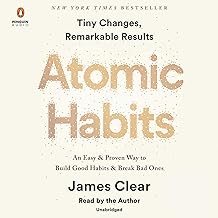
Atomic Habits: An Easy & Proven Way to Build Good Habits & Break Bad Ones
James Clear and Penguin Audio
4.8 on Amazon
60 HN comments

Extreme Ownership: How U.S. Navy SEALs Lead and Win
Jocko Willink, Leif Babin, et al.
4.8 on Amazon
59 HN comments

Blink: The Power of Thinking Without Thinking
Malcolm Gladwell and Hachette Audio
4.6 on Amazon
55 HN comments

The 7 Habits of Highly Effective People: Guided Journal (Goals Journal, Self Improvement Book)
Stephen R. Covey and Sean Covey
4.6 on Amazon
55 HN comments

The Happiness Hypothesis: Finding Modern Truth in Ancient Wisdom
Jonathan Haidt
4.6 on Amazon
50 HN comments

Nonviolent Communication: A Language of Life
Marhsall B. Rosenberg
4.7 on Amazon
48 HN comments

Quiet: The Power of Introverts in a World That Can't Stop Talking
Susan Cain
4.6 on Amazon
45 HN comments

Waking Up: A Guide to Spirituality Without Religion
Sam Harris and Simon & Schuster Audio
4.4 on Amazon
42 HN comments

Nudge: Improving Decisions About Health, Wealth, and Happiness
Richard H. Thaler and Cass R. Sunstein
4.4 on Amazon
40 HN comments

No More Mr. Nice Guy: A Proven Plan for Getting What You Want in Love, Sex and Life (Updated)
Dr Robert Glover and Recorded Books
4.6 on Amazon
39 HN comments

The 48 Laws of Power
Robert Greene
4.7 on Amazon
37 HN comments

Be Here Now
Ram Dass
4.7 on Amazon
33 HN comments

Who Moved My Cheese?: An A-Mazing Way to Deal with Change in Your Work and in Your Life
Spencer Johnson, Kenneth Blanchard, et al.
4.6 on Amazon
31 HN comments

karlbookloveronFeb 13, 2018
6d0debc071onApr 24, 2013
jhatemyjobonNov 17, 2019
cehrnroothonMar 26, 2015
[0] http://en.wikipedia.org/wiki/The_48_Laws_of_Power
billswiftonJune 28, 2010
lawnchair_larryonFeb 28, 2018
peter_d_shermanonJuly 29, 2020
1. Rich Dad Poor Dad by Robert Kiyosaki
2. The 4-Hour Workweek by Tim Ferriss
3. How to Win Friends and Influence People by Dale Carnegie
4. The 48 Laws of Power by Robert Greene
5. The Way of the Superior Man by David Deida
6. Man's Search for Meaning by Viktor Frankl
7. Mastery by George Leonard
8. Mindfulness for Beginners by Jon Kabat-Zinn
9. The Obstacle is the Way by Ryan Holiday
annajohnsononSep 2, 2010
mattmonApr 14, 2014
HINT: This has nothing to do with your coding ability
NumberCruncheronMar 15, 2017
And if you don't: How I Found Freedom in an Unfree World
NumberCruncheronMar 27, 2017
totalZeroonAug 22, 2017
n3on_netonDec 22, 2016
- The Elegant Universe: Superstrings, Hidden Dimensions and the Quest for the Ultimate Theory
- The 48 Laws Of Power
- Freakonomics: A Rogue Economist Explores the Hidden Side of Everything
- Crossing the Chasm
- The Richest Man in Babylon
- Confessions of an Economic Hit Man
- Europe: A History
- The Penguin History of Europe
- The Everything Store: Jeff Bezos and the Age of Amazon
- Sapiens: A Brief History of Humankind
Every of the books was awesome. The only thing is that I haven't finished Europe: A History from Norman and read The Penguin History of Europe instead because the Norman book was just too long for me. But It has way more details.
I switch between business-related books and non-business related (it can be everything from philosophy to language history to hardcore science) but I don't read fiction (The Richest Man in Babylon is fictional, but still the focus is on self-development).
Hope you could see some titles that might interest you.
osswidonDec 18, 2009
"The 48 Laws of Power" is an example. I originally read this as a magazine article, which was great. I excitedly bought the 452 page book of the same title when it came out, but unfortunately it didn't cover much more than the magazine article I had already read; it was just book length.
AromasinonJuly 2, 2019
looping__luionDec 5, 2019
Imho one of the best books out there on the topic.
Also: “The Hard Thing About Hard Things”
Beyond managing teams, you probably will need to cope with politics as well. “The 48 Laws of Power” are a good start...
It is also worth understanding how asymmetry works in the business world: give Taleb’s “Antifragile”
I think managing teams has always to be seen in the culture of the respective company. Good managers make sure they position their teams for high-impact (depending on what high impact is), get the resources they need and the credit they deserve. All that has almost 0 to do with how to lead people but will probably determine success like no other factor...
mayk93onJune 14, 2021
If I could give it a short description, it's pretty much the modern equivalent of The Prince and i highly reccomend it to everyone!
prknightonMar 27, 2011
I like watching the 'Dragon's Den'(UK tv show) and seeing how entrepreneurs pitch/fail to pitch and watch how potential investors evaluate deals.
I'd love to see other types of reality shows that follow startups & entrepreneurs.
incisiononNov 7, 2013
Very true. This is why I think "get the fuck out" is often great advice. Keep moving, onward and upward. Sit still too long and you run the risk of getting run down and becoming what you hate without even realizing it.
It seems to me there are plenty of books which claim to teach you how to be a great leader, but not so many about how to manage up, lead from the rear and survive among hostile peers.
Personally, one of the better resources I've read for this was The 48 Laws of Power [1]. The book sometimes gets a bad rap from people who look at it as a manual for your own action. While it could certainly be applied that way, it's at least as useful for understanding the mechanism of others actions and how to protect yourself against or benefit from them.
1: http://www.amazon.com/dp/0140280197/
GavinMcGonMar 21, 2021
nevf1onDec 29, 2019
Personally, I would put "Sapiens - A brief History of Humankind"[0] in the list rather than it's successor "21 Lessons for the 21st Century".
While some people have some gripes about The 48 Laws of Power and Robert Greene's other books, in my opinion, they serve as a really valuable tool for understanding how most medium and large companies work. And for anyone interested, a great way to dip your toes into it is by having a look at Derek Sivers' book notes - https://sivers.org/book/48LawsOfPower
[0] https://www.amazon.co.uk/Sapiens-Humankind-Yuval-Noah-Harari...
cpronNov 12, 2012
Wow, Darwin, Mozart, Graham and Ford. PG's head must be spinning. ;-)
ilconsiglierionOct 28, 2009
The books are not necessarily meant to be instructional, but informative about the economics of power.
I haven't read 48 in some time but I believe Greene says something about regardless of if you want to participate in power plays you will undoubtedly find become a part of them so it's best to be aware.
kamaalonFeb 20, 2019
Stealing the Corner office by Brendan Reid
Assorted works of Niccolo Machiavelli and Balatazar Gracian.
It will be hard to impossible to make transition even after reading these books, but at least you can detect and avoid problems at work. Or at best set up a firewall around you.
Lastly expecting goodness from people is wrong. The fact of the matter is people are bad and do what is good in their interests even if it hurts the whole world, be prepared, be ready and have means to take care of yourself.
ravenstineonMar 6, 2017
espeedonSep 17, 2019
The Internet is written in ink. Integrity is your most valuable asset. Reputation is your brand. "Guard it with your life."
"Law 5: So Much Depends On Reputation Guard It With Your Life. - The 48 Laws of Power, by https://twitter.com/RobertGreene
samsononSep 19, 2007
1. How to Win Friends and Influence People by Dale Carnegie
I know its been mentioned already, but truly this is a book worth mentioning twice. For the introverted or the arugmentative type and for anyone else, this book hits alot critical and sometimes overlooked human traits that everyone should be aware of in their daily interactions with other people.
A few quotes by Carnegie.
Avoid arguments
"you can't win an argument, because if you win it you lose it, and if you lose...well you lose it."
"few people think of themselves as bad people"
-means regardless of how they look,dress or talk, most people are appproachable with a smile and a "hi".
"people will always strive to justify themselves".
All three of these quotes are connected.
2. The Innovators Solution - Christensen and Raynor
If you've ever heard the quote "First they ignore you,... then they fight you, then you win." by Gandhi. This book puts it in perspective in relation to how small companies over take large companies.
3.The 48 Laws of Power _ Robert Greene.
Go Go read if you haven't yet. This is a great book! It pullls lessons which you can learn from various types of people throughout history from painters,generals to presidents.
My favorite was Law 28: "Enter action with boldness". Be bold in your ideas, be bold in how your carry yourself in life.
I know I said three 3, but Seth Godin still deserves some mention with All marketers are liars. Which simply I take to mean for us here is if your developing a startup, make sure it has a good...no a great story to tell.
vonklausonJuly 16, 2015
I really enjoyed The 48 Laws of Power and a few other titles by Greene. Some of Malcolm Gladwell's books are interesting although they are a tad popsci. Recently finished Zero to One which was good, but if you listen to Thiel often there wasn't much new material. Lords of Finance is a NYTBS that is really well done and reminiscent of Taleb so you might like that.
Thanks.
icuonMay 23, 2017
I humbly suggest to finding another job ASAP and take a moment to read "The 48 Laws of Power" by Robert Greene. This will be the best time investment I can think of for not finding yourself in this situation ever again.
muzanionNov 23, 2017
Both of these are history books, but don't expect just the cliches of Napoleon and Genghis Khan. Robert Greene covers case studies throughout history, from Roosevelt to Gandhi, to some much lesser known figures of history.
Basically a lot of us deal with conflict. One book covers how to deal with politically, and the other one more directly. It's not all about attacking, but rather strategies around war - defense, deterrence, motivating your side, keeping the (moral) high ground, getting your adversaries to work for you.
brkonJan 15, 2009
" Mr. Madison, what you've just said is one of the most insanely idiotic things I have ever heard. At no point in your rambling, incoherent response were you even close to anything that could be considered a rational thought. Everyone in this room is now dumber for having listened to it. I award you no points, and may God have mercy on your soul. "
However, for all of his non-value he manages to maintain visibility via the simple effort of waving his arms continuously. This is the bottom-line definition of Marketing. It's a good lesson for people trying to draw attention to their efforts or companies on the Internet... The majority of the public values quantity over quality.
Produce enough quantity and you will strike a chord with a small group of people. Position yourself as a celebrity, and your followers will help to elevate your status. The cycle feeds on itself.
Someone could make a lot of money by translating The 48 Laws of Power directly to a How to be Famous on the Internet book.
billswiftonMay 16, 2011
Also, the comment about the mangled syntax misunderstands its purpose--the surest way to a successful con is to make the mark feel smarter than the conman. As several people have observed, most cons work by making the mark think he is going to get something for nothing, or at least for less than its worth.
I just finished reading Robert Greene's The 48 Laws of Power about a month ago, so all this is near the top of my mind right now; a lot of his illustrative anecdotes involved conmen.
WheelsAtLargeonJuly 29, 2019
"Barnum’s first big venture of his own was the American Museum—a collection of curiosities, located in New York. One day a beggar approached Barnum in the street. Instead of giving him money, Barnum decided to employ him. Taking him back to the museum, he gave the man five bricks and told him to make a slow circuit of several blocks. At certain points he was to lay down a brick on the sidewalk, always keeping one brick in hand. On the return journey he was to replace each brick on the street with the one he held. Meanwhile he was to remain serious of countenance and to answer no questions. Once back at the museum, he was to enter, walk around then leave through the back door and make the same bricklaying circuit again.
On the man’s first walk through the streets, several hundred people watched his mysterious movements. By his fourth circuit, onlookers swarmed around him, debating what he was doing. Every time he entered the museum he was followed by people who bought tickets to keep watching him. Many of them were distracted by the museum’s collections, and stayed inside. By the end of the first day, the brick man had drawn over a thousand people into the museum. "
zzzmarcusonJune 18, 2009
1. The Art of Learning - I'll never think about practice the same way.
2. Getting Things Done - Enough has been said about this elsewhere, but the whole concept of "what's the next action" has really worked for me.
3. E-Myth Revisited - This was my MBA in one book. It came at the right time for me and really changed the way I think about creating businesses as assets. I wasn't a fan the cheesy example of the pie shop, but the advice has been invaluable.
Others that I found interesting, and that changed the way I think were:
4-hour Work Week. Yes, there is a ton of hype around this book, but I'd be surprised if anyone read it with an open mind and didn't learn anything or come away motivated to experiment with their lifestyle.
Outliers. This one probably stands out to me since I read it so recently. Gladwell gets a lot of hype as well, but I think he deserves at least some of it.
The Culture Code drastically changed the way I think about marketing.
And, a few random notes on the others I've read:
I found Predictably Irrational, Brain Rules and The 48 Laws of Power to be mostly garbage.
The Wisdom of Crowds, Wikinomics and Made to Stick are decent essays in book form.
Stumbling on Happiness is not nearly as good as Haidt's The Happiness Hypothesis which would be in the first list I made above if it were on Siver's list.
Seth Godin's books are good for motivation and for changing the way you think about marketing, especially if you've been doing it for a long time (I haven't). They're quick and fun, I think they're worth reading.
Fooled By Randomness is worth reading if nothing else because Taleb is such an entertaining writer.
mindcrimeonMay 29, 2017
1. Neuromancer - William Gibson
2. Snow Crash - Neal Stephenson
3. Hackers - Heroes of the Computer Revolution - Steven Levy
4. How to Measure Anything - Douglas Hubbard
5. Godel, Escher, Bach - Douglas Hofstadter
6. The Pragmatic Programmer - Andy Hunt and Dave Thomas
7. The Soul of a New Machine - Tracy Kidder
8. Code - Charles Petzold
9. The Shockwave Rider - John Brunner
10. Ambient Findability: What We Find Changes Who We Become
Book - Peter Morville
11. Don't Make Me Think - Steve Krug
12. The Design of Everyday Things - Donald A. Norman
13. The Mythical Man-Month: Essays on Software Engineering - Fred Brooks
14. Decline and Fall of the American Programmer - Ed Yourdon
15. Cube Farm - Bill Blunden
16. The Philip K. Dick Reader
17. The Cuckoo's Egg - Clifford Stoll
18. The Prince - Niccolò Machiavelli
19. The 48 Laws of Power - Robert Greene
20. The Atrocity Archives - Charles Stross
21. Business @ the Speed of Thought: Using a Digital Nervous System - Bill Gates
tveitaonSep 3, 2015
"four years ago Pennington was "validated" by prison staff as an associate of a prison gang (one formed on the inside, as opposed to a street gang). That's the reason he and thousands of others are in the SHU with no exit date."
"Gang evidence comes in countless forms. Possession of Machiavelli's The Prince, Robert Greene's The 48 Laws of Power, or Sun Tzu's The Art of War has been invoked as evidence. One inmate's validation includes a Christmas card with stars drawn on it—alleged gang symbols—among Hershey's Kisses and a candy cane. Another included a poetry booklet the inmate had coauthored with a validated BGF member. One poem reflected on what it was like to feel human touch after 14 years and another warned against spreading HIV. The only reference to violence was the line, "this senseless dying gotta end.""
"THE DECISION to put a man in solitary indefinitely is made at internal hearings that last, prisoners say, about 20 minutes. They are closed-door affairs. CDCR told me I couldn't witness one. No one can."
"At one point he initiated a hunger strike that involved 120 inmates. Two days later, he was put in ad-seg for "conspiracy to assault staff." The claim was based on confidential information that the person in charge of reviewing ad-seg assignments later found did not exist; it couldn't be found anywhere in his file. He spent a year in isolation."
e: to state the point explicitly, few conclusions can be drawn from the official records because the standard of evidence is near zero, the guards can write anything they like, and they do.
wyclifonApr 5, 2018
Brewer, Ebenezer Cobham. Brewer's Dictionary of Phrase and Fable
Euclid, Elements of Geometry
Fuller, Buckminster. Operating Manual for Spaceship Earth
Greene, Robert. The 48 Laws of Power
Kernighan & Ritchie. The C Programming Language
The King James Bible
Polya, George. How to Solve It