
Think and Grow Rich: The Landmark Bestseller Now Revised and Updated for the 21st Century (Think and Grow Rich Series)
Napoleon Hill and Arthur R. Pell
4.7 on Amazon
62 HN comments

Drive: The Surprising Truth About What Motivates Us
Daniel H. Pink
4.5 on Amazon
61 HN comments
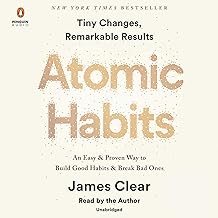
Atomic Habits: An Easy & Proven Way to Build Good Habits & Break Bad Ones
James Clear and Penguin Audio
4.8 on Amazon
60 HN comments

Extreme Ownership: How U.S. Navy SEALs Lead and Win
Jocko Willink, Leif Babin, et al.
4.8 on Amazon
59 HN comments

Blink: The Power of Thinking Without Thinking
Malcolm Gladwell and Hachette Audio
4.6 on Amazon
55 HN comments

The 7 Habits of Highly Effective People: Guided Journal (Goals Journal, Self Improvement Book)
Stephen R. Covey and Sean Covey
4.6 on Amazon
55 HN comments

The Happiness Hypothesis: Finding Modern Truth in Ancient Wisdom
Jonathan Haidt
4.6 on Amazon
50 HN comments

Nonviolent Communication: A Language of Life
Marhsall B. Rosenberg
4.7 on Amazon
48 HN comments

Quiet: The Power of Introverts in a World That Can't Stop Talking
Susan Cain
4.6 on Amazon
45 HN comments

Waking Up: A Guide to Spirituality Without Religion
Sam Harris and Simon & Schuster Audio
4.4 on Amazon
42 HN comments

Nudge: Improving Decisions About Health, Wealth, and Happiness
Richard H. Thaler and Cass R. Sunstein
4.4 on Amazon
40 HN comments

No More Mr. Nice Guy: A Proven Plan for Getting What You Want in Love, Sex and Life (Updated)
Dr Robert Glover and Recorded Books
4.6 on Amazon
39 HN comments

The 48 Laws of Power
Robert Greene
4.7 on Amazon
37 HN comments

Be Here Now
Ram Dass
4.7 on Amazon
33 HN comments

Who Moved My Cheese?: An A-Mazing Way to Deal with Change in Your Work and in Your Life
Spencer Johnson, Kenneth Blanchard, et al.
4.6 on Amazon
31 HN comments

wenconSep 2, 2018
Underlying idea: friction disincentivizes.
[1] https://en.m.wikipedia.org/wiki/Nudge_theory
mgiannopoulosonOct 18, 2017
0: https://en.wikipedia.org/wiki/Nudge_(book)
prependonApr 13, 2019
Tl;dr; people usually accept the default so your prompts yield very different results.
ghaffonAug 4, 2020
bimronOct 13, 2016
http://opinionator.blogs.nytimes.com/2013/10/31/psyching-us-...
bimronOct 13, 2016
The term should be famous now thanks to the books "Thinking Fast and Slow" and "Nudge". Also probably a dose of recency bias.
http://opinionator.blogs.nytimes.com/2013/10/31/psyching-us-...
hux_onJune 6, 2018
dtujmeronAug 17, 2018
ghaffonMay 11, 2021
westurneronJan 19, 2018
aspenmayeronMay 30, 2020
https://en.wikipedia.org/wiki/Libertarian_paternalism
https://en.wikipedia.org/wiki/Nudge_(book)
DocTomoeonFeb 25, 2021
Websites should not use JS to load static content, obsolete or not, this is a bad practice. By nudging website owners and -developers (and let's be honest: Framework devs), we can improve on such lack of common sense.
mbestoonNov 5, 2012
I've been generally curious about DDG for awhile now and I'm still trying to figure out why I should make a switch. If I understand correctly; DDG is trying to solve a problem in internet search so that people can't find things easier on the internet without sacrificing knowledge about one's self or behaviors, and your organization believes that that problem is largely due to the opt-out nature (or rather how you are automatically opt-in'd to everything) of Google's platform.
Also, the filter bubble it is not an effective marketing message because it requires too much education given it is a complicated subject no one knows about.
I guess, I, like many others who have expressed interest, don't see the problems with this. More commonly, I can't say my mother or my boss or anyone else I know is encountering this as a problem or a challenge. I'm happy to be wrong.
I find this whole topic absolutely fascinating, especially after having recently read Nudge by Richard Thaler, which basically is a whole book which talks about the value of libertarian paternalism. In other words, how opt-out choice architecture can be much more suitable than having completely free choice. Would love to know your thoughts. Great blog, this is fascinating stuff!
skhonAug 16, 2018
https://neurosciencenews.com/neuroscience-choice-psychology-...
https://www.google.com/search?hl=en&q=are%20we%20in%20contro...
oicu812onJune 26, 2019
[1] https://www.amazon.com/Nudge-Improving-Decisions-Health-Happ...
[2] http://freakonomics.com/podcast-tag/nudge/
skygazeronJune 22, 2018
ghaffonJuly 12, 2018
Misbehaving is more of a personal history of how he got to behavioral decision theory. I particularly enjoyed that because I had a couple classes with him when he was working on these ideas early on.
13of40onJuly 2, 2019
tcopelandonOct 10, 2018
https://www.chds.us/c/hsbooks
ghaffonOct 9, 2017
It’s really interesting stuff. I actually had a couple of grad courses with Thaler when he was at Cornell. I still have a draft copy of one of his earlier books in Behavioral Decision Theory somewhere.
grzmonNov 4, 2016
This calls to mind "Nudge: Improving Decisions about Health, Wealth, and Happiness"[0]. It discusses, in part, setting up decisions and choices so that the default choice is in the best interest of the decider. (It's been a while since I read it. Improvements on my sentence-long summary welcome :) They also discuss what they term "liberal paternalism".[1] Good, interesting stuff if this are interests you.
This seems in line with the decision UCSF made. You still have the choice to drink sugary soda. They're just not going to make it as easily available.
Where this line is drawn is often going to be contentious. That said, there's always going to be some sort of line, right? Why this is being called into question now is that something is changing. At some point in the past, soda machines weren't on campus. Putting them on campus likely didn't have this same issue. But it did change the environment, and opened up more choice. What choices should be made available? All legal ones? All healthy ones? I think it's an interesting and valid question, one that needs to take into account both the individual and the community as a whole.
[0]: https://en.wikipedia.org/wiki/Nudge_(book)
[1]: https://en.wikipedia.org/wiki/Libertarian_paternalism
If you choose to down vote, I'd appreciate it if you'd also take the time to reply in a comment. I'm interested in hearing what you think!
BinRooonJune 1, 2021
Behavioral Economics is at the heart of what we do. If you are a fan of books like Nudge, Freakonomics, and Predictably Irrational and were as excited as us when a Nobel Prize went to a professor of behavioral economics, then this is the place for you!
Apply: https://wellthapp.freshteam.com/jobs/_bSlURLVKjrW/sr-softwar...
mbestoonJuly 6, 2012
[1]- http://www.amazon.com/Thinking-Fast-Slow-Daniel-Kahneman/dp/...
[2]- http://www.amazon.com/Nudge-Improving-Decisions-Health-Happi...
FabHKonJuly 30, 2019
That's exactly how it works, to an extent. In a study [1], people with self-refilling soup bowls ate 73% more soup (p < 0.01) than those eating from normal soup bowls. Similar with popcorn [2]. I first read about this either in Nudge or in Mindless Eating.
[1] Wansink, B., Painter, J.E., & North, J. (2005). Bottomless Bowls: Why Visual Cues of Portion Size May Influence Intake Obesity Research, 13 (1), 93-100
https://onlinelibrary.wiley.com/doi/full/10.1038/oby.2005.12
[2] http://projectputthatcookiedownnow.com/2011/bottomless-bowls...
BinRooonMay 3, 2021
Our mission is to help people living with chronic conditions make healthier choices, every day.
Behavioral Economics is at the heart of what we do. If you are a fan of books like Nudge, Freakonomics, and Predictably Irrational and were as excited as us when a Nobel Prize went to a professor of behavioral economics, then this is the place for you!
Apply: https://wellthapp.freshteam.com/jobs/_bSlURLVKjrW/sr-softwar...
danblickonJuly 28, 2016
AaronFrielonApr 9, 2019
It's when things are outright illegal (see: prohibition, narcotics) or the cost of ignoring the law is de facto lower than the legal price that things become quite dangerous for consumers, like the sale of narcotics laced with cheaper, more potent compounds like fentanyl.
For better and worse, a regulated market that pushes prices upward is usually better than an unregulated market or a criminalized one.
yitchelleonFeb 18, 2019
In a similar vein, I have just finished "Nudge: Improving Decisions About Health, Wealth, and Happiness" by Thaler and Sustein. This might be worth a look as well.
shi314onSep 21, 2020
FabHKonOct 9, 2017
Tversky/Kahneman got the Nobel Memorial price in Econ also for behaviour econ ("Prospect theory"), in 2002.
From the article:
> Asked how he would spend the prize money, he replied: "This is quite a funny question." He added: "I will try to spend it as irrationally as possible."
> Professor Thaler had a cameo appearance, alongside the actress and singer Selena Gomez, in the film "The Big Short," in which he used behavioral economics to help explain the causes of the financial crisis. Asked about his
"short Hollywood career," he joked that he was disappointed his acting prowess had not been mentioned during the summary of his achievements when the award was announced.
yndoendoonMay 20, 2020
This mentality has actually helped other countries save more lives by default. While each person still retains the power to opt-out. And yes other countries have done this before the UK. US should do this too!
hos234onOct 16, 2019
They can be targeted to diffuse fear and inject purpose, hope etc. Which is the thesis of the book Nudge (by Nobel winner Richard Thaler and Cass Sunstein who tried doing this during the Obama Administration)
pyronicideonMar 29, 2010
Behavioral Economics:
Economics:
Psychology:
Management:
falcor84onApr 1, 2021
jorgeleoonMay 24, 2012
I agree that in default should works the way you say, but that is theory, in practice it is not what actually happens a the OP found out. And we need to acknowledge the reality that people does not behave as theory, law, or whatever other abstract term expects (the law is so abstract that it needs a punishment machinery to be respected, it is not natural at all, and while some people will surrender their free will to goverment compliance, others will not, not even under the threat of heavy legal pain). Not realising this fact of life is naive.
You can go around beating people over their head for their wrong doings (natural or artificial), and if that makes you feel better about yourself or your position then take your measuring stick and go on your merry way.
I, on the other camp, rather attempt to figure out how people actually works, and make decisions accordingly.
Try to understand how things work vs. Do a I say or I'll beat you up. I guess that is one of the differences between tinkers and lawyers.
One book that explain tis concept better than me would be Nudge by Sunstein and Thaler.
nreeceonNov 5, 2015
In the book “Nudge: Improving Decisions About Health, Wealth, and Happiness”, Prof. Cass Sunstein and Richard Thaler talk about the science of choices and defaults:
The human brain is amazing, but it evolved for specific purposes, such as avoiding predators and finding food. Those purposes do not include choosing good credit card plans, reducing harmful pollution, avoiding fatty foods, and planning for a decade or so from now. Fortunately, a few nudges can help a lot.
marchenkoonNov 3, 2018
Nudge by Sunstein has probably had a lot of subtle influence. The Taleb books, esp. Black Swan should be on the list - he essentially introduced a term into common usage (as Gladwell did with the 10,000 hours idea). Piketty will probably have a long tail of influence.
A lot of these books describe social and historical phenomena - they may be the most authoritative scholarly text, but don't really influence broader society as much. The exception would be Critical Race Theory, which has outsized influence both inside and outside of academia.
unethical_banonMay 26, 2020
The idea of designing human interaction and government policy with the knowledge of how humans react is not shocking or new. Heck, the "Pandemic Playbook" from the CDC continuously references group behavior when discussing how to communicate facts to the public. For example: If you tell people to stay home on day 1, the public may doubt or tune out your advice. So what do you do on days 1-3 so that on Day 4, government advice is heeded? Get private companies on board, ramp up voluntary advice for some time, before letting the big news fall.
If you'd like to learn more, check out Nudge by Cass Sunstein [1]. And another book by the same man, specifically covering the ethics of governments using the technique. [2]
[1] https://www.amazon.com/gp/product/B00A5DCALY
[2] https://www.amazon.com/gp/product/B01JGME90E
rayineronJan 6, 2012
Dan Kahneman, Richard Thaler and Dan Ariely have both published some popular books on the subject. Thinking Fast, Thinking Slow just came out last year. Predictably Irrational came out a few years ago. Nudge (Cass Sunstein and Richard Thaler) looks at the implications of behavioral economics for the law. There is a good summary article of that work here: http://www.law.harvard.edu/programs/olin_center/papers/pdf/2....
I personally think this work is pretty earth-shattering in the field, and that the above work is a must-read for anyone interested in economics. The engineer side of me is really attracted to the fact that behavioral economics uses legitimate experimental methodology, instead of mathematically-supported handwaving. And the implications of the work really turn some of our assumptions about the nature of the economic system on their head.
MITDGreenbonMar 13, 2010