
Turn the Ship Around!: A True Story of Turning Followers into Leaders
L. David Marquet, Stephen R. Covey, et al.
4.7 on Amazon
47 HN comments

Hooked: How to Build Habit-Forming Products
Nir Eyal and Ryan Hoover
4.6 on Amazon
46 HN comments

The Omnivore's Dilemma: A Natural History of Four Meals
Michael Pollan, Scott Brick, et al.
4.6 on Amazon
44 HN comments

How to Win Friends & Influence People
Dale Carnegie
4.7 on Amazon
43 HN comments

The Road
Cormac McCarthy
4.4 on Amazon
42 HN comments

The Grapes of Wrath
John Steinbeck, Robert DeMott, et al.
4.6 on Amazon
41 HN comments

History: From the Dawn of Civilization to the Present Day
Smithsonian Institution
4.8 on Amazon
40 HN comments

Rules for Radicals: A Practical Primer for Realistic Radicals
Saul D. Alinsky
4.2 on Amazon
33 HN comments

Plato: Complete Works
Plato, John M. Cooper, et al.
4.8 on Amazon
31 HN comments

The Pyramid Principle: Logic in Writing and Thinking
Barbara Minto
4.5 on Amazon
27 HN comments

Salt, Fat, Acid, Heat: Mastering the Elements of Good Cooking
Samin Nosrat and Wendy MacNaughton
4.8 on Amazon
26 HN comments

Lies My Teacher Told Me: Everything Your American History Textbook Got Wrong
James W. Loewen
4.7 on Amazon
24 HN comments

Story: Substance, Structure, Style and the Principles of Screenwriting
Robert McKee
4.7 on Amazon
21 HN comments

Bird by Bird: Some Instructions on Writing and Life
Anne Lamott
4.7 on Amazon
21 HN comments
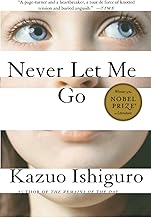
Never Let Me Go
Kazuo Ishiguro
4.2 on Amazon
21 HN comments

hestefiskonOct 29, 2020
tmalyonSep 4, 2019
https://www.amazon.com/Pyramid-Principle-Logic-Writing-Think...
dioclesonJune 5, 2021
This approach is taught at consultancy firms to help structure clear written business communication, especially if your audience includes time-poor senior executives.
tmalyonMar 5, 2018
tmalyonOct 17, 2019
domodonFeb 26, 2019
[1] Barbara Minto - The Pyramid Principle
tmalyonMay 31, 2019
domodonOct 26, 2020
- Problem Solving 101 - Ken Watanabe
- The Pyramid Principle - Barbara Minto
Mental Models:
- https://fs.blog/mental-models/
- The Art of Thinking Clearly - Rolf Dobelli
- Books by Nassim Taleb
Meditate:
- waking up app - Sam Harris
tmalyonFeb 8, 2019
It covers how to write logically so that a document flows as you have described it.
wenconFeb 22, 2018
This seem to be a great summary of the Pyramid Principle [0] -- I hear the book is a bit of a slog after the first 3 chapters.
[0] https://medium.com/lessons-from-mckinsey/the-pyramid-princip...
asplakeonJuly 25, 2020
tmalyonNov 16, 2018
Try to find a copy of an older edition, the material is essentially the same as the newer edition
tmalyonDec 30, 2019
Never Split the Difference - some very practical negotiation strategies.
Mini Habits by Stephen Guise - short book but awesome method. I am still doing the one pushup habit since last March.
How to Shoot Video That Doesn't Suck by Steve Stockman - I wanted to improve my video production for my programming course for kids. I am still learning but this book has been a huge help.
The Pyramid Principle: Logic in Writing and Thinking by Barbara Minto - huge help with improving my written communication at my job.
The Coaching Habit by Michael Stanier - short book but huge help when your transitioning to managing people.
Made to Stick by Dan Heath - was a huge help in planning how I would teach elementary students last month about programming.
The 80/20 Principle by Richard Koch - aside from application of Pareto principle, I took away the idea that books provide the best bang for your buck for knowledge density.
The 4 Hour Work Week - great inspiration to start your own thing.
The $100 Startup - like the 4HWW but with more details.
he11owonApr 10, 2020
It reads very much like a graph-algorithms book.
Two of most famous principles from it are:
1. The Pyramid Principle, which points out that people tend to write like you write a proof, first the supporting arguments leading up to the key point. The principle is a way to 'flip' paragraphs.
2. The SCQA Principle: This is exploiting the idea that the way we think is to try to slot facts into a narrative, and that we're naturally wired to like a certain narrative that's in the form of Situation-Complication-Question-Answer.
tmalyonFeb 22, 2018
mindcrimeonAug 4, 2015
That is so true. I read somewhere once that a big reason many people don't try writing is because they read their favorite writers, and then try to write something, and when their words don't come out like, say, Stephen King, they give up. And the thing I was reading (sorry, don't remember the exact source now) was basically making the same point you just made. So, if you want to write like Stephen King, or Dean Koontz, or Haruki Murakami or Ernest Hemingway or whoever, you have to realize that their works didn't just flow from their fingertips in one continuous stream of perfection, from beginning direct to end. The great writers revise and revise and edit and revise and rewriter obsessively. Or so I hear. Koontz is notorious for saying that he only writes one page at a time, and he keeps rewriting that page until he's happy with it.
Because writing, at its most fundamental level, is the art of making your own ideas more clear to yourself. So how do you become a better writer? Become a more clear thinker.
That reminds me of another book that I see recommended here on HN quite often, and which I myself bought on such a recommendation. It's called The Pyramid Principle.
http://www.amazon.com/The-Pyramid-Principle-Writing-Thinking...
I'm only part way through it, but I think it's quite worthwhile. The basic premise is about logic and clarity and organization in thinking & writing.
mindcrimeonAug 28, 2018
In terms of spoken communication... I'd suggest looking into Toastmasters, and/or just volunteer to speak at user-group meetings and things of that nature. There are a number of good books out there on public speaking / presenting, but most of what I've learned on the topic came from online sources (like threads here on HN) and just practice.
Also, as somebody else said: read lots of books. Try blogging / writing in some context. The more you write, the better you'll get. Somebody, I think maybe it was Stephen King[2], said something like (paraphrased) "the best way to learn to write well is to read a lot and write a lot".
[1]: https://www.amazon.com/Pyramid-Principle-Logic-Writing-Think...
[2]: https://www.independent.co.uk/arts-entertainment/books/news/...
mindcrimeonNov 30, 2020
The other book I'd recommend is The Pyramid Principle[2] by Barbara Minto.
[1]: https://www.amazon.com/Writing-10th-Anniversary-Memoir-Craft...
[2]: https://www.amazon.com/Pyramid-Principle-Logic-Writing-Think...
tmalyonMay 11, 2020
tmalyonJune 9, 2018
https://www.amazon.com/Pyramid-Principle-Logic-Writing-Think...
jackgoldingonJan 10, 2018
sorumonAug 9, 2020
Not talking about your style, prose or grammar, but how you structure the points you want to come across. It's not just useful in the context of "business writing", it's useful whenever you want something from someone else: to take an action of any kind.
I see it every week at work where people put a presentation together at first glance seems to be coherent, but if it had been written out as a document / memo, you'd easily see the gaps in their thinking. Forcing yourself to write out full sentences (not bullet points) into paragraphs and those paragraphs having a logical connection to each other, shines a spotlight on places where your thinking is weak or there are unfounded conclusions.
Here's the good news: there's one book that will teach you this thoroughly: Barbara Minto's - "The Pyramid Principle: Logic in Writing and Thinking". Bad news: the book is out of print, since the author wants people to either buy her courses or her updated textbook which she charges $150 for (not a typo): http://www.barbaraminto.com/textbook.html
The book is insanely useful, so find a used copy of the 1987 or 2002 edition in a used bookstore.
mindcrimeonOct 23, 2015
This book was recommended by a fellow HN'er a few years back in a different thread. I bought a copy and read it and was suitably impressed. I'm still working on integrating the ideas from the book, but I think it's worth reading.
Basically, the book teaches you to organize your thoughts (and writing) in a hierarchical, logical structure, and to present the most important idea first, and then branch out below that with sub-points and supporting material.
If you're interested in clear writing, I think this book is worth the money and time.
speledingonFeb 13, 2011
Agreed, but it might still be a good idea to change the order in which you teach them: first learn to drive, then learn how the car works inside. There is ample evidence that the human brain is better capable of understanding if it understands the big picture first (for proof see: "The pyramid principle" by M.Minto)
hhsonFeb 26, 2019
Please note that there has been criticism raised in recent years about the pyramid principle. Some argue that it turns people's writing in "McKinsey" style, which could be even more confusing to the audience. For instance, Duff McDonald writes in his book, "The Firm", the details on Barbara Minto's text, "The Pyramid Principle". He offers a useful critique of writing things in that style.
Minto's book is useful to read, but just be aware of the criticism raised. This will help when you're thinking about your audience and hoping to explain things to them.
tmalyonApr 30, 2018
Never Split the Difference, its about how to negotiate in life
The Pyramid Principle for learning how to structure your ideas and write logically.
Getting Things Done, the 2001 version on how to apply a simple workflow to managing all the tasks you have both personal and professional.
DenzelonJune 24, 2014
Finally, one late night, sitting across from my managing director (the leader of a prestigious boutique pharma-consulting firm), I asked him rather bluntly, "How did you learn to speak so well?" He gave me a rather blank stare, and thought for a little while. "Ah!" he exclaimed, jumping up from his desk and darting over to his bookcase. After a little rummaging, lo and behold, he pulled out an old copy of the Pyramid Principle. I leafed through the book and found a number of notes and highlights as he explained to me that what I held was the single most influential book he'd ever read. He told me to read it, not as a way to structure presentations or emails (although it helps there), but as a new lifestyle. Fold the ideas and principles into your very being, so as to become second nature, and you'll never have trouble communicating again.
It's a must-read book.