
Turn the Ship Around!: A True Story of Turning Followers into Leaders
L. David Marquet, Stephen R. Covey, et al.
4.7 on Amazon
47 HN comments

Hooked: How to Build Habit-Forming Products
Nir Eyal and Ryan Hoover
4.6 on Amazon
46 HN comments

The Omnivore's Dilemma: A Natural History of Four Meals
Michael Pollan, Scott Brick, et al.
4.6 on Amazon
44 HN comments

How to Win Friends & Influence People
Dale Carnegie
4.7 on Amazon
43 HN comments

The Road
Cormac McCarthy
4.4 on Amazon
42 HN comments

The Grapes of Wrath
John Steinbeck, Robert DeMott, et al.
4.6 on Amazon
41 HN comments

History: From the Dawn of Civilization to the Present Day
Smithsonian Institution
4.8 on Amazon
40 HN comments

Rules for Radicals: A Practical Primer for Realistic Radicals
Saul D. Alinsky
4.2 on Amazon
33 HN comments

Plato: Complete Works
Plato, John M. Cooper, et al.
4.8 on Amazon
31 HN comments

The Pyramid Principle: Logic in Writing and Thinking
Barbara Minto
4.5 on Amazon
27 HN comments

Salt, Fat, Acid, Heat: Mastering the Elements of Good Cooking
Samin Nosrat and Wendy MacNaughton
4.8 on Amazon
26 HN comments

Lies My Teacher Told Me: Everything Your American History Textbook Got Wrong
James W. Loewen
4.7 on Amazon
24 HN comments

Story: Substance, Structure, Style and the Principles of Screenwriting
Robert McKee
4.7 on Amazon
21 HN comments

Bird by Bird: Some Instructions on Writing and Life
Anne Lamott
4.7 on Amazon
21 HN comments
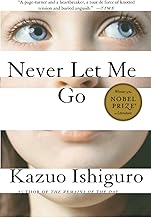
Never Let Me Go
Kazuo Ishiguro
4.2 on Amazon
21 HN comments

th0ma5onAug 15, 2018
nickbaumanonFeb 11, 2020
It's an old retail move: a popular SKU is copied by the store to take more margin from its demand. Your suppliers test product viability for you.
thejteamonSep 4, 2017
The Little Engine That Could and The Grapes of Wrath are good and all...
herghostonMar 29, 2020
Hemingway: The Old Man and the Sea - a gorgeous tale that brings to life the beauty of struggle and suffering.
jammygitonMay 26, 2019
manofmanysmilesonJuly 20, 2018
Also, do you think humans (in an economy or not) always act rationally?
mohsenonNov 5, 2010
Edit: I'm also reading this book called "Hold Nothing Back" by Mike Jones, it was gift from a good friend of mine.
btw kudos on an awesome question
ojbyrneonAug 19, 2010
ojbyrneonApr 3, 2009
garnerwoodsonDec 17, 2008
Stephen King's Favorite:
This Book Will Save Your Life by A. M. Homes
Saturday by Ian McEwan
The Mad Cook of Pymatuning: A Novel by Christopher Lehmann-Haupt
The Girl with the Dragon Tattoo by Stieg Larsson
The Tenderness of Wolves: A Novel by Stef Penney
When Will There Be Good News?: A Novel by Kate Atkinson
J.K. Rowling's Favorite:
The Five Red Herrings by Dorothy L. Sayers
I Capture the Castle by Dodie Smith
Skellig by David Almond
The Woman Who Walked into Doors by Roddy Doyle
Jeffrey Eugenides, author, Pulitzer prize winner
"Herzog," by Saul Bellow
"Love in a Fallen City," by Eileen Chang
"The Lay of the Land," by Richard Ford
Oprah Winfrey's Favorite:
White Oleander by Janet Fitch
The Color Purple by Alice Walker
A Tree Grows in Brooklyn by Betty Smith
The Four Agreements by Don Miguel Ruiz
To Kill a Mockingbird by Harper Lee
The Bluest Eye by Toni Morrison
The Grapes of Wrath by John Steinbeck
For complete list visit http://www.famouspal.com
therealdrag0onDec 8, 2014
But, out of all that (which I had to go look up on my Goodreads), HPMOR is what came to mind, both an engaging story, thought provoking ideas, and a lot of pages to work with :).
lsconNov 6, 2018
I'm reading Greer's "Less" today, the most recent winner, and it is really pretty great.
If you haven't read Hemingway, "The Old Man and the Sea" is a pretty good starting point.
If you are into post-apocalyptic fiction at all, you need to read McCarthy's "The Road"
(Note, if you want Steinbeck - personally, I liked 'Of Mice and Men' a lot more than "The Grapes of Wrath" but both are good. Just saying I don't always side with the committee)
I mean, we can argue all day about what the best book is, but everything on that list is going to be both very good and usually quite accessible; you will note that Joyce is conspicuously absent, and a few of these are assigned reading in high school.
If you want to read stuff before that (and get free books from gutenberg!) I recommend you check out Mark Twain and Joseph Conrad. Both are excellent. "The end of his tether" is my favorite Conrad. "Roughing it" is my favorite Twain.
dasbothonApr 9, 2015
Currently reading The Grapes of Wrath by John Steinbeck, after finishing East of Eden, which I loved. On the non-fiction front I'm reading Big Data by Kenneth Cukier and Viktor Mayer-Schönberger and Wherever You Go, There You Are by Jon Kabat-Zinn. Both interesting and compelling in their own ways.
robbrown451onDec 5, 2019
Public funding makes a ton of sense, personally I think it is the only economically efficient solution, but doing it well is hard. I scanned your history here to see a bit more on where you are coming from (I agree with you on a lot of things), and I see that this is something you talk about a lot.
I notice you say elsewhere "the enemy is the state". That makes it tricky to say "the state should decide what stuff gets funded." I always tend to be up against that whenever I suggest that state funded IP makes sense. I still believe there is a way.
I have more thoughts on how we could actually move toward such things, my contact info is in my profile, feel free to email.
* see chapter 25 of the Grapes of Wrath for a beautifully written essay on the evils of artificial scarcity: https://genius.com/John-steinbeck-grapes-of-wrath-chapter-25...
jlangenaueronDec 25, 2012
Lights Out in Wonderland by D.B.C. Pierre. A wonderful story with a few incidental observations about modern society.
The Grapes of Wrath by John Steinbeck. Sure, you can read about people who've made everything, but what about people who lose everything. Absolutely everything. Shattering, tragic fiction.
skadamouonAug 24, 2019
What exactly do you mean by being an attentive reader and how do you go about training this skill? I read a lot and feel like I understand most of what I'm reading but it doesn't seem like most of it sticks for more than a year or two (if that).
crooked-vonJune 9, 2021
> I admit I'm limited to the sample I've experienced personally but it's over 90%.
You need to read a wider selection of books, then. Try, say, The Great Gatsby, Pride and Prejudice, Of Mice and Men, Frankenstein, Jane Eyre, A Christmas Carol, The Grapes of Wrath, The Time Machine, Dune, The Hitchhiker's Guide to the Galaxy, the Foundation series, anything by Ray Bradbury... there's a very long list of books that are not driven by simplistic good vs. evil conflicts.
dirkthemanonApr 22, 2014
A good example of this is The Grapes of Wrath by Steinbeck. I read it a good 20 years ago as part of an English literature assignment. It wasn't too hard to read, but I didn't think much of it at the time. I re-read it last year, and was blown away, not only because I read a lot more on the Great Depression/Dust Bowl period, but also because of the writing style of Steinbeck. Hemingway: the same. The tone, the rhythm, the choice of words... pure art. Like this gem from The Great Gatsby (it's about turning 30): "Thirty: the promise of a decade of loneliness, a thinning list of single men to know, a thinning brief-case of enthousiasm, thinning hair". One sentence, perfectly describing the anxiety of turning 30... I could go on forever, but all I want to say is: don't forget the classics!
shreyanshdonDec 12, 2018
ryanwaggoneronJan 8, 2010
Give me a break. You think the world is really better served by you giving up on your dreams? It's a good thing not everything felt as you did or the world would be pretty bleak indeed.
xyzzyzonNov 27, 2020
I recommend rereading “The Grapes of Wrath”, to get a taste of what poverty in this country had actually looked like, and what it actually was like to not be able to afford food. Then compare that with what currently passes as “poverty”: you get much more than that already on SNAP benefits.
I am very sympathetic to people in poverty, having grown up in it. However, let’s not pretend that poverty in today’s America is about “affording food”: everyone, no matter how poor, is able to afford food, and poverty today is less about the hunger, and more about the lifestyle you can or are forced to carry out.
shantlyonDec 14, 2019
roymurdockonMay 25, 2016
I would recommend Gordon's book as an objective overview of the astonishing growth in economic and quality of life terms from 1870-1970. It's not as thoroughly researched as I expected it to be, and the prose is somewhat clunky, but it's a good lesson in the history of technology that we take for granted nonetheless.
Steinbeck's tale of the banks/landowners displacing poor, rural farming families is also extremely pertinent in light of this post. Car dealers extract value from the fleeing, unnecessariat farmers in "Grapes", while insurance companies/debtors prisons extract value from the unnecessariat rural poor chronicled in this post. The promised land of "Grapes" (California) continues to be successful today, with the coasts accreting a large portion of the nation's wealth. It's also just a beautifully written and thoroughly considered (to the point of seeming spontaneous) piece of art.
I am waiting for the next paradigm shifting technology with bated breath.
[1] http://www.amazon.com/Rise-Fall-American-Growth-Princeton/dp...
[2] http://www.amazon.com/Grapes-Wrath-John-Steinbeck/dp/0143039...
yodsanklaionSep 2, 2017
Capitalism and freedom. Helped me to understand capitalism and American right-wing ideology.
The grapes of wrath. Actually, I haven't read the book, only watched the movie. It puts into perspective what we see happening with refugees in Europe.
throwaway83291onAug 15, 2021
According to Wikipedia [0], the eponymous expression occurs in Chapter 25, "which describes the purposeful destruction of food to keep the price high:"
> [A]nd in the eyes of the hungry there is a growing wrath. In the souls of the people the grapes of wrath are filling and growing heavy, growing heavy for the vintage.
[0] https://en.wikipedia.org/wiki/The_Grapes_of_Wrath
tmm84onJan 20, 2021
thaumaturgyonMay 16, 2008
I think I've read over half of the volumes mentioned there, and disliked a lot of them. I thought "The Grapes of Wrath" was awful, and never did figure out why anybody was ever impressed by "The Catcher In The Rye". To me, both of those were good examples of books that people read because other people read them, and nobody can really describe why they're so profound, but since everybody else has read them, they must be. And, among all these "profound" works, they included "Into Thin Air". I enjoyed it, and I used to be a climber, but what's it doing on that list?
Then, there are the many titles not found on the list. How about "The Decameron", for one? "Pale Blue Dot"? "A Brief History of Time"? "Cosmos"? "The Rubaiyat of Omar Khayyam"?
And, I'd argue that reading should be done as much for enjoyment as for edification. So, why not some "Calvin and Hobbes"? Or "Words I Wish I Wrote"? Or some Neil Gaiman or Greg Bear or George RR Martin?
I'm not ranting at you; I agree with you 100%. Your comment just seemed like an appropriate place to attach a rant against the article. :-)
b3moralesonMay 23, 2021
If properly chosen, it could certainly have a beneficial effect. But DNA is also a much more complex system than a book.
gioeleonMay 12, 2012
If you have a problem with Bulgarian people in general, then, well, that is called xenophobia or more simply racism.
If you have a problem with Bulgarian criminals, then complain to your police force. How come you able to spot such criminals so easily while they cannot? Did you make precise and detailed reports to the police about cases you witnessed, experienced personally or know from local hearsay?
Talking about apartments, do you agree on the principle that access to public housing should be given to those most in need? Do you also agree on the principle that the needs for every lawful person should be addressed regardless of their country of origin? If you do, what is the problem them? If you do not, why?
Question for the US readers: do scenes like those depicted in Steinbeck's novel The grapes of wrath still happen? Are people from rural zones like Oklahoma's countryside treated as filthy dangerous foreigners in California? Because that is what we are seeing and experiencing right now in the EU.
red_admiralonOct 7, 2018
Here's an article about hops pickers in England [1] and the related Wikipedia article [2]. I also recommend Steinbeck's "The Grapes of Wrath".
[1] https://mashable.com/2017/06/03/hop-pickers
[2] https://en.wikipedia.org/wiki/Hopper_hut
dredmorbiusonNov 13, 2019
Depending on the timeline for achieving a 2-3B population, any period of less than ~100 years is not attainable without a huge increase in mortality. That's shown in numerous models suggested by the 1970 Limits to Growth project.
In pre-industrial times, and as recently as 1850s Ireland, massive population declines in regional areas were fairly commonplace. The Irish Potato Famine, through direct mortality and emigration, reduced the population of Ireland from 8 million to 4, over a period of 60 years:
https://en.m.wikipedia.org/wiki/Great_Famine_(Ireland)#/medi...
Ireland has still not regained its 1850 population peak.
Note too that Ireland's population had increased tremendously from the 3 millions of 1740. The potato primed the trap the blight triggered.
There were numerous other notable famines in the 19th century, several in China, then as Ireland under strong British influence. These continued through the 20th century, including in both Nationalist and Communist regimes. The Ukranian Holdomor struck at the same time as famines elsewhere in the world, and was somewhat contemporaneous with the Dust Bowl in the US, a localised famine, in which there was some starvation, though largely manifested as a massive internal migration (see especially Steinbeck's The Grapes of Wrath).
The people who realise this is a potential path are largely wholly aware of just how horrific the prospect is, both in direct misery and the all-but-certain breakdown of all social, governmental, commercial, and technical institutions. While there are some who embrace this, they tend to be extreme outliers.
Most see this as the scenario to avoid at all costs.
caffeinewriteronOct 22, 2020
It's probably one of the more complex parts of copyright law. There's a few well-known cases of section 203 being used to claw back copyright decades down the line. (Note: I'm am very much not a lawyer)
In 1938, John Steinbeck granted Viking Press rights to publish 13 of his works, including Of Mice And Men, The Grapes of Wrath, and Tortilla Flats, as long as they were kept in print and for sale. In 2005, John Steinbeck's son and granddaughter served notice to Penguin Publishing, who were the interested party at the time, that they were terminating the agreement.^2
This section was originally designed to give artists who may have essentially (or even literally) given away their rights due to inequitable bargaining power a chance to recoup their property down the line with at least several years notice that they are planning on terminating the agreement.^3 In practice, however, it's kind of a mess, and to say that it would allow an artist or their heirs to terminate a grant to the public domain is dubious. It's something that would likely see its way to the supreme court should it ever come to pass.
I've included a couple other articles here just in the general interest of providing more info.^4^5
[1]: https://www.copyright.gov/docs/203.html
[2]: http://billgablelaw.com/sites/law/files/TakingItBack.pdf
[3]: https://abovethelaw.com/2019/05/terminators-mount-up-section...
[4]: https://media2.mofo.com/documents/190700-all-shook-up.pdf
[5]: https://wiki.creativecommons.org/wiki/Case_Law
sdfinonSep 2, 2017
'The First and Last Freedom' by J. Krishnamurti: Mainly because of what he says regarding Free Will. Later I read 'Free Will' by Sam Harris, and I think Sam explains the same idea in more detail.
Citing 'The First and Last Freedom': "Thought is nothing else but reaction; thought is not creative."
'The Grapes of Wrath' by John Steinbeck
'The Little Prince' by A.S.Exupery: when I was a child it made me reflect about society.
nicwolffonApr 16, 2020
https://www.nytimes.com/2020/04/11/business/coronavirus-dest...
> In Wisconsin and Ohio, farmers are dumping thousands of gallons of fresh milk into lagoons and manure pits. An Idaho farmer has dug huge ditches to bury 1 million pounds of onions. And in South Florida, a region that supplies much of the Eastern half of the United States with produce, tractors are crisscrossing bean and cabbage fields, plowing perfectly ripe vegetables back into the soil.
which brings to mind John Steinbeck's The Grapes of Wrath:
> The people come with nets to fish for potatoes in the river, and the guards hold them back; they come in rattling cars to get the dumped oranges, but the kerosene is sprayed. And they stand still and watch the potatoes float by, listen to the screaming pigs being killed in a ditch and covered with quick-lime, watch the mountains of oranges slop down to a putrefying ooze; and in the eyes of the people there is the failure; and in the eyes of the hungry there is a growing wrath. In the souls of the people the grapes of wrath are filling and growing heavy, growing heavy for the vintage.
0xbearonOct 9, 2017
tokenadultonApr 20, 2014
So, no, in the United States we look at the historical experience of Stalinism as a wholly negative example, one of the worst examples of mass irrationality and needless human suffering in the twentieth century. Where the various branches of my family have lived for generations, we know better than to take Stalin's policies as models of modernization or anything worthwhile.
rfurmanionApr 29, 2009
queseraonDec 31, 2020
Then a few months ago, I read an interesting quote here on HN -- I traced it back to Steinbeck's East of Eden, so I decided to give it a try.
I really truly deeply enjoyed the book. I hesitate to add books to a "favorites of all time" list until at least several months after reading, but it's a definite contender.
As for the different experiences between GoW and EoE, I have to assume that the inconsistency of the reader has a lot to do with it.
So, +1 on the Steinbeck recommendation. And gratitude to the lost-attribution commenter who quoted him!
Hemingway waits patiently on my TODO list.
techopolyonFeb 26, 2020
Carrie should be on the bookshelf next to other somewhat recent masterpieces like the Grapes of Wrath, Invisible Man (Ellison's), Lord of the Flies, the Great Gatsby, and Ulysses.
osipovonApr 20, 2014
onreact-comonAug 11, 2009
Zero tolerance means a war on the poor. Like the "war on terror" or "the war on drugs" it does not solve the problem at all.
Poverty is always relative. You can be poor with the same amount of money the next guy is still OK with. Poverty depends largely on sociological factors. People who are embedded in some kind of social order, who partake in society, are respected and have human relations to other people aren't as poor as those who are isolated, spat upon and criminalized.
I'd recommend reading The Grapes of Wrath, one of the greatest works of American literature and written during the Great Depression for some solutions.