
Turn the Ship Around!: A True Story of Turning Followers into Leaders
L. David Marquet, Stephen R. Covey, et al.
4.7 on Amazon
47 HN comments

Hooked: How to Build Habit-Forming Products
Nir Eyal and Ryan Hoover
4.6 on Amazon
46 HN comments

The Omnivore's Dilemma: A Natural History of Four Meals
Michael Pollan, Scott Brick, et al.
4.6 on Amazon
44 HN comments

How to Win Friends & Influence People
Dale Carnegie
4.7 on Amazon
43 HN comments

The Road
Cormac McCarthy
4.4 on Amazon
42 HN comments

The Grapes of Wrath
John Steinbeck, Robert DeMott, et al.
4.6 on Amazon
41 HN comments

History: From the Dawn of Civilization to the Present Day
Smithsonian Institution
4.8 on Amazon
40 HN comments

Rules for Radicals: A Practical Primer for Realistic Radicals
Saul D. Alinsky
4.2 on Amazon
33 HN comments

Plato: Complete Works
Plato, John M. Cooper, et al.
4.8 on Amazon
31 HN comments

The Pyramid Principle: Logic in Writing and Thinking
Barbara Minto
4.5 on Amazon
27 HN comments

Salt, Fat, Acid, Heat: Mastering the Elements of Good Cooking
Samin Nosrat and Wendy MacNaughton
4.8 on Amazon
26 HN comments

Lies My Teacher Told Me: Everything Your American History Textbook Got Wrong
James W. Loewen
4.7 on Amazon
24 HN comments

Story: Substance, Structure, Style and the Principles of Screenwriting
Robert McKee
4.7 on Amazon
21 HN comments

Bird by Bird: Some Instructions on Writing and Life
Anne Lamott
4.7 on Amazon
21 HN comments
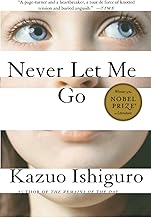
Never Let Me Go
Kazuo Ishiguro
4.2 on Amazon
21 HN comments

sevencolorsonJune 10, 2020
PascLeRasconOct 1, 2018
hardwaregeekonMar 11, 2021
postingpalsonDec 13, 2020
apsurdonJan 18, 2021
Actually, you can be four! Send me your address and i’ll send it to you, email the gmail domain with the handle plusjade
it’s really that good ^_^
roganmurleyonJuly 14, 2021
alwaysreadingonNov 18, 2018
nerdponxonApr 9, 2018
The Food Lab by J. Kenji Lopez-Alt
Salt, Fat, Acid, Heat by Samin Nostrat
Ratio by Michael Ruhlman
spurcell93onNov 12, 2017
wallfloweronJuly 30, 2018
> This beautiful, approachable book not only teaches you how to cook, but captures how it should feel to cook
> "Just reading Salt, Fat, Acid, Heat will make you a better cook, adept at seasoning, balancing..."
https://www.saltfatacidheat.com/
https://www.theatlantic.com/amp/article/523923/
ngngngngonJuly 18, 2019
dgacmuonApr 9, 2018
Julia Child, "the way to cook"
Jeff Potter, "Cooking for geeks"
Kenji lopez-alt's "the food lab"
The author does compare to most of these, so the recommendation seems solid.
TomteonApr 9, 2018
I like Ruhlman's "Twenty", maybe followed by "Ratio".
"How to Cook without a Book" by Anderson is great, although you probably needwhole rooms in your house for food storage if you took her "what you should have in your pantry" serious.
My most used cookbook is the one my mother gave me and all my relatives when we were living alone for the first time. It's the book she uses at school. It's for special-needs children, so extremely basic and easy, with many, many quirky illustrations.
But it has everything important. Bechamel? Sure. Choux pastry? Yes. But also how to cook potatoes or eggs.
The only infuriating thing in this book is that the index is worse than useless. I know the important recipes' page numbers by heart.
wincyonMar 7, 2018
I made a baked potato with a perfect inside and perfect crisp skin from the books, it involved like 4 steps of how to cook, like bathing them in a specific mixture of salt water, baking for 45 minutes, then running olive oil on the skins, then baking for another 15 minutes.
If they didn’t explain the why in the book, which I guess is the copyrighted part, and what the results are, I never would have tried that recipe.
nemo44xonJuly 14, 2021
Another person in this thread mentioned the Master Classes with Gordon Ramsey and Thomas Keller and I can concur that both of those are really great in teaching technique that is reusable across just about anything you cook.
Cooking is pretty easy once you get enough of it under your belt and are confident with different techniques. It's also quite liberating as many things go with each other and it isn't a mystery if something will work. You can begin to target "profiles" you want your food to take on.
atwebbonNov 20, 2019
Clarifying butter and slower cooking my omelettes has been fantastic, along with salt early in the mixing bowl and letting it sit for a minute.
ajhurlimanonJuly 13, 2018
-Salt, fat, acid heat / A no-nonsense approach to cooking that's made me feel a lot more confident in the kitchen
-It's your ship / Required reading for a PM class
PascLeRasconJuly 8, 2018
Also, check out the book Salt, Fat, Acid, Heat if you haven't already. It's not a cookbook per se, more of a technique and cooking theory book, but it really changed the way I approach cooking most dishes.
dceddiaonMar 11, 2021
Check out Salt Fat Acid Heat [0] if you haven’t seen it. It totally changed my idea of how to season things, to the point that I feel a lot more confident modifying existing recipes now.
One of the most eye opening things also sounds the most silly in retrospect: taste as you go. It makes such a huge difference! For whatever reason, I would always blindly follow a recipe until the very end, and hope that the “big reveal” turned out how I hoped. Now, I try to taste as I go (add a little salt; try it; add more). A related tip that blew my mind recently: if you’re making meatballs and want to check the seasoning, cook a tiny chunk of it and taste it before committing to a whole batch.
Anyway, I really like that book :D
0: https://www.amazon.com/Salt-Fat-Acid-Heat-Mastering/dp/14767...
phobosanomalyonSep 1, 2020
For example, I wouldn't pay to see Gordon Ramsay teaching something without first working through Salt, Fat, Acid, Heat and The Food Lab. And by the time I've worked through the books, I know if I'm actually interested in the subject, or if it's just something that I've convinced myself is interesting based on seeing someone doing it on YouTube.
That's just my own philosophy on it. You gotta chop the mesquite before you can smoke the ribs.
starkyonDec 24, 2020
neilkonFeb 8, 2020
One book that helped me was Vegetarian Cooking For Everyone. You may not want to cook vegetarian, but many vegetarians are young people who are also building their own cooking styles from scratch. So VCfE goes through the basics - like what is cubing and what is dicing - with illustrations. While it has complex recipes, it also includes almost absurdly simple ones, like preparing beans with olive oil and salt. But think of them like "kata"; basic exercises, that you can build up to more complex forms.
A recent book which I've recently found extremely useful is Salt, Fat, Acid, Heat. It is a wonderfully readable introduction to the elements of cooking and how they combine, and it is great for complete newbies as well as experienced home cooks. It manages to be both accessible, practical and a little bit technical, perfect for the techie who wants to get better at cooking. It taught me things simple dishes like roasted chicken, which I had prepared like a hundred times before I read it, which have changed how I cook forever.
chubotonJan 11, 2020
She says you have to orient the chicken a specific way in the oven because the corners of the oven are the hottest and the different parts of the chicken will cook evenly that way (?) Not quite sure since I didn't try it. But my friend made it and it was fantastic.
So the way I look at it (without much experience) is that a thermometer measures one dimension, while a chicken is a 3D thing. And an expert chef noticed that enough to put the detail in her recipe. i.e. "reality is complicated".
Not sure if that's the problem with sausages (since they're not that 3D) but there's a reason that specific foods are cooked in specific ovens. i.e. why do people obsess over pizza ovens and import them from Italy? Why is clay pot cooking different than metal pot cooking, etc.?
Because temperature / heat aren't just one-dimensional. She says that good cooks look at the food and not at the thermometer. They're looking for signs in the food which stay constant across environments rather than measuring one aspect of the environment.
tl;dr Samin Nosrat rejects the use of a thermometer because it doesn't measure enough reality to cook well.
dkarlonNov 18, 2018
The show is very different from the book. It's a great pleasure to watch, even though I don't feel like I learn anything that improves my cooking. I agree that the cooking demos don't add much. It feels like she isn't as comfortable looking at the camera as she is conversing in front of it, and she's already said everything so well in the book, you might as well skip to the next episode.
dceddiaonMar 11, 2021
It does have a section on recipes, but a solid half or more of the book is on technique, why certain ways work and others don’t, etc.
Lots of stuff that I imagine one would pick up by working in a kitchen or going to school for it, but could take a long time to figure out on your own.
0: https://www.amazon.com/Salt-Fat-Acid-Heat-Mastering/dp/14767...
philocleaonSep 1, 2020
Two thoughts to this convo:
1. One thing it took a few years of living in Europe to learn is that what seems like a logical way to learn or convey information is also -- at least partially -- cultural. I'm an experience first kind of gal -- and I judge theories by how well they explain experience. I also think it's a better way to communicate. But here in Europe the standard way of giving, say, a presentation is to begin with all the theory, definitions, concepts, and only then move on to case studies.
It was when I read Erin Meyer's The Culture Map that the whole thing clicked for me. I think it's worth reading the whole book, but here's a quick summary: https://www.mdttraining.vn/post/on-our-bookshelf-the-cultura...
One of her axes of comparison is "principles first vs applications first." It helped me to realise that my preference for applications first was also due to spending all my formative years in North America, being taught this way, consuming media structured this way, and so on.
2. I actually finally bought Salt Fat Acid Heat this spring, started reading it, and just the chapter on salt has already begun making a difference in my cooking. I do think cooking proves you can do something badly, every day, for an entire lifetime, if you don't either get some better theory or carry out a lot of experimentation and remember what works.
However... the reason I bought the Nosrat book was that I was starting to be inspired by cooking again, and what motivated me in that end was the Ramsay course! It gave me that sense of exploration and play again. So I think it's worth paying attention to what increases motivation, especially with something that can become quite a dull chore.