
Turn the Ship Around!: A True Story of Turning Followers into Leaders
L. David Marquet, Stephen R. Covey, et al.
4.7 on Amazon
47 HN comments

Hooked: How to Build Habit-Forming Products
Nir Eyal and Ryan Hoover
4.6 on Amazon
46 HN comments

The Omnivore's Dilemma: A Natural History of Four Meals
Michael Pollan, Scott Brick, et al.
4.6 on Amazon
44 HN comments

How to Win Friends & Influence People
Dale Carnegie
4.7 on Amazon
43 HN comments

The Road
Cormac McCarthy
4.4 on Amazon
42 HN comments

The Grapes of Wrath
John Steinbeck, Robert DeMott, et al.
4.6 on Amazon
41 HN comments

History: From the Dawn of Civilization to the Present Day
Smithsonian Institution
4.8 on Amazon
40 HN comments

Rules for Radicals: A Practical Primer for Realistic Radicals
Saul D. Alinsky
4.2 on Amazon
33 HN comments

Plato: Complete Works
Plato, John M. Cooper, et al.
4.8 on Amazon
31 HN comments

The Pyramid Principle: Logic in Writing and Thinking
Barbara Minto
4.5 on Amazon
27 HN comments

Salt, Fat, Acid, Heat: Mastering the Elements of Good Cooking
Samin Nosrat and Wendy MacNaughton
4.8 on Amazon
26 HN comments

Lies My Teacher Told Me: Everything Your American History Textbook Got Wrong
James W. Loewen
4.7 on Amazon
24 HN comments

Story: Substance, Structure, Style and the Principles of Screenwriting
Robert McKee
4.7 on Amazon
21 HN comments

Bird by Bird: Some Instructions on Writing and Life
Anne Lamott
4.7 on Amazon
21 HN comments
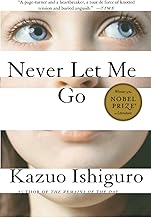
Never Let Me Go
Kazuo Ishiguro
4.2 on Amazon
21 HN comments

drallisononOct 5, 2017
evtothedevonOct 5, 2017
GaussianonOct 5, 2017
ZannionOct 10, 2017
scrumperonOct 9, 2017
HN'ers unfamiliar with his work might really enjoy Never Let Me Go, a very affecting novel which you could plausibly call sci-fi.
lubujacksononDec 29, 2019
millstoneonMar 6, 2021
theshadowonDec 1, 2013
zbobet2012onMar 30, 2020
The story line is enrapturing but ultimately not what the book is about. I'll leave two quotes.
> We all complete. Maybe none of us really understand what we've lived through, or feel we've had enough time.
> All children have to be deceived if they are to grow up without trauma
jackschultzonOct 9, 2017
I'll say this though, make sure to read Remains of the Day and then move to Artist of the Floating World. Both about WWII and people's opinions and feelings from what happened in their world. Not the longest of novels, so reading them back to back is the way to go.
mark_l_watsononMar 6, 2021
Sorry to be a little off topic, but I notice that most of my friends and family spend a lot of time watching movies and other streaming media, but from conversations it seems to me like they spend little time reading (with some exceptions). We all get to allocate our own time, but I like limiting myself to a maximum of one movie a day, but I feel good about spending much more time reading, choosing an active pastime of visualizing the people and world depicted in books, rather than passively watching streaming content. A movie has to be really fantastic to get the same effect as just a good book.
udrronNov 3, 2010
twoodfinonOct 5, 2017
I can say that I've "read" more Ishiguro through audiobooks than paper, and that they've all been excellent. Rosalyn Landor's Never Let Me Go was particularly moving.
The first-person perspective used by Ishiguro in several of his novels lends itself very well to the format. When We Were Orphans isn't typically considered one of his stronger works, but as a "told tale" I found it fascinating.
sdrothrockonSep 12, 2018
In fact, foreknowledge of plot and detail color your experience of reading the book such that successive rereads each have a different character in many cases.
Imagine the first time you read a book like The Time Traveler's Wife, Life of Pi, Never Let Me Go, A Tale of Two Cities, The Count of Monte Cristo, or The Boy in the Striped Pajamas. Now, imagine the second time reading through any of those books; the experience will be greatly changed by the knowledge and anticipation of what you know is coming.
Some people may not think that change in experience is important, but some definitely will. I don't think there's any reason to look down on either group, nor to look down on people who chose to respect the latter.
dkarlonAug 2, 2010
A family drama set in Cairo during and after World War I. It's a long book, but the going is easy. The variety of characters of different ages and temperaments, each with their own preoccupations in a turbulent time, provide a fascinating glimpse of what to me was an entirely unknown society and culture. It's the first book in a trilogy, so if you like it, there are more books waiting.
Never Let Me Go, by Kazuo Ishiguro
Very sad. It ripped me up the first time I read it. Anybody who grew up feeling different and somehow deficient should read it.
Talking to Strange Men, by Ruth Rendell
An easy and fast-paced kind-of-mystery by a well-known mystery writer. There are two stories related in a crucial but indirect way. Each story has mysteries and twists that could stand on their own for suspense, but they play second fiddle to the development of several interesting characters.
Persepolis and Persepolis 2, by Marjane Satrapi
Graphic memoirs about growing up in Iran and Europe.
wenconAug 30, 2020
It is a book about many things, but one of the main themes is regret. As a younger person, I thought I would end up following the trajectory of Stevens. The narrative matched mine so much that I thought it was a description of an inexorable path in life that someone like me was bound to follow. As I got older, I realized the opposite: that Stevens was an anti-hero, that I did NOT have to follow the his trajectory, and that I had the agency to make different choices in life. In that way, the book's anti-message guides me today.
p.s. with regards to Ishiguro, despite liking RotD, I didn't care for any of his other works. I didn't like Never Let me Go (which was highly acclaimed), nor the Buried Giant, nor When we were Orphans. Admittedly I have not read "An Artist of the Floating World".
shooonOct 9, 2017
I found the latter irritating to read -- roughly, many of the characters are "not in a great situation" when it comes to the role society has assigned them -- yet they are all accepting (perhaps that is too strong) or passive. No volition to change the status quo.
That doesn't mean it is a bad book, or bad literature, but reading pages and pages of characters focusing on interpersonal drama when they are trapped in this hideous situation pissed me off!
gcvonMay 30, 2010
I think the distinction between the two has to do with the primary driver of the book. Genre fiction tends to be about telling a story about people and events. Plot and character both get strong billing, but plot dominates. In literary fiction, though, plot tends to be unimportant and character analysis dominates. A whole book can take place inside the mind of one person over the course of, say, one uneventful day.
This isn't an iron-clad rule, of course. By my definition, A Wizard of Earthsea is basically literary fiction; not coincidentally, English teachers sometimes assign it. Occasionally, a writer sprinkles fantastic or pulpy elements in a work of literary fiction and earns high praise; Gabriel García Márquez and Salman Rushdie do this routinely. It was kind of amazing that Kazuo Ishiguro's Never Let Me Go — very much a dystopian science fiction novel — made the Booker shortlist in 2005.
wtflmaohnisdumbonOct 9, 2017
I haven't read anything of his work beyond a bit of The Buried Giant, but this sentence makes me want to read "Never Let Me Go". I think it's easy to focus on the immediate or even use it to distract yourself from big picture problems that might not even have solutions.
pavlovonAug 22, 2013
"Without that terrifying two-headed dog, in other words, we’d all go down with our failing kidneys."
Eventually we would have found other ways to collect the data needed for safe organ transplants than using live mammals. It probably would have delayed the introduction of transplant procedures on humans, so in that sense there would have been "people going down with failing kidneys" -- but how much suffering can you justify by saying that it might save human lives down the road?
I'm reminded of Kazuo Ishiguro's excellent novel Never Let Me Go.
(--- Major spoiler alert! ---)
It takes place in a sort of parallel-universe Britain of the '70s and '80s where human cloning was invented just after WWII. Cloning has become the cure for cancer: just grow a steady supply of live clones, take their organs and transplant them to cancer-inflicted patients.... Of course it takes about 18 years to grow a clone, and you can't just keep these people in a vat somewhere. So the clones are people without citizen rights, whose sole mission in life is to be harvested eventually. Society sees this as justified because clones are not "real people" anyway -- and more importantly, nobody wants to turn the clock back to an era when people regularly died of cancer.
calebmonDec 19, 2017
* Never Let Me Go (Kazuo Ishiguro)
* Influx (Daniel Suarex)
* Sputnik Sweetheart (Haruki Murakami)
* Apex (Ramez Naam)
* One Second After (William R. Forstchen)
* Anna Karanina (Leo Tolstoy)
* Neuromancer (William Gibson)
* A Farewell to Arms (Ernest Hemingway)
* Crux (Ramez Naam)
* A Moveable Feast (Ernest Hemingway)
* Hardboiled Wonderland and The End of the World (Haruki Murakami)