
Turn the Ship Around!: A True Story of Turning Followers into Leaders
L. David Marquet, Stephen R. Covey, et al.
4.7 on Amazon
47 HN comments

Hooked: How to Build Habit-Forming Products
Nir Eyal and Ryan Hoover
4.6 on Amazon
46 HN comments

The Omnivore's Dilemma: A Natural History of Four Meals
Michael Pollan, Scott Brick, et al.
4.6 on Amazon
44 HN comments

How to Win Friends & Influence People
Dale Carnegie
4.7 on Amazon
43 HN comments

The Road
Cormac McCarthy
4.4 on Amazon
42 HN comments

The Grapes of Wrath
John Steinbeck, Robert DeMott, et al.
4.6 on Amazon
41 HN comments

History: From the Dawn of Civilization to the Present Day
Smithsonian Institution
4.8 on Amazon
40 HN comments

Rules for Radicals: A Practical Primer for Realistic Radicals
Saul D. Alinsky
4.2 on Amazon
33 HN comments

Plato: Complete Works
Plato, John M. Cooper, et al.
4.8 on Amazon
31 HN comments

The Pyramid Principle: Logic in Writing and Thinking
Barbara Minto
4.5 on Amazon
27 HN comments

Salt, Fat, Acid, Heat: Mastering the Elements of Good Cooking
Samin Nosrat and Wendy MacNaughton
4.8 on Amazon
26 HN comments

Lies My Teacher Told Me: Everything Your American History Textbook Got Wrong
James W. Loewen
4.7 on Amazon
24 HN comments

Story: Substance, Structure, Style and the Principles of Screenwriting
Robert McKee
4.7 on Amazon
21 HN comments

Bird by Bird: Some Instructions on Writing and Life
Anne Lamott
4.7 on Amazon
21 HN comments
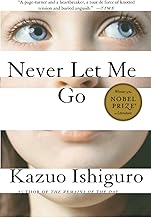
Never Let Me Go
Kazuo Ishiguro
4.2 on Amazon
21 HN comments

spchampion2onApr 13, 2019
modoconSep 29, 2009
http://www.amazon.com/Bird-Some-Instructions-Writing-Life/dp...
calinet6onMay 1, 2013
scrrronFeb 25, 2011
Link: http://search.barnesandnoble.com/Bird-by-Bird/Anne-Lamott/e/...
blacksmytheonMar 27, 2011
Try reading
Although to summarize, the bulk of the advice in both books is encouraging you to write every day.
davelnewtononMay 23, 2018
There are several really good books that cover this as well; they're pretty easy to search. I really enjoyed Bird by Bird and several of the Pressfield books.
Note, of course, that reading about writing is not actually writing.
keithpeteronJuly 25, 2011
roryisokonJuly 29, 2018
- On Writing - Stephen King
- Bird by Bird - Anne Lamott
- Story - Robert McKee (screenwriting)
- Do the work - Stephen Pressfield (he's more famous for The War of Art but I haven't actually read that one yet)
Also there are some great blogs out there
- Terrible Minds by Chuck Wendig
- The Creative Penn - Joanna Penn
- Mary Robinette Kowal's blog
- John August (screenwriting)
a_bonoboonDec 21, 2015
Wodehouse (also listed in the OP) makes me happy to read, they're hilarious and glowingly warm books.
Here are some recommendations from me in a similar vein, (non-fiction) books that positively influenced my outlook:
- Lamott's Bird by Bird, it's reflections on how to be a writer, but the advice works on "living" and "working" in general
- Werner Herzog - A Guide for the Perplexed: an updated long interview with Herzog on his life and his craft, extremely passionate. There are so many minor stories and bits of wisdom that positively influenced my outlook on humanity and the work I do.
- Bakewell's How To Live: If you don't have time or leisure to read Montaigne's Essais (I'm still not finished with those), Bakewell's book is a bit of a primer/summary of Montaigne's lessons interwoven with Montaigne's life.
- Marsh's Do No Harm: it's the autobiography of a "famous" neuro-surgeon at the end of his career. If I'm 50% as honest and humble about the mistakes I've made at the end of my life (mistakes in his operations turned several patients into people who need constant care for the rest of their lives) then I can die contempt.
tkfuonAug 12, 2016
I'd also agree with Geoff Pullum's characterization of it as "a smug, arrogant, dishonest tract full of posturing and pothering, and writing advice that ranges from idiosyncratic to irrational" (http://chronicle.com/blogs/linguafranca/2013/04/04/eliminati...)
But apart from it being a very poor source of writing advice, I don't believe it's accurate in its diagnosis of how language is deployed for political ends—the question is a much more complicated one than he claims here.
There exist actual good books that can teach you how to write better, instead of patting you on the back and allowing you to tut-tut at those plebians who write things that are "outright barbarous". Pinker's The Sense of Style is one of those; Ann Lamott's Bird by Bird is another. There also exist much better (and more accurate and scientific) resources about how language actually affects the way we think about things. Benjamin Bergen's Louder than Words is an excellent start, and virtually anything from Lakoff's long list of publications is worth reading—Metaphors We Live By is the classic, but Women, Fire, and Dangerous Things in particular is excellent from his more recent work.
tathagataonAug 1, 2012
'Bird by Bird',
'The Writer's Portable Mentor',
and 'On Writing', are some books on writing worth reading.
BylineronAug 1, 2013
1. Read great writing. If you want to write better nonfiction, read the masters of nonfiction. Michael Lewis. Tracy Kidder. Atul Gawande. Joseph Mitchell. Jon Krakauer. Christopher Hitchens. Tom Junod. If you want to write great fiction, read Murakami, Marquez, Palahniuk, Eggers, Hosseni, Oates, Atwood. (Shameless plug here, you can find stories by these folk at Byliner: http://www.byliner.com )
2. Read about writing. Some worthy books on this:
On Writing: A Memoir of the Craft, by Stephen King (really!)
The Practice of Writing, by David Lodge
The Writing Life, by Annie Dillard
Bird by Bird: Some Instructions on Writing and Life, by Anne Lamott
Good Prose: The Art of Nonfiction, by Tracy Kidder and Richard Todd
To Show and to Tell: The Craft of Literary Nonfiction, by Phillip Lopate
3. As already mentioned upthread, practice. Write something every day.
4. If you're not confident in your writing, apply your MVP lessons. Write short sentences. Use as few words as possible. Rid your sentences of adjectives and adverbs. Study your verb choices. Ditch the complex punctuation and dependent clauses. Ask yourself, What's the least amount of "writing" necessary to convey this idea or image?
5. Have fun.
spcelzrdonMar 27, 2017
A few that I've read
John Gardner's -- On Fiction
How to Write a Blockbuster Novel
Story (more about screenwriting, but very useful to novelists)
Bird by Bird
None of these are particularly focused at the novice novel writer. Good luck!
jmkbonJune 9, 2017
davelnewtononJan 14, 2019
That you're asking this here leads me to believe there's some unknown (to me) internal resistance holding you back: start writing. Write some more. Then write some more.
You might be interested in books like "Bird by Bird" (Lamott) or "Do the Work" (Pressman) etc. (I've read BbyB a few times, and am re-reading/-listening to DtW again as I plow through some drudge work that's necessary, but irritating.)
klodolphonJune 29, 2016
* Style: Lessons in Clarity and Grace, Joseph Bizup
* The Chicago Manual of Style (depending on what kind of writer you are, a different guide may suit you better)
* Bird by Bird, Anne Lamott
* On Writing, Stephen King
a_bonoboonFeb 6, 2019
Two books by Erich Fromm, a German/American philosopher of the 50s/60s: The Art of Loving. Some points: To him love is a skill that has to be practiced and learned, love in a relationship is constant hard work, love of another is only possible if you first love yourself, and you cannot love another human being if you do not love mankind. A little bit later he published The Sane Society, a Marxist critique of capitalist society, how consumerism leads to self-alienation etc.
>Fascism, Nazism and Stalinism have in common that they offered the atomized individual a new refuge and security. These systems are the culmination of alienation. The individual is made to feel powerless and insignificant, but taught to project all of his human powers into the figure of the leader, the state, the "fatherland," to whom he has to submit and whom he has to worship. He escapes from freedom and into a new idolatry. All the achievements of individuality and reason, from the late Middle Ages to the nineteenth century are sacrificed on the altars of the new idols. ...built on the most flagrant lies, both with regard to their programs and to their leaders.
Sounds familiar?
- Donna Meadows' Thinking in Systems, how to model anything as an interconnected system, and how unseen positive and negative feedback loops cause unintended consequences in any system
- Anne Lammott's Bird by Bird - I have to write a lot for my work and this is the best primer on getting things out the door
- For the Australians: Bruce Pascoe's Dark Emu, on how early white European settlers completely misunderstood indigenous agriculture, all the things that were lost when Europeans settled Australia, and what we can use today. Gives you a VERY different look at Australian history.
- Ha-Joon Chang's Economics: The User's Guide. Just came out, an absolutely amazing intro and look at modern economics, the flimsiness of neoliberalist thought, and how we need to use the tools of each economic school of thought to think about the economy, not getting stuck on one school
bloggergirlonNov 25, 2012
Interesting: Virginia Tufte is the mother of data visualization guru Edward Tufte.
(Other good books for writers and writers-in-training: "Bird by Bird" by Anne Lamont, Stephen King's "On Writing" and a collection of letters on writing by F. Scott Fitzgerald, also called "On Writing". Oh, and please don't hate on White's "Elements of Style" --- it may be old, but it's foundational.)
strawsonJan 26, 2017
Good writing is not necessarily good speech, as you've noted. Learning technical writing is a superpower — I would recommend The Essentials of Technical Communication. A chemistry teacher once introduced it alongside a Vonnegut quote:
"It would never occur to me, to look for the best minds of my generation in an undergraduate English department anywhere. I would certainly try the physics department or the music department first."
Technical writing and writing for emotional impact both have their place. Learn both, and learn when to employ them. You may find yourself appreciating that Thoreau quote one day.
greyboyonNov 26, 2012
bloggergirl 21 hours ago | link [dead]
I'll add to this list my all-time favorite writing companion: Virginia Tufte's "Grammar As Style". It's been out of print forever, which is tragic, and, when you can find it, it usually sells for over $100 - even in rough shape. "Artful Sentences" is meant to replace "Grammar As Style", but I prefer the original. If you want to tie all the rules together so you can understand why we even have grammar in the first place and how truly magical grammar can be to shaping a sentence or paragraph, track down this book.
Interesting: Virginia Tufte is the mother of data visualization guru Edward Tufte.
(Other good books for writers and writers-in-training: "Bird by Bird" by Anne Lamont, Stephen King's "On Writing" and a collection of letters on writing by F. Scott Fitzgerald, also called "On Writing". Oh, and please don't hate on White's "Elements of Style" --- it may be old, but it's foundational.)
quantumhobbitonJan 22, 2009
http://www.amazon.com/Bird-Some-Instructions-Writing-Life/dp...