
Turn the Ship Around!: A True Story of Turning Followers into Leaders
L. David Marquet, Stephen R. Covey, et al.
4.7 on Amazon
47 HN comments

Hooked: How to Build Habit-Forming Products
Nir Eyal and Ryan Hoover
4.6 on Amazon
46 HN comments

The Omnivore's Dilemma: A Natural History of Four Meals
Michael Pollan, Scott Brick, et al.
4.6 on Amazon
44 HN comments

How to Win Friends & Influence People
Dale Carnegie
4.7 on Amazon
43 HN comments

The Road
Cormac McCarthy
4.4 on Amazon
42 HN comments

The Grapes of Wrath
John Steinbeck, Robert DeMott, et al.
4.6 on Amazon
41 HN comments

History: From the Dawn of Civilization to the Present Day
Smithsonian Institution
4.8 on Amazon
40 HN comments

Rules for Radicals: A Practical Primer for Realistic Radicals
Saul D. Alinsky
4.2 on Amazon
33 HN comments

Plato: Complete Works
Plato, John M. Cooper, et al.
4.8 on Amazon
31 HN comments

The Pyramid Principle: Logic in Writing and Thinking
Barbara Minto
4.5 on Amazon
27 HN comments

Salt, Fat, Acid, Heat: Mastering the Elements of Good Cooking
Samin Nosrat and Wendy MacNaughton
4.8 on Amazon
26 HN comments

Lies My Teacher Told Me: Everything Your American History Textbook Got Wrong
James W. Loewen
4.7 on Amazon
24 HN comments

Story: Substance, Structure, Style and the Principles of Screenwriting
Robert McKee
4.7 on Amazon
21 HN comments

Bird by Bird: Some Instructions on Writing and Life
Anne Lamott
4.7 on Amazon
21 HN comments
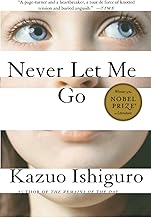
Never Let Me Go
Kazuo Ishiguro
4.2 on Amazon
21 HN comments

gyardleyonNov 7, 2015
HoffonJune 19, 2010
http://sundown.afro.illinois.edu/liesmyteachertoldme.php
Worthy read.
rthomas6onOct 13, 2014
SlyShyonJune 6, 2009
mirimironDec 7, 2015
cmiles74onApr 9, 2015
http://en.wikipedia.org/wiki/Lies_My_Teacher_Told_Me
dfconJuly 3, 2013
stevenwooonDec 31, 2018
stevenwooonSep 11, 2018
guohuangonSep 23, 2017
http://toptalkedbooks.com/books/aRnlEw/Lies-My-Teacher-Told-...
http://toptalkedbooks.com/books/_5tcQA/Lies-My-Teacher-Told-...
rayineronOct 21, 2012
unaloneonFeb 19, 2009
As the book Lies My Teacher Told Me elegantly shows, many history books that have existed for decades are thoroughly incorrect and yet are still used by teachers. Length of use can be a good sign, but it isn't necessarily. "the book has been used in writing classes (and has been constantly in print) for 33 years so I think the criticism that there's "isn't much content" is unfounded" is an ad hominem argument.
If you're going to tear him apart, do it. We won't mind. That always leads to good discussion. But don't say you could and then don't.
chimeracoderonNov 27, 2012
It shows that people are complicated and multifaceted. While we have a tendency to either laud or vilify figures (with nothing in between), in reality, historical figures can be both "good" and "bad" in different aspects of their lives... just like the rest of us.
My favorite example of this is Helen Keller[1]. Almost nobody these days knows anything about Helen Keller beyond the age of 18 - they know that learned to communicate despite being deaf and blind, but the nearly 70 years of her life after that are almost buried in history.
Which is a shame, because Helen Keller would have been a notable figure in her own right even if it weren't for her disability[2].
But because she was a member of the official Socialist party, we can't use her story as an inspirational lesson and mention that she held political beliefs that we may or may not agree with. Instead have to make a judgement call as to whether her "good" or her "bad[3]" side is more important to teach, and then forget about the rest.
Worse, this principle is applied in reverse to dehumanize people whom history has classified as villains. The result is that our history is filled with monochromatic caricatures, and we forget that, were we to see the complete picture, our modern-day "villains" may not look so different (for better or for worse!)
[1] I believe Loewen talks about this in his excellent book Lies My Teacher Told Me (http://en.wikipedia.org/wiki/Lies_My_Teacher_Told_Me)
[2] http://en.wikipedia.org/wiki/Helen_Keller#Political_activiti...
[2] Naturally, this presumes that you either disagree with socialist politics or think that history lessons should be politically neutral, which is the predominant belief in the USA.
stevenwooonOct 2, 2017
https://en.wikipedia.org/wiki/Lies_My_Teacher_Told_Me
agrippanuxonMay 12, 2020
mstocktononNov 13, 2013
- Currency Wars, James Rickards
- The Shock Doctrine, Naomi Klein
- What Technology Wants, Kevin Kelly
- The Art Of Happiness, Dalai Lama
- Lies My Teacher Told Me, James Loewen
- The Four Agreements, Miguel Ruiz
- Man's Search For Meaning, Viktor Frankl
- Understanding Power, Noam Chomsky
- The New Jim Crow, Michelle Alexander
- Good To Great, Jim Collins
- Abundance, Peter Diamandis
- The Mystery Of Capital, Hernando De Soto
- Pathologies Of Power, Paul Farmer
- Metaphors We Live By, George Lakoff
- Seeing Like A State, James Scott
- Ishmael, Daniel Quinn
- Surely You're Joking Mr. Feynman, Richard Feynman
- Beyond Fear, Bruce Schneier
- The Omnivore's Dilemma, Michael Pollan
- The Birth Of Plenty, William Bernstein
scrapcodeonNov 8, 2014
I recently read "Lies My Teacher Told Me" by J. Loewen [1], and it hits on just this, being the "heroification" of American leaders. I wouldn't doubt that this is what was the popular teaching in K-12 US.
[1] http://www.amazon.com/Lies-My-Teacher-Told-Everything/dp/074...
ComputerGuruonNov 7, 2015
Edit: Loewen makes no claim that his book is by any means a history book and outright states that he does not intend to cover everything, but I personally feel that the issues he does cover are treated considerably more fairly, even if he makes no secret of which side of history he comes down on. He also feels like he has less of an axe to grind with the United States as a country and government as compared to Zinn, coming across as being more against certain persons or policies that have been (in his opinion) incorrectly hero-worshipped or whitewashed by traditional history books.
lev99onOct 4, 2018
A summary of the book is that history textbooks have a tendency to avoid showing anything negative done by great American historical figures because they are held up as heroes for people in imitate. There is a narrative of constant progress that is told in the textbooks that does not match with actual history. History textbooks avoid talking about class struggles altogether, because if they did they would be labeled as Marxist. There is a general avoidance of discussing immoral foreign policy. The book backs up these claims by citing many popular textbooks and how they cover, or don't cover, historical events.
(The following summary of the book is my own understanding of the book's opinions and not necessarily my own. I haven't studied history enough to hold my own opinion.)
mechanical_fishonJuly 3, 2013
Includes not only an intro to labor history, but also to civil rights history, and American Indian war-of-extermination history, and of course the charming US imperial history of the 20th century. (Not that any other country's imperial history is much prettier.)
alargeonFeb 6, 2019
It made me understand just how much of what I was raised believing about the history of the US was just plain mythology. It also explained why I always hated US History in school...
npsimonsonSep 17, 2012
I'm no historian, but the general gist I got is that with the shift from bespoke to industrial society came a regimenting of schedule. Could have sworn I read about this somewhere ("Peopleware"? "Lies my Teacher Told Me"?), and maybe even caught a synopsis on a book dedicated to the topic, but titles escape me right now. Might be worth looking into.
mechanical_fishonOct 25, 2007
"Students did the work on time, writing real definitions to the first two and last two terms, but for the thirty or forty in the middle they free-associated whatever nonsense they wanted. 'Hawley-Smoot Tariff: I have no idea, Mr. De Moulin,' might be one entry. Or 'Blue Eagle: FDR's pet bird who got very sad when he died.' Educational theorists call such acts "day-to-day resistance" -- a phrase that comes from theorizing about slavery...
"Of course, fooling the teacher is of little consequence. Quite possibly my sister's teacher even knew of the ruse and joked about it with his colleagues, the way masters chuckled that their slaves were so stupid they had to be told every evening to bring in the hoes or they would leave them out in the night dew."
So, no, you're not the only adult who remembers what school was like.
And school is worse today -- students have more restrictions, more rote testing, and less academic freedom than ever. No wonder they feel and act like imprisoned, rebellious slaves.
bgrohmanonOct 1, 2012
http://www.amazon.com/Lies-My-Teacher-Told-Everything/dp/074...
2. Clojure Programming, by Chas Emerick
http://www.amazon.com/Clojure-Programming-Chas-Emerick/dp/14...
3. Zorba the Greek, by Nikos Kazantzakis
http://www.amazon.com/Zorba-Greek-Nikos-Kazantzakis/dp/06848...