
Lolita
Vladimir Nabokov
4.3 on Amazon
40 HN comments

Heart of Darkness
Joseph Conrad
4.6 on Amazon
37 HN comments

Catch-22
Joseph Heller, Jay O. Sanders, et al.
4.4 on Amazon
37 HN comments

The Sun Also Rises: The Hemingway Library Edition
Ernest Hemingway
4.3 on Amazon
36 HN comments

The Odyssey
Homer , Robert Fagles, et al.
4.6 on Amazon
35 HN comments

On the Road
Jack Kerouac
4.3 on Amazon
33 HN comments

The Stranger
Albert Camus and Matthew Ward
4.6 on Amazon
32 HN comments

Ishmael:A Novel
Daniel Quinn
4.7 on Amazon
30 HN comments

American Gods: A Novel
Neil Gaiman
4.8 on Amazon
30 HN comments

Exhalation
Ted Chiang
4.6 on Amazon
24 HN comments

Mere Christianity
C. S. Lewis and Kathleen Norris
4.8 on Amazon
24 HN comments

The Remains of the Day
Kazuo Ishiguro
4.5 on Amazon
22 HN comments
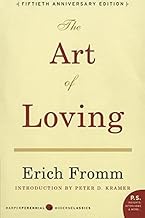
The Art of Loving
Erich Fromm
4.6 on Amazon
22 HN comments

World War Z: An Oral History of the Zombie War
Max Brooks
4.4 on Amazon
20 HN comments

The Stand
Stephen King, Grover Gardner, et al.
4.7 on Amazon
19 HN comments

rbliononOct 6, 2010
Anyone read Ishmael by Daniel Quinn?
hokumguruonApr 24, 2021
rwbtonMar 29, 2020
js2onMar 12, 2012
For an intersting philosphical treatment of hunter gatherers vs agricultural societies, see Ishmael by Daniel Quinn.
MaroonMar 29, 2020
iamjdgonFeb 6, 2019
cannonedhamsteronJuly 2, 2019
How to Win Friends and Influence People. - Dale Carnegie
Influence - Robert Cialdini
Books on understanding how to push through adversity
The Obstacle Is The Way - Ryan Holiday
Man's Search For Meaning - Victor Frankly
Books on process improvement
The Phoenix Project
The Four Hour Work Week - Tim Ferriss (ignore the outsourcing bit, listen to his podcast)
Books on breaking out of your thought bubble.
Outliers - Malcolm Gladwell
Ishmael - David Quinn
Books for understanding how sales works
Ultimate Sales Machine - Chet Holmes
Negotiate As If Your Life Depended on It - Chris Voss
Any of these books are great starts. If the leadership big bites you there's way more I can suggest. Most of these are a mix of classics and new stuff. I've read them all and they want have their own style and provide their own insight. The trick is to find out what parts work with how you do and incorporate them into your flow. The learning process never ends.
dantleonOct 3, 2010
Explains an ethical viewpoint in a very clear style. Changed the way I think about human progress.
xemokaonJuly 30, 2014
I'll also say Ishmael by Daniel Quinn and The Story of B are two of my favourite books.
voisinonMay 12, 2020
Just a short conversation between a man and an ape that explains the unsustainable path our society has taken.
mslateonAug 3, 2010
xkgtonMay 11, 2018
kryogen1conJuly 23, 2018
The funny thing about that argument is that chimpanzees, and all other creatures, exist in some kind of hierarchy, usually involving sex and power. His premise is simply wrong.
For a more convincing argument along these lines, see Ishmael by Daniel Quinn.
https://en.m.wikipedia.org/wiki/Ishmael_%28novel%29?wprov=sf...
It posits that, amongst other things, agriculture (food supply) is allowing us to violate laws of nature by overextending population beyond what is sustainable. Of course, you can't violate a scientific law, so the metaphor used in the book is akin to a plane careening towards the ground and everyone claiming they took off and flew so there can be no problem now.
ShorelonJuly 30, 2014
I think you will like it. It paints Buddhism and Stoicism in a very pragmatic light.
I second the Discworld recomendation. The series is fantastic. Read everything Pratchett has written, it is worth it.
Also: Ishmael by Daniel Quinn: the only book to truly explain the genesis scripture.
The prophet by Khalil Gibran: One of the most beautiful books I've read.
And please ignore Paulo Coelho books. Paulo Coelho is to Richard Bach what Dan Brown is to Humberto Eco.
voisinonJuly 16, 2020
voisinonDec 16, 2019
codeulikeonOct 18, 2017
nkrisconFeb 6, 2019
After I read it, I felt like I could see the world for what it really is: just a bunch of fallible humans all pretending they knew The Way Things Should Be. Popes, CEOs, tech gurus, presidents, the lot of them all desperately clinging to their beliefs lest their followers abandon them.
That book made me realize that all the truths everyone "just knows" and takes for granted aren't necessarily truths. They're beliefs, or myths. Even so, there isn't anything necessarily wrong with that: a culture or civilization needs beliefs or myths to function, but what those beliefs are can determine the ultimate fate of that civilization and whether it's sustainable.
What I really took away from it is that I no longer really believe anything. Or perhaps more accurately, I recognize when something I hold true is actually a belief and not truth, and am willing to question it or understand that I continue to hold it despite any supporting evidence. I learned that beliefs are choices people make, for reasons their own.
I was always an atheist, but I realized religions are just more beliefs like any other belief people hold as true.
I learned that some beliefs can be beneficial ("If I'm good to others, others will be good to me") and others destructive ("Humans are the pinnacle of evolution"). Ideas don't need to be true to be helpful (which is why the relentless drive in tech communities, often, for the objective truth or a logical ordering and categorization for everything rubs me the wrong way).
https://en.wikipedia.org/wiki/Ishmael_(novel)
vector_spacesonMar 29, 2020
This book changed my life. I read this book when I was maybe 17? And read it again last year, a decade and a half later.
The most powerful lesson I learned here is what anthropologists call cultural relativism. This book also taught me that everyone is under the influence of Mother Culture and her stories. I think internalizing this can help a lot with understanding other people, building self awareness, understanding politics in general, and also history in general.
There's a narrative here about ecology and generally making the world a less shitty place which is nice too, but not the primary value-add IMO (although it's unique in proposing cultural transformation as the solution).
Nevada by Imogen Binnie was another. I read it when I was working through questions about my gender. It's dark, funny, beautiful, and brutally candid account of the (a) trans experience.
Ursula LeGuin's Earthsea series follows these closely.
amh1619onMar 29, 2020
js2onJuly 5, 2016
https://en.wikipedia.org/wiki/Ishmael_(novel)
voisinonDec 28, 2019
habosaonMar 6, 2017
There are many other books that changed the way I think about literature, but I wouldn't say they affected my worldview.
mattyghonJuly 23, 2018
wpq0onJune 29, 2019
“You may compete to the full extent of your capabilities, but you may not hunt down your competitors or destroy their food or deny them access to food. In other words, you may compete but you may not wage war.”
We are waging a war on our brothers and sisters. Our collective humanity deteriorate for each and every soul that we trample upon for the sake of economic progress.
artostonOct 12, 2009
xemokaonMar 6, 2017
His thoughts on religion and interpretation of religion as propaganda and how we've framed our taker society very much influenced my young mind.
- 1491 and 1493 by Charles C. Mann
The way we look at the new world and how vastly different standard teachings and what actually happened are.
- A Guide to the Good Life by William Irvine
Put to words what I already mostly practise, it identified my issues I had with buddhism.
- A Dictators Handbook by Bruce Bueno de Mesquita
An interesting flip on politics, it made me stop worrying so much about the here-and-now of it, and quelled my anger with the (further?) realisation that it is a game. If we want to fix what's happening we need to fix the rules, not the players.
KGIIIonOct 18, 2017
I put an email address in each one, along with a quick note. I got exactly one response.
I left copies of:
Ishmael;
Another Roadside Attraction;
Zen and the Art of Motorcycle Maintanence;
Hitchhiker's Guide to the Galaxy;
Battle Cry
(the formatting kinda sucks)
A dozen copies of each, except Ishmael which I bought the half dozen I found at a bookstore along the way and added those to my random seeding of books.
I hope they were placed in the right places and at the right times, but I only got one reply so maybe not.
andrewceonMar 16, 2011
"Zen and the Art of Motorcycle Maintenance" had a similar effect, though with the Classicist/Romanticist split more than any other part of the book. Also: "Itty-bitty rules for itty-bitty people" made quite a few things make sense.
ibzonJuly 30, 2014
(from Wikipedia) Ishmael is a 1992 philosophical novel by Daniel Quinn. It examines the mythological thinking at the heart of modern civilization, its effect on ethics, and how this relates to sustainability and societal collapse on the global scale.
https://en.wikipedia.org/wiki/Ishmael_%28novel%29