
Lolita
Vladimir Nabokov
4.3 on Amazon
40 HN comments

Heart of Darkness
Joseph Conrad
4.6 on Amazon
37 HN comments

Catch-22
Joseph Heller, Jay O. Sanders, et al.
4.4 on Amazon
37 HN comments

The Sun Also Rises: The Hemingway Library Edition
Ernest Hemingway
4.3 on Amazon
36 HN comments

The Odyssey
Homer , Robert Fagles, et al.
4.6 on Amazon
35 HN comments

On the Road
Jack Kerouac
4.3 on Amazon
33 HN comments

The Stranger
Albert Camus and Matthew Ward
4.6 on Amazon
32 HN comments

Ishmael:A Novel
Daniel Quinn
4.7 on Amazon
30 HN comments

American Gods: A Novel
Neil Gaiman
4.8 on Amazon
30 HN comments

Exhalation
Ted Chiang
4.6 on Amazon
24 HN comments

Mere Christianity
C. S. Lewis and Kathleen Norris
4.8 on Amazon
24 HN comments

The Remains of the Day
Kazuo Ishiguro
4.5 on Amazon
22 HN comments
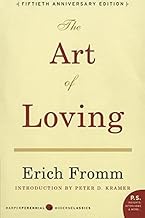
The Art of Loving
Erich Fromm
4.6 on Amazon
22 HN comments

World War Z: An Oral History of the Zombie War
Max Brooks
4.4 on Amazon
20 HN comments

The Stand
Stephen King, Grover Gardner, et al.
4.7 on Amazon
19 HN comments

mhbonApr 4, 2021
That criticism is pretty applicable to The Sun Also Rises. Two great sentences and a lot of setting description.
rjkennedy98onMar 29, 2020
lou1306onDec 12, 2018
marnettonMar 5, 2018
marnettonFeb 11, 2021
wpietrionJune 17, 2020
devguttonOct 3, 2012
samizdisonApr 15, 2020
Two ways. Gradually, then suddenly.
― Ernest Hemingway, The Sun Also Rises
gjvconOct 14, 2014
haniefonApr 24, 2015
- “How did you go bankrupt?” Bill asked.
- “Two ways,” Mike said. “Gradually and then suddenly.”
robertkonNov 4, 2010
The Sun Also Rises - Ernest Hemingway
Chess Openings for Black, Explained
nullandnullonMay 16, 2013
The Road.
Daily Rituals: How Artists Work.
How to Read a Modern Painting: Lessons from the Modern Masters.
The Sun Also Rises.
The Wind Up Bird Chronicles.
Reamde: A Novel.
1984.
pewallinonFeb 14, 2014
tmalyonDec 23, 2015
Hooked How to Build Habit-Forming Products - Nir Eyal ( great book very insightful )
The Power of Habit - Charles Duhigg ( interesting topic, long book )
Bandit Algorithms - John White ( great book, very short and easy to get through )
Ask - Ryan Levesque ( interesting ideas on sales funnels for websites )
Predictable Revenue - Aaron Ross ( so so, I liked some of the sales ideas but I see them used too often now )
Sherlock Holmes Adventures - Mike Ashley ( good book if you like the original and want some fresh material )
jtbigwooonFeb 4, 2011
We may be getting off the query hint topic, but normals can use SQL Server as you've described. They can write queries and get data out, they just can't expect those queries to perform optimally without expertise.
In normal language, you and I have the freedom to convey our thoughts a billion different ways. But only one guy wrote The Sun Also Rises (for example.) Hemingway found the right way to write it.
briandearonAug 6, 2012
To those that lack that ability, I'm sure "Hills like White Elephants" is a story about a train station and "The Sun Also Rises" is a story about drinking.
The best writers know when to shut the heck up and let their stories resonate beyond the words on the page.
jasonkesteronJuly 23, 2014
Utilized in one of the more memorable exchanges in The Sun Also Rises:
"Let us rejoice in our blessings. Let us utilize the fowls of the air. Let us utilize the product of the vine. Will you utilize a little, brother?"
... and so on for nearly ten pages, utilizing wine, pubs, etc.
http://books.google.co.uk/books?id=fAcAd5gFdB0C&lpg=PP1&dq=h...
I bet if you apply this tool to more of his writing, you'd find it neutered it completely, removing much of the magic that makes it so great.
trophycaseonMar 5, 2018
"They became intimate and friendly by imperceptible degrees, and then by leaps."
Which reads very similar to the Hemmingway passage. Maybe he stole it ;)
pprbckwrtronApr 26, 2016
Flowers for Algernon (Daniel Keyes)
The Effect of Gamma Rays on Man-in-the-Moon Marigolds (Paul Zindel)
The Things They Carried (Tim O' Brien)
This Side of Paradise (F. Scott Fitzgerald)
Something Wicked This Way Comes (Ray Bradbury)
Essentially a children's sci-fi novel, but it doesn't read that way.
A Moveable Feast (Ernest Hemingway)
My personal favorite (along with his short stories, which I highly recommend), but if it's your first time reading Hemingway, might be better to go with The Sun Also Rises.Revolutionary Road (Richard Yates)
On the Road (Jack Kerouac)
*One of my personal favorites, but most people either love or hate it, so maybe save this towards the end.
On my own reading list:
Speedboat (Renata Adler)
Money (Martin Amis)
Love in the Time of Cholera (Gabriel Garcia Marquez)
KylekrameronNov 24, 2011
richeyryanonJan 26, 2017
lkrubneronApr 20, 2015
Everyone writes garbage, all the time, including the greatest writers. Indeed, when you do much serious literary criticism, one of the first things you learn is the (perhaps surprising) extent to which great writers can write terrible junk in their rough drafts. Sometimes terrible passages almost make it into print, as, for instance, the first chapter of Hemmingway's book "The Sun Also Rises", which had already been sent to the printing plant when Hemmingway, on advice from Scott Fitzgerald, sent a telegram asking that the first chapter be cut. You can find that cut chapter online, and everyone whose ever read it agrees that it is terrible -- cutting it was a very good idea.
Likewise, there are some famous cuts from Tolkien that would have been awful if they were included.
If the author decides to cut a passage, the author is saying "This isn't really true for this story, this is garbage." You would be unwise to read deep meaning into passages that get cut.
bshimminonFeb 28, 2016
Whenever I have the misfortune to visit a shopping centre, I always make an effort to quote Waugh: "All that succession and repetition of massed humanity... Those vile bodies..."
cs702onJuly 14, 2021
> "How did you go bankrupt?" Bill asked.
> "Two ways," Mike said. “Gradually and then suddenly."
In other words, at all times, Mike's march to bankruptcy was always obvious, but somehow he couldn't see it, or do anything about it, until it was too late!
If you read accounts about inflation in the mid to late 1970's, you'll see that by the time inflation started getting out of control, it was too late to prevent it. Inflation couldn't be brought under control until Paul Volcker aggressively raised interest rates, which was very painful for a lot of businesses and a lot of people. 10-year treasuries hit 16%/year. Mortgage rates hit 20%/year. Valuations for all kind of assets hit rock bottom.
It's not too hard to imagine the following Q&A a few years from now in some congressional hearing:
> Q: "How did inflation get so out of control?"
> A: "Two ways. Gradually and then suddenly."
lisa_hendersononFeb 10, 2015
ghiculescuonJune 7, 2020
I re-read The Sun Also Rises[1] yesterday. You could change the names and it'd be the story of plenty of people I know today. History repeats itself.
[1] https://en.wikipedia.org/wiki/The_Sun_Also_Rises - if you haven't read it, it's the best book.
staycoolboyonJune 19, 2020
That's really funny.
On the one hand, I feel a satisfying connectedness when I visit a real-life place mentioned in a book: I traveled the Spanish countryside after reading "The Sun Also Rises", and got lost in the countryside and drank red wine on the hills. I also visited the killing fields in Cambodia after reading "The Killing Fields" and "Swimming to Cambodia". It was fucking terrifying that this happened in my lifetime.
On the other hand, I can see how stressful this is for locals, like both in Alaska and Spain who aren't asking for the influx. But at least in Cambodia, it is an important historical legacy and it brings revenue.
I've come to the conclusion for myself that I don't want to bother the locals just for my own satisfaction unless the target destination has been built with concern and sensitivity, and not for exploitation. Even the latter case is still subjective: are the streets of Paris' tourist-traps exploitative and annoying? What about the shops around Giza's pyramids? Both locations seemed to be unhappy about the tourism. I spoke with a shop owner in Panama and he said the locals love/hate tourists: the dollars are important, but the psychological impact of having their homes be fishbowls is not insignificant.
samizdisonJuly 24, 2021
“How did you go bankrupt?” Bill asked.
“Two ways,” Mike said. “Gradually and then suddenly.”
- From The Sun Also Rises by Ernest Hemingway.
So, I am not encouraged by trends - populism, protectionism, increasing divide between haves and have-nots, climate problems, resource competition (such as for water), and suchlike - but I would not expect a tipping point for a while.
I am not in a position to predict anything, I lack the expertise/data, and my record for, say, trying to predict markets (this property boom can't last, this stock-price boom can't last, etc ad nauseam) is abysmal.
That being said, I can't imagine that 50 to 100 years out that push will not have come to shove and societal collapse will, at the very least, have pretty much ended aspirational notions of or for a global society progressing towards better and better outcomes for all.
The good news: I've always been wrong before :-)
muhfuhkuhonMar 1, 2011
Even John Keats, the "poster boy" for poetic works of unending beauty and pure inspiration, quit his job as a surgeon-in-training to become a full-time published-and-paid poet. He could've easily worked his day job as a surgeon and moonlighted as a for-free poet by night. His primary goal was to be a poet, and he found the only way to do so was by making it his career.
Even Vincent Van Gogh, the more modern keeper of raw artistic expression, pined for more people to buy his work, not the least of reasons being to fend off abject poverty, but also as a validation of the style he admittedly created. He was resigned in his later years to live off his brother as he painted prodigiously, but by that point he was in the throes of psychosis. Is that what you meant by "art for art's sake"?
It's surely a romantic notion that artists draw forth passionate forms of expression from fending off psychological defect, hungry bellies, and harsh surroundings. But the truth is, every one of those artists to a person wanted to get paid doing what they do. Perhaps the money is a validation, or incidental being a published or culturally accepted artist, or simply a means to an end. Doesn't matter a whit. They want to do what they want to do full-time.
In other words, "Shakespeare got to get paid, son"[1]
[1] http://i.imgur.com/cyIGF.jpg
kjdal2001onOct 6, 2016
transitorykrisonDec 22, 2016
Norwegian Wood - Haruki Murakami (I love Murakami’s novels, recommend starting with Hard Boiled Wonderland though)
Hear the Wind Sing and Pinball - Haruki Murakami
The Maltese Falcon - Dashiell Hammet (Surprising just how much San Francisco is in it)
The Postman Always Rings Twice - James Cain
Seveneves - Neal Stephenson (recommended)
Pattern Recognition - William Gibson
The Sun Also Rises - Hemingway (recommended, refreshing language)
Non-fiction:
Running Lean - Ash Muraya
Lean Customer Development - Alvarez
Talking to Humans - Giff Constable
Hooked - Nir Eyal (probably not need the book to get the thesis)
Sprint - Jake Knapp
Juno Beach - Mark Zuehlke
Anti-Education - Nietzsche
ianaionSep 21, 2018
My working hypothesis is our brains are always learning - literally everything. We learn our concept of time from our experience with it. We learn our concept of a relationship with another person from our experience with them. If someone comes into our life easily - relative to other relationships - our brain associates them with less value. It’s also horrible logic.
Edit- as for whether someone likes you: people accept, overlook, and tolerate more aberrations from normal/good treatment from people they value or like. If they’ll accept little of your aberrations then they’re unlikely to ever like you - run for the hills. That’s one of my tricks for likeness.
tharris0101onDec 14, 2012
I've heard this story many times over the years and was always found it amusing but was skeptical that it did HST any good. I mean, what use is it to blindly just copy something letter by letter?
I did Nanowrimo on a whim this year and it was a lot of fun (I doubt I'm actually any good at it, though). In doing it I found myself going to Gatsby and a Hemingway book (The Sun Also Rises) for examples of clear, direct prose. I thought back to this Thompson anecdote and thought to myself that if I ever wanted to really pursue writing, a straight copy of one of those books would help my prose ten fold.
So I agree with this article. Type out the code you're borrowing from, don't copy and paste. Also, tchlock23 is right in that you also need to start some small projects from scratch and suffer through them with minimal help.
dmixonOct 3, 2010
When Hemingway started out, he worked for the Toronto Star (another Canadian newspaper). He wrote his first novel during this time: The Sun Also Rises, about expatriates living in Paris.
Hunter decided to apply to a Canadian newspaper after admittingly not being familiar with it. Then not long after he wrote his first novel - The Rum Diary - which was heavily inspired by Hemingway's first, about expatriates living in Puerto Rico.
lkrubneronFeb 16, 2014
In conceptual fields, such as math and physics, the big breakthroughs happen young. Werner Heisenberg was 27 when he came up with the Uncertainty Principle, and Einstein was 26 when he discovered relativity.
In fields where progress is primarily empirical, such as biology, the big breakthroughs tend to happen later. Alexander Fleming was 42 when he discovered penicillin and Jonas Salk was 40 when he invented the vaccine for polio.
This distinction can be extended to artists. To write a great empirical novel, one rich in observed life experience, one must live a long time, and therefore Tolstoy was 41 when he wrote War and Peace. But to write a novel where one demonstrates new techniques for grammar and structure and pacing (a novel noteworthy for conceptual innovation) then one will be young, and therefore Hemmingway was only 26 when he wrote The Sun Also Rises.
cabbeeronDec 26, 2013
Invisible Man by Ralph Ellison
Slaughterhouse-5 by Kurt Vonnegut
1984 by George Orwell
To Kill a Mockingbird by Harper Lee
The Sun Also Rises by Ernest Hemingway
An American Tragedy by Theodore Dreiser
Midnight’s Children by Salman Rushdie
My Antonia by Willa Cather (1918)
On the Road by Jack Kerouac
The Heart is A Lonely Hunter by Carson Mccullers
The Tropic of Cancer by Henry Miller (1934)
Their Eyes Were Watching God by Zora Neale Hurston
To the Lighthouse by Virginia Woolf
Ulysses by James Joyce