
Lolita
Vladimir Nabokov
4.3 on Amazon
40 HN comments

Heart of Darkness
Joseph Conrad
4.6 on Amazon
37 HN comments

Catch-22
Joseph Heller, Jay O. Sanders, et al.
4.4 on Amazon
37 HN comments

The Sun Also Rises: The Hemingway Library Edition
Ernest Hemingway
4.3 on Amazon
36 HN comments

The Odyssey
Homer , Robert Fagles, et al.
4.6 on Amazon
35 HN comments

On the Road
Jack Kerouac
4.3 on Amazon
33 HN comments

The Stranger
Albert Camus and Matthew Ward
4.6 on Amazon
32 HN comments

Ishmael:A Novel
Daniel Quinn
4.7 on Amazon
30 HN comments

American Gods: A Novel
Neil Gaiman
4.8 on Amazon
30 HN comments

Exhalation
Ted Chiang
4.6 on Amazon
24 HN comments

Mere Christianity
C. S. Lewis and Kathleen Norris
4.8 on Amazon
24 HN comments

The Remains of the Day
Kazuo Ishiguro
4.5 on Amazon
22 HN comments
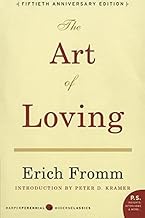
The Art of Loving
Erich Fromm
4.6 on Amazon
22 HN comments

World War Z: An Oral History of the Zombie War
Max Brooks
4.4 on Amazon
20 HN comments

The Stand
Stephen King, Grover Gardner, et al.
4.7 on Amazon
19 HN comments

nairozonDec 31, 2020
- Lolita by Nabokov, delightfully written and disturbing
- the Foundation series by Asimov, a classic. Great plot
charlyslonApr 26, 2018
3. Lolita
2. Catcher in the rye
1. Anne Frank diary
omarchowdhuryonDec 22, 2008
The Great Gatsby by F. Scott Fitzgerald
One Flew Over The Cuckoo's Nest by Ken Kesey
Nonfiction:
Market Wizards: Interviews with Top Traders by Jack D. Schwager (1993)
Guns, Germs, and Steel by Jared Diamond (history)
watwutonJan 23, 2020
Also, see Lolita as a popular book.
violetgardenonMar 30, 2020
fastballonSep 18, 2019
It was written by a non-native speaker in English. Thinking a non-native speaker can't write great English novels is the ignorant view, in my opinion. Is it difficult? Of course it is. But all writing is difficult.
ulisesrmzrocheonMar 3, 2021
Try reading Lolita by Nabokov.
iron_ballonJan 1, 2010
systemvoltageonMar 20, 2021
forlornonDec 23, 2018
Other than that Nabokov's Lolita is just celestial. And it's not only about the wording which is beyond beauty. Sometimes I caught myself thinking that this book reads me not the other way around. It's very precise, very unabashed, very intimate. Sometimes it looks surprisingly like your own reflection. Can't recommend enough.
ZababaonApr 28, 2021
hristovonNov 11, 2010
agentargoonAug 2, 2010
Downtown Owl (novel)
Sex Drugs and Cocoa Puffs (essays on pop culture)
Eating the Dinosaur (more essays)
Other Novels:
Lolita - Nabokov
White Noise - Delillo
SolaceQuantumonJan 10, 2019
jlconNov 4, 2008
I'm reading Wise Blood by Flannery O'Connor, because O'Connor is wicked and funny. Favorite book? As others have pointed out, this is a ridiculous question -- my favorite kind! Some books I love: Lolita, As I Lay Dying, The Ghost Writer, Goodbye, Columbus, Blood Meridian, Anna Karenina, Where I'm Calling From, Huck Finn, Dubliners and on and on. I read mostly literary novels, but I read fairly widely -- genre stuff (skiffy, crime), history, philosophy, pop science, whatever's good. I average around 1 book per week, but I read in jags and sometimes go a couple of weeks without reading anything but blogs and news.
I'm sure there are any number of studies that will show the benefit of reading, but I much prefer to classify books with whiskey and cigarettes. How do you measure the utility of whiskey and cigarettes? I like the Romantic idea that books are bad for you. You know, the kind of thing that destroyed Emma Bovary and robbed Señor Quixote of his sanity. Maybe I just need to manufacture a vice. I don't like cigarettes, and a beer (and a book) after the kids are in bed is about all I can handle these days.
iamelgringoonFeb 14, 2010
The book is written from the perspective of a pedofile lusting after a young girl. Stanley Kubrik's film of the movie in 1962 won an academy award. There was an immense ammount of controversy surround the movie and the book, and they still are. Art or obscenity? We'll be having this discussion for years to come.
reddogonMar 30, 2020
Three books that I haven't seen listed, but were impactful on my life:
Vladimir Nabokov, Lolita -- Incredible writing, maybe the best ever. And english was Nabokov's second language. Don't miss this just because of the creepy subject matter or because you saw one of the movies. This is an incredible read and one of the English languages greatest books.
Cormac McCarthy, All the Pretty Horses -- I initially put off reading this by McCarthy's singular use of punctuation and his long, spare sentences. But I picked up the audiobook from Books on Tape (pre Audible) and fell into it. When read by a talented narrator its like poetry (and I mean that in a good way). When I finished it I immediatly rewound the tapes and listened to it again.
Rudy Rucker, White Light -- I read this 38 years ago and still think of it often. Think Alice in Wonderland written by William Burroughs and Kurt Godel. Giant cockroaches, absolute infinite, the devil harvesting souls, Albert Einstein, the Banach–Tarski paradox: its a wild ride. Hard to find but available on Kindle.
blabla_blubluonDec 19, 2016
* Lolita by Vladmir Nabakov ; an absolute master class.
* The Harry Potter series by JK Rowling ; one for the memories!
Non Fiction :
* Letters of Note by Shawn Usher; a compendium of wonderful letters from the past. Highly recommended. https://www.amazon.com/Letters-Note-Collection-Correspondenc...
* Deep work by Cal Newport ; very applicable to the modern day distracted soul.
programLyriqueonJuly 16, 2016
FezzikonDec 7, 2016
His short story 'Beneficence' may be may favorite piece of writing ever. He had a knack for capturing a simple occurrence, making it moving and immersive, and wrapping up his story with a poignant conclusion that I have found in very few other authors' works.
mordechai9000onMar 20, 2021
I slogged through it the first time, and didn't particularly enjoy it. All I remember from the first reading is that HH seemed kind of icky. I was barely older than Delores was in the first half of the novel, and I didn't really understand all the implications. I probably skimmed a great deal of the book without paying attention to it. Much of the subtlety of the story and all of the brilliant writing went right over my head.
Then I happened to pick up The Fued, about the friendship and subsequent falling out between Nabakov and Edmund Wilson. It mentioned several times that Lolita was a runaway success, and it made Nabakov famous.
I thought there must be something more to Lolita than I remembered, so I picked up a copy at the library. It was a whole different book. This time, I found the story both riveting and disturbing. On the first read, I knew that what he was doing would be called abuse, but I didn't really understand how he took advantage of her trust and naivety and adolescent rebelliousness. Or how awful it is to dehumanize pre teen girls and characterize them as sexual objects called nymphets.
HH claims to know that he took something irreplaceable from her and ruined her childhood. But - and I think this is why they say he is an unreliable narrator - it's not clear if he really believes what he's saying, or if it's a calculated ploy to garner sympathy.
The writing is incredible. The story is troubling and fascinating, and stayed in my mind a long time after. RIP Delores Schiller.
Barrin92onFeb 7, 2021
A lot of Borges stories come to mind. Stanislaw Lem's work like Solaris, on moral issues surely Nabokov's Lolita or Ada or Ardor. The Master and Margarita in the Soviet Union, Le Guin's the Left Hand of Darkness with takes on sexuality way ahead of their time and so on. If I go through my list of favourite books there's a lot of those.
devchixonMar 31, 2020
"-- and I looked and looked at her, and knew as clearly as I know I am to die, that I loved her more than anything I had ever seen or imagined on earth, or hoped for anywhere else. She was only the faint violet whiff and dead leaf echo of the nymphet I had rolled myself upon with such cries in the past, an echo on the brink of a russet ravine, with a far wood under a white sky, and brown leaves choking the brook, and one last cricket in the crisp weeds ... but thank God it was not that echo alone that I worshiped (...) I insist the world know how much I loved my Lolita, this Lolita, pale and polluted, and big with another's child, but still gray-eyed, still sooty-lashed, still auburn and almond, still Carmencita, still mine;"
Freak_NLonJuly 4, 2018
I don't think people even consider it weird, as most people haven't read it. People who do read the book tend to be predisposed towards appreciating literature as an accepted vehicle for exploring ideas and thoughts that would be condemned in real life — including all kinds of murder, sex, drugs, illicit liaisons, and assorted forms of destructive behaviour.
Incidentally, it is for sale in every decent bookshop that has an English literature section; Penguin publishes it in their modern classics line.
prennertonMar 20, 2021
Why this comment? If you don't know, please check out the fantastic Conversations with Tyler podcast. And if you are looking for a very diverse, entertaining and informative podcast, try it.
Also the "Complete Review". Wow what a website! Proper 90s feel and still delivering value. If you think Lolita is one of the best books to read, you are probably having a similar taste and the reviews might work for you.
[1] https://www.complete-review.com/reviews/nabokovv/lolita1.htm
[2] https://conversationswithtyler.com/episodes/
6ak74rfyonJuly 3, 2018
Related question: do you guys have a similar system for research papers? I've tried reading them a lot but have successfully made it through only a few. At this point, I even question if the effort in getting through their drudgery is worth it.
JohnBootyonMar 23, 2021
You're presenting "great" and "pop cultural humorist" as mutually exclusive terms.
It feels fundamentally incorrect to compare him to writers producing conspicuously deeper and denser stuff.
If you judge him by standards and goals to which he never aspired then I'd agree he comes up awfully short.
Reminds me of the old days when people derided the Beatles and other rock and roll acts because they didn't meet the standards of classical music. Or when people derided e.g. Shigeru Miyamoto because video games didn't measure up to the narrative achievements seen in the best movies.
It's true: The Godfather and Super Mario Brothers are both things that appear on your television screen. Just like Hitchiker's Guide To The Galaxy and Lolita and Finnegan's Wake are all books. Not sure they're trying to be the same thing, though.
MichaelApprovedonFeb 9, 2014
pvaldesonApr 2, 2018
> or in response to some form of judicial process (subpoena, search warrant, or other court order).
So basically, this info is available and can be used against you in a trial. Is a fake sense of privacy.
The main difference between public libraries and internet is that the former have much less controversial adult or political stuff but a lot of stablished literature touch taboo and very sensitive matter. Has this people read 'Lolita', 'the Catcher in the Rye' or took a look to 'The Capital' in the past?, has borrow a Quran recently? For how many days? How many times? Any attorney could easily use pseudoscience and cheap psychology to draw a line and build a relate leading to any conclusion of their interest with this info.
erikbyeonApr 4, 2019
As for Nabokov, he had, like many other famous authors, a contentious relationship with editors.
> By “editor” I suppose you mean proofreader. Among these I have known limpid creatures of limitless tact and tenderness who would discuss with me a semicolon as if it were a point of honor—which, indeed, a point of art often is. But I have also come across a few pompous avuncular brutes who would attempt to “make suggestions” which I countered with a thunderous “stet!”
It seems his wife did a lot of editing:
> Nabokov wrote Lolita while travelling on butterfly-collection trips in the western United States that he undertook every summer. Véra acted as "secretary, typist, editor, proofreader, translator and bibliographer; his agent, business manager, legal counsel and chauffeur; his research assistant, teaching assistant and professorial understudy"; when Nabokov attempted to burn unfinished drafts of Lolita, Véra stopped him. He called her the best-humored woman he had ever known.”
What work was further done at the various publishing houses I don’t know, but the first edition, published by Olympia, was “riddled with typos,” which would indicate little additional editing was done for this edition. The typos were corrected for the American publication.
rrobukefonJuly 4, 2018
Pixiv is generally drawn but there are no examples of the other. The book Lolita is ok in europe, a bit weird but not banned. There is even
nude art of children - though it is controverial.
moabonAug 9, 2019
I am not sure the same case about "a lack of advocacy" can be made for Delany or his oeuvre.
[1] https://www.nytimes.com/2019/04/10/arts/nolde-nazi-exhibitio...
ojosilvaonMay 11, 2019
For instance, many people who are native English speakers have terrible accents (ie Texan, Scouse, Scottish, etc etc) that make it hard for other native English speakers to understand, even though they're nearly 100% "fluent English speakers". In fact this applies to many if not all languages.
As a curiosity, two of the most lyric works of literature ever written in the English language - Lolita and Heart of Darkness - were written by Vladmir Nabokov and Joseph Conrad, one Russian and the other a Polish immigrant to the US that had terrible foreign English accents.
campermanonJune 23, 2014
I need to re-read Lolita in the light of this. I know that the book mocks the supposed connections between an author's experience and his work but I've always felt the Humbert-Quilty relationship to be a deeply personal one that the author drew on from somewhere.
sonnymonMar 29, 2010
You see, Nabokov toys with his readers - he leaves puzzles throughout his books; he writes in defiance of literary criticism (part of his impetus in Pale Fire); he foreshadows with a trail of anagrams. To throw someone in media res of two of his most complex tales (perhaps only surpassed by Lolita and The Gift), might give a premature distaste for Nabokov's heady style.
What I would personally recommend for someone new to Nabokov would be any of Despair, The Real Life of Sebastian Knight, or Transparent Things.
If you like Nabokov, you may also want to try:
Rushdie, Salman - The Satanic Verses
Pynchon, Thomas - The Crying of Lot 49
Freak_NLonDec 13, 2020
Just a random couple of highly appreciated titles from my collection:
(Sci-fi, British gothic fantasy, 20th century American literature)
And it suggests The Farside (well yeah, if you want something completely on the opposite side of well-written prose), Tintin, and Shakespeare (huh?).
As for breaking any bubble I might live in: I grew up reading Tintin.
Interestingly enough it throws up Preacher as well, a comic written by Garth Ennis. Again not really breaking any bubble there: I love his works and have read Preacher, The Boys, Battlefields, and all his Punisher stories (that man is the only comic writer who truly groks Frank Castle).
harshrealityonFeb 13, 2012
What about Adrian Lyne's 1997 movie, Lolita? It has artistic merit, but arguably not as much as the novel.
What about girls' dancing and gymnastics? Should photography of those activities, even including women's international gymnastics competitions, be banned just because, viewed with an eye toward prurience, they might qualify? Certainly the activities have artistic value, but how much?
What about purely fictional depictions of minors, either in manga (see the case of Christopher Handley's manga possession) or even in fictional stories that may not be deemed to have serious literary merit?
reptationonApr 25, 2018
Nabokov's character development and psychological penetration don't hold a candle to Dostoyevsky's though.
cabbeeronDec 26, 2013
Invisible Man by Ralph Ellison
Slaughterhouse-5 by Kurt Vonnegut
1984 by George Orwell
To Kill a Mockingbird by Harper Lee
The Sun Also Rises by Ernest Hemingway
An American Tragedy by Theodore Dreiser
Midnight’s Children by Salman Rushdie
My Antonia by Willa Cather (1918)
On the Road by Jack Kerouac
The Heart is A Lonely Hunter by Carson Mccullers
The Tropic of Cancer by Henry Miller (1934)
Their Eyes Were Watching God by Zora Neale Hurston
To the Lighthouse by Virginia Woolf
Ulysses by James Joyce
marincountyonMay 25, 2015
This is supposedly the reason? When I was in school, I was not required to read any Russian Liturature. I didnt care at the time, I was working towards a business degree, with a minor in biology. My writting skills, and use of the English language was, and still is atrocious; I ended up taking most the required English, and Literature courses my last semester.
My first introduction to Russian Liturature was years later. I checked out Lolita by Valadimire Nabokov. I wanted to see what all the fuss was about. Well, after reading the book, I finally appreciated good writing. I found his writing beautiful, and easy to read. I wonder why some of his work wasn't required reading. I wish I was forced to read at least one of his books in high school, or college.(I understand why a high school english teacher wouldn't even mention Lolita. It wouldn't be worth the backlash, but his other books are appropriate?).
As to why I wasn't introduced to any Russian Liturature, I always thought it was due to the Mcarthy Era--where anything remotely related to socialism/communism was career ending? And, professors remember what their predecessors went through, and just decided it wasn't worth it. Stick with the safe stuff politically? I assumed, today, Russian Literature, at least some authors, were required reading in most American college Lit. departments? I had no idea, the students were the one's whom showed no interest in Russian literature? Are their any recent English, Lit. majors who would chime in? Just curious to see If you agree with the author?
(Valadimire Nabrakov Lolita is one of his English novels. I always thought it was translated. His first nine novels were in Russian.)