
Lolita
Vladimir Nabokov
4.3 on Amazon
40 HN comments

Heart of Darkness
Joseph Conrad
4.6 on Amazon
37 HN comments

Catch-22
Joseph Heller, Jay O. Sanders, et al.
4.4 on Amazon
37 HN comments

The Sun Also Rises: The Hemingway Library Edition
Ernest Hemingway
4.3 on Amazon
36 HN comments

The Odyssey
Homer , Robert Fagles, et al.
4.6 on Amazon
35 HN comments

On the Road
Jack Kerouac
4.3 on Amazon
33 HN comments

The Stranger
Albert Camus and Matthew Ward
4.6 on Amazon
32 HN comments

Ishmael:A Novel
Daniel Quinn
4.7 on Amazon
30 HN comments

American Gods: A Novel
Neil Gaiman
4.8 on Amazon
30 HN comments

Exhalation
Ted Chiang
4.6 on Amazon
24 HN comments

Mere Christianity
C. S. Lewis and Kathleen Norris
4.8 on Amazon
24 HN comments

The Remains of the Day
Kazuo Ishiguro
4.5 on Amazon
22 HN comments
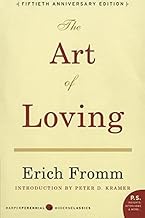
The Art of Loving
Erich Fromm
4.6 on Amazon
22 HN comments

World War Z: An Oral History of the Zombie War
Max Brooks
4.4 on Amazon
20 HN comments

The Stand
Stephen King, Grover Gardner, et al.
4.7 on Amazon
19 HN comments

foobarquxonJune 6, 2013
djb10401onDec 28, 2011
ArkyBeagleonJan 20, 2015
_gtlyonJuly 24, 2021
Brave New World, Huxley
Animal Farm, Orwell
The Moon is a Harsh Mistress, Heinlein
Zen and the Art of Motorcycle Maintenance, Persig
Cat's Cradle, Vonnegut
Catch-22, Heller
The first 3-4 books of the Foundation Series, Asimov
The Lord of the Rings, Tolkien
SkyMarshalonApr 29, 2010
Those are the only two books I've read that managed to pull off that style of satire. If anyone knows any others, I'd love to know.
jstanekonJan 20, 2015
chris11onNov 4, 2008
bilbo0sonAug 3, 2009
It is the farmer in a book called Catch-22 by Joseph Heller.
You've probably already read this book, if not, yeah, check it out!
instakillonAug 25, 2010
acjohnson55onJan 20, 2015
jackschultzonJune 9, 2020
For me:
Lonesome Dove
100 Years of Solitude
Catch-22
The Sellout (very relevant again)
East of Eden
Kafka on the Shore (and all the stories in Blind Willow, Sleeping Woman)
tcopelandonMay 28, 2015
0xdeadbeefbabeonJuly 10, 2015
dgabrielonJan 28, 2015
TichyonFeb 24, 2010
klenwellonJuly 14, 2019
Google reveals various versions and sources of the exchange. Here's mine:
Vonnegut: Can you believe this guy? He makes more money in a single day than we'll make in our entire lives. And you wrote Catch-22!
Heller: Sure, but I have something he'll never have.
Vonnegut: Yeah, Joe? What's that?
Heller: Enough.
stenonJuly 3, 2018
simonblackonMay 29, 2020
Many people can only read a book once. I like to read books that I have enjoyed many times.
Just as you eat one particular dish that you like many times, enjoying it every time, you can enjoy some books over and over for the delight they give you.
But some books you won't like and will never read again, just as some food dishes you won't have again because they were found to be unenjoyable the first time.
mslaonApr 30, 2020
[snip]
> The books remain in school libraries, but will no longer be taught.
> According to a flier from the district’s Office of Instruction, Angelou’s memoir had been challenged over its “sexually explicit material, such as the sexual abuse the author suffered as a child, and its ‘anti-white’ messaging”, while Fitzgerald’s classic novel was pulled for “language and sexual references”. Invisible Man was marked for containing “language, rape and incest”, while Catch-22 was included for its violence, “a handful of racial slurs” and the fact the characters “speak with typical ‘military men’ misogyny and racist attitudes of the time”.
Here's the full flier as a PDF:
https://go.boarddocs.com/ak/matsu/Board.nsf/files/BNQSWL743B...
ConfusiononApr 18, 2010
Completely offtopic, but...
i've never been able to finish it. The repetitiveness bored me out of my skull. It's on the stack of unfinished books with, among others, On the Road (by Kerouac) and Catch-22 (by Heller). I'd rather re-read Gormenghast (by Peake), The Plague (by Camus) or any book by Marukami.
danieltillettonJan 20, 2015
thewarrioronNov 4, 2019
Joseph Heller, Catch-22
SixSigmaonJan 20, 2015
* James Salter’s outline for Light Years
* J.K. Rowling’s spreadsheet plan for Harry Potter and the Order of the Phoenix
* Joseph Heller’s chart outline for Catch-22
* Henry Miller’s manuscript plan for Tropic of Capricorn
* William Faulkner’s outline for A Fable — written on his office walls.
* Sylvia Plath’s outline for The Bell Jar
* Norman Mailer’s character timeline for Harlot’s Ghost.
* Part of Jennifer Egan’s plan for her short story “Black Box.”
* Gay Talese’s outline for his classic profile “Frank Sinatra Has a Cold”
http://flavorwire.com/391173/famous-authors-handwritten-outl...
Personally, I use Scrivener - http://www.literatureandlatte.com/scrivener.php
doodlebuggingonOct 13, 2020
In one passage he relates the story of passing along a lane late at night on his way home or back to base and seeing a cozy cottage warmly lit beside the road. It looked homey but he didn't remember seeing it before and when he revisited it during daytime there was nothing there so he asked around and discovered that indeed there had been a cozy cottage at that location where an old lady lived. It had been destroyed by a bomb which killed the old lady and consequently, it no longer existed.
I probably butchered that tale so if anyone else read that book feel free to correct me. That book and Catch-22 were a couple of my favorites growing up. Excellent writers both of them.
desdivonJune 8, 2017
-Joseph Heller, Catch-22
jackschultzonDec 24, 2018
From this year, I read all but two of the Haruki Murakami books and all short stories. I love his writing style (great translations), and the fact that the stories are about not all the time realness. Kafka on the Shore is a great starting book. Also Norwegian Wood is another example, though this strayed away from the magical aspect I like of his.
Another from this year was The Dubliners, collection of short stories from James Joyce. I was stuck in Dublin during a snow storm this past spring, so I'm sure this lead me to like the stories more, but I swear they're amazing and I haven't found anything else like them. They're all tiny points in people's lives, and the things that happen make differences for the people or are also easy to remember and not forget. Get one with reference notes in the back too.
Besides those, Love in the Time of Cholera was another one way up on my list. Similar to One Hundred Years of Solitude, which I think I prefer slightly more, but reading both is interesting to read since Cholera was written 20 years after Solitude and we can see how the author changed over time.
Overall though, my absolute top tier books are East of Eden, Catch-22, and My Struggle (Knausgaard). 1000% read those. I like including these so if somebody reads this and likes these books as well, they can somewhat trust my other suggestions.
GHFigsonDec 22, 2008
What does it mean when freshmen are assigned things like 1984 and Brave New World, Lord of the Flies and Les Misérables for sophomores, The Catcher in the Rye for juniors, and Catch-22 for seniors?
All are great books, worth reading, and worth assigning as the object of study, but it's sad that the curriculum is so focused on shallow analysis.
wallfloweronDec 4, 2009
Original source of 'enough' quote in Sivers' essay
http://www.tompeters.com/dispatches/010754.php
hackeraccountonOct 19, 2017
Maybe it's because the logic seems to be that existence is terrible so we're doing the unborn a favor by saving them from it. Given the shortness of our time (something the author mentions) it seems like no great harm is done. And in any case wouldn't it be more fair to give the unborn the opportunity to make the choice of existence or not themselves?
buttcoinslolonMar 16, 2018
I always enjoy seeing character archetypes from Catch-22 in the flesh.
jonnathansononOct 4, 2013
Consider:
- Bukowski spent many years trying to get published, failed, developed a severe drinking problem, and took up a progression of itinerant jobs. But he gave writing another shot while lying in a hospital bed, having nearly drunk himself to death. At the time, he was working in a post office.
- Albert Einstein failed to land a prestigious academic position and took up a day job as an assistant patent examiner. He and his friends pursued scientific projects on nights and weekends.
- Harry Potter author J.K. Rowling created her famous series as a single, working mother on welfare. She worked out of train stations and coffee shops, often on the verge of homelessness.
- Actor Jack Nicholson went on over 300 auditions before landing his first significant role.
- Johnny Depp spent his days as a telemarketer, selling office supplies. He carved out nights and weekends to practice his craft and look for opportunities.
- Joseph Heller, author of Catch-22, worked at an advertising agency by day. Three hours a night, for eight years straight, he worked on his book before submitting it to a publisher.
Only the very fortunate have the ability to drop everything and pursue their creative dreams. Everyone else has to pay the bills somehow, and carve out the "right time" when and where they can.
projektironJuly 16, 2018
It's one thing to describe the experiences of soldiers returning from Vietnam, because that is valuable information. It's another to interpret it and make conclusions when there are 50 other valid explanations.
"People/men like war/aggression/risk" is honestly not a new concept, and it's seems pretty correct on the surface, especially when you cut out the whole part of your comrade slowly dying due to a stray shell. This is the glorification of war that books like Catch-22 and Slaughterhouse Five were written against.
Most incorrect claims are dangerous, and the reasons are not always all enumerable since you often can't see the problem when you think a false thing is true. I.e., if you already think women are hysterical, treating them as hysterical doesn't seem like an issue because, well, they're hysterical.
ericbonSep 19, 2007
As inklesspen mentioned, Elements of Style is a must.
Code Complete and the Mythical Man Month by Fred Brooks. Timeless coding wisdom.
For a laugh, Catch-22 by Joseph Heller, or Hitchhiker's Guide.
Body Language, Julius Fast. Kitschy but fascinating insights into body language.
Fabric of the Cosmos, Brian Greene. Brian is a fluke of nature--a physicist who can explain things realy well!
Anything by Phillip K. Dick. Sci-fi stories that make you think.
markJesonSep 30, 2019
therealdrag0onAug 27, 2019
I peaked (according to Goodreads) in 2012 when I read 75 books (including many large tomes! Godel Escher Bach, Rise and Fall of the Third Reich, Catch-22, Hyperion, Brothers Karamazov, Thinking Fast and Slow). But after all that, I felt like a hollow/vain effort. I felt like I spent TOO much time in books, time not investing in relationships or skills.
Now I read ~25 a year, and that seems like a sweet spot (though I still feel like I spend too much time on reddit/HN heh).
Anyways the OP article resonated with me. I've been taking the bus for the first time in my life this year and am wanting to start writing while on it.
fogusonOct 12, 2009
and
Catch-22 by Josepf Heller
PLenzonSep 23, 2015
See, used books made me - my local library as a kid was heavy on Nancy Drew and Hardy Boys, and decades-old travel guides, not so much on other subjects. I very distinctly remember wanting to find Catch-22 and not only was it not available from my local, it wasn't available at any library in the county.
But used book stores didn't have that problem. I found my copy of Catch-22 in the back of a Goodwill store. Tolkien came out of a Salvation Army. Scores more came from library sales and yard sales, each a quarter or a dollar at a time.