
Lolita
Vladimir Nabokov
4.3 on Amazon
40 HN comments

Heart of Darkness
Joseph Conrad
4.6 on Amazon
37 HN comments

Catch-22
Joseph Heller, Jay O. Sanders, et al.
4.4 on Amazon
37 HN comments

The Sun Also Rises: The Hemingway Library Edition
Ernest Hemingway
4.3 on Amazon
36 HN comments

The Odyssey
Homer , Robert Fagles, et al.
4.6 on Amazon
35 HN comments

On the Road
Jack Kerouac
4.3 on Amazon
33 HN comments

The Stranger
Albert Camus and Matthew Ward
4.6 on Amazon
32 HN comments

Ishmael:A Novel
Daniel Quinn
4.7 on Amazon
30 HN comments

American Gods: A Novel
Neil Gaiman
4.8 on Amazon
30 HN comments

Exhalation
Ted Chiang
4.6 on Amazon
24 HN comments

Mere Christianity
C. S. Lewis and Kathleen Norris
4.8 on Amazon
24 HN comments

The Remains of the Day
Kazuo Ishiguro
4.5 on Amazon
22 HN comments
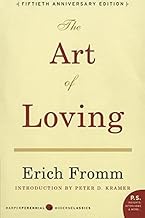
The Art of Loving
Erich Fromm
4.6 on Amazon
22 HN comments

World War Z: An Oral History of the Zombie War
Max Brooks
4.4 on Amazon
20 HN comments

The Stand
Stephen King, Grover Gardner, et al.
4.7 on Amazon
19 HN comments

SpikeDadonSep 6, 2018
dmitri1981onJuly 12, 2011
http://www.amazon.com/World-War-Oral-History-Zombie/dp/03073...
curtisonMay 4, 2018
[1] https://en.wikipedia.org/wiki/World_War_Z
[2] https://en.wikipedia.org/wiki/The_Zombie_Survival_Guide
zbleskonFeb 18, 2015
If you look at it this way, it CAN be done in fantasy. Check out Brandon Sanderson's Warbreaker (a great one-off), or the Mistborn series. (There are quite a few similarities between them.)
Or Max Brooks' World War Z was great in this way, I think. Although it's been quite a while since I read that.
(I know this is an older thread, so I hope you'll find this comment. Made a HN account for this. :D )
kjbekkelundonAug 2, 2010
If you are willing to check out an audiobook, World War Z is truly an amazing book. Absolutely the best audiobook I have heard so far.
Enjoy your weeks off!
monk_e_boyonApr 9, 2015
aweilandonAug 4, 2017
James Marsters reads the Dresden Files books and he is amazing. It really is a performance by a good actor and (IMHO) adds to the book. He does use "voices" for different characters and it works really well. Most other readers will try to do this has well. It can be hit or miss.
A really good ensemble book is World War Z by Max Brooks. The cast is incredible (Alan Alda, Martin Scorsese, Simon Pegg, and more)
colinramsayonAug 28, 2016
That said, I find Le Guin quite dull, though the characterisation is excellent.
In suspect we're in that ambiguous area in which people have different opinions but I do find it a little absurd to reference those three books in response to a comment which implicitly disses Vonnegut.
hef19898onFeb 22, 2021
The book is also the only zombie fiction that really covers, somewhat realistically, the period between case zero and the break down of society. All other shows just show the early outbreak and then jump right into the post apocalyptic anarchy.
One good historical precedent to build this kind of fiction upon would be the Black Death in Europe. Good sources, real apocalyptic pandemic without counter measures. And yet society didn't completely disintegrate. World War Z is the only work I know of that comes close.
mooseyonOct 16, 2018
I cannot deal with the guilt of the loss of megafauna. I just can't. If justice only includes humanity, then it isn't justice. I feel as if I've reached this place using sound ethical logic, and I'm culpable for what we are doing to this planet. We are bacteria in a petri dish.
bmeronAug 28, 2016
James S. A. Corey writes beautiful socio-political commentary in The Expanse series.
Max Brooks' World War Z was biting in its own special way, more (admittedly positive) social than political commentary.
Ann Leckie's Ancillary Justice shows us a world where the only pronoun is "she", and what it might mean for a ship to love her crew.
There are lots of people who write social and political commentary through the vehicle of fiction. It has kind of been one of the defining features of fiction for all of its existence, no?
> Just read more. You'll get it eventually.
This is reasonable. I get that some things can't be communicated too well, and a lot of my favourites I could recommend only in the same way.
Why didn't the article simply begin and end with those two phrases?
newfeatureokonNov 13, 2020
Why doesn’t the government actually just enforce rules? So many lockdowns, mandates and laws but so little enforcement, or the penalty is not commensurate with the risk. What’s the point?
drclauonMar 17, 2020
However, I enjoyed the movie too, and I think it's one of the best in the genre. Although, admittedly it has very little in common with the book.
dhosekonMay 7, 2020
[1] https://www.npr.org/2020/03/24/820601571/all-of-this-panic-c...
koshatnikonAug 22, 2013
dagwonFeb 12, 2021
One problem it highlights is that modern armies and military tactics are incredibly inefficient. The amount of fuel, munitions and calories they use for every kill is staggering. Also much of modern military tactics are based around putting on a massive show of force up front and hoping the enemy surrenders or retreats. That is not a problem if you only have to kill a few thousand people who's spirit to fight can be broken, and you're backed up by a fully functional logistics network. Remove the logistics network and face off against an 'army' of hunderds of thousands of enemies that will never retreat then those tactics will quickly see your fuel and munition stores depleted.
Towards the end of the book the Army has reinvented the infantry square and equipped all their soldiers with bolt action rifles to stop them wasting ammo.
sorbusonJune 26, 2011
I highly encourage you to read World War Z (written by the same guy who wrote the Zombie Survival Guide); while it doesn't directly address most of those questions, you can read between the lines to find the answers. It is, admittedly, only a type 1 Apocalypse, by the TVTropes scale, but still.
gsaurusonAug 3, 2010
Journalist/Mountaineer account of an Everest expedition gone wrong. Read it, ponder, but know that there is some controversy. Very interesting look into expedition dynamics.
"Mountains Beyond Mountains" (Kidder)
An account of Paul Farmer's work in Haiti, and later in other parts of the world. If you are interested in public health it is a great read, and may provide a fresh angle on recent Haiti <-> world politics.
"Three Cups of Tea" (Oliver, I think)
Greg Mortensen starts building schools in Pakistan / Afghanistan. Adventure ensues. There's some definite political bias here but it's worth a read.
Fun summer read: "World War Z".
Unrelated, I use Shelfari [http://www.shelfari.com/] to organize my books-to-read, if you need an organization tool.
ZeroGravitasonSep 8, 2016
The book wasn't very film-able, so the movie they made from it was quite different in approach.
I've also heard there's a non-fiction book about the "Spanish flu" outbreak that basically reads like a zombie film (e.g. one interesting tidbit, they call it the Spanish Flu because that is where the first reported cases were, but it didn't start there, the other countries just suppressed the information because they were at war)
msgonJuly 3, 2013
The novels I'm talking about are about 300 pages in paperback. The reading level is not Peanuts, but it's also not Shakespeare.
By comparison, I read the World War Z book over the course of about a week, in bits. I found it very boring and wooden though. Motivation makes a big difference.