
Lolita
Vladimir Nabokov
4.3 on Amazon
40 HN comments

Heart of Darkness
Joseph Conrad
4.6 on Amazon
37 HN comments

Catch-22
Joseph Heller, Jay O. Sanders, et al.
4.4 on Amazon
37 HN comments

The Sun Also Rises: The Hemingway Library Edition
Ernest Hemingway
4.3 on Amazon
36 HN comments

The Odyssey
Homer , Robert Fagles, et al.
4.6 on Amazon
35 HN comments

On the Road
Jack Kerouac
4.3 on Amazon
33 HN comments

The Stranger
Albert Camus and Matthew Ward
4.6 on Amazon
32 HN comments

Ishmael:A Novel
Daniel Quinn
4.7 on Amazon
30 HN comments

American Gods: A Novel
Neil Gaiman
4.8 on Amazon
30 HN comments

Exhalation
Ted Chiang
4.6 on Amazon
24 HN comments

Mere Christianity
C. S. Lewis and Kathleen Norris
4.8 on Amazon
24 HN comments

The Remains of the Day
Kazuo Ishiguro
4.5 on Amazon
22 HN comments
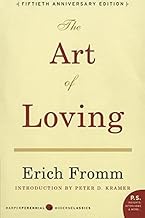
The Art of Loving
Erich Fromm
4.6 on Amazon
22 HN comments

World War Z: An Oral History of the Zombie War
Max Brooks
4.4 on Amazon
20 HN comments

The Stand
Stephen King, Grover Gardner, et al.
4.7 on Amazon
19 HN comments

yesenadamonSep 5, 2018
snet0onJuly 25, 2021
combatentropyonNov 18, 2020
combatentropyonNov 27, 2016
More Than a Carpenter by Josh McDowell
callmeedonAug 8, 2016
Traction by Weinberg & Mares
Predictable Revenue by Ross
Choose Yourself by Altucher
Learn Python the Hard Way by Shaw
Mere Christianity by Lewis
maynmanonJuly 22, 2019
2. Mere Christianity - C.S. Lewis
combatentropyonJan 4, 2020
Good books, however, are some of my favorite things: The Language Instinct by Stephen Pinker, Mere Christianity by C. S. Lewis, On Writing Well by William Zinsser.
One advantage of a book by someone who is both (a) an expert in the field, and (b) an expert at expression, is a coherent, thorough treatment of a subject, from start to finish. It's usually best to first get your hands dirty for a few weeks and then search for the best book on the subject (rather than the other way around). For example, I fiddled with JavaScript, writing little snippets, got them to kind of work. But I could not say at that time that I understood JavaScript. And had I tried to learn JavaScript by reading scraps here and there online I wonder if I would have ever developed a coherent understanding. What I did was buy the O'Reilly book, JavaScript: The Definitive Guide, by Brendan Eich, which is 500 pages, and I read it cover to cover. I was then ready to write my own framework :)
combatentropyonSep 4, 2018
natecavanaughonFeb 28, 2018
For instance, I don't believe science is the realm for meta physics, even if it can help inform it.
If you are curious as to my thinking and reasoning on it, two good books, relatively short reads, are Mere Christianity by C.S. Lewis and The Reason for God by Timothy Keller.
Tim Keller also gave a good Google Talk [0] on the book if you prefer that :)
[0] https://m.youtube.com/watch?v=Kxup3OS5ZhQ
cconceptsonDec 22, 2016
Extreme Ownership: Jocko Willink - entertaining listening in the car, perhaps no so much if you tried to read it. An impressive balance of storytelling and principles. (6/10)
Maximum City: Suketu Mehta - as someone who has lived in Mumbai for nearly five years, this book captured the pulse of the supercity as no other has. Able to describe the inherent beauty of modern India without resorting to the typical cliched western neuroses about the place. (8/10)
Seven Brief Lessons on Physics: Carlo Rovelli - Got recommended this book multiple times. Brief and succinct so Carlo must be commended for that. As a pop-science book it kind of paled in comparison to Bill Bryson's "Complete History" (6/10)
Rebels: Aris Roussinos - A raw, honest and powerful book that tells a story about many of the world's conflict zones from the perspective of someone who may get shot themselves. Refreshing and beautifully upsetting all at once. (7/10)
Mere Christianity: C.S. Lewis - A broad spectrum of thoughts about meaning and purpose that have obviously been considered for many years and then condensed in a very succinct way (8/10)
Business Adventures: John Brooks - A recommendation by Buffet and Gates, entertaining read with business principles built in (7/10)
Tools of Titans: Tim Ferriss - Obviously written for those of us who have allowed our attention spans to be destroyed by the constant sugary stimulation of the internet, Tim nails the balance of useful thoughts and observations from a broad array of guests while keeping it succinct and entertaining. (7/10)
kirseonFeb 17, 2010
I can understand where you're coming from. The majority of my friends are Catholic (well, ex-Catholics), and to hear them talk about church almost pains me. I could not believe when they said people would show up at their door demanding tithes/money, some of the requirements for attending church, etc. To be honest, hearing all about how Catholicism operates, I'd probably have been an ex-Catholic myself.
I'm a protestant Christian though, and the root of my belief has always been that we are "justified by faith" in the midst of our depraved, imperfect nature (see Romans 3:23-24 and Galatians 2:16). My faith is not a set of demands that I am obligated to perform to get into Heaven, nor does it operate out of fear of Hell and punishment. It's a faith that is rooted in a love for Christ, knowing that I can never do enough good deeds to justify myself before a perfect God.
When you know that by faith - simply believing - you are justified, clean, and in God's grace, there is no basis for fear.
It's an awesome concept, but if you were to examine the New Testament, you'd conclude that Christ didn't come to instill fear (or condemn) the world, but to save the world (John 3:17).
If you're really curious, check out "Classic Christianity" by Bob George or the latter parts of "Mere Christianity" by CS Lewis. Both books do away with the needless junk that is the basis for many sects of Christianity and get to the core of what Christianity and the Bible really means.
shooveronDec 8, 2014
The Accidental Creative and Die Empty by Todd Henry provide excellent tools and background for adding practical discipline to creative work and life in general. As of now I can't prioritize one over the other. Either or both are well worth the time invested.
Toxic Charity by Robert Lupton takes a critical look at how charitable giving and service are done by the modern church and provides a better plan distilled from decades of experience helping troubled neighborhoods in Atlanta.
The Permanent Portfolio by Rowland and Lawson preaches Harry Browne's Permanent Portfolio but fills in all the implementation gaps left in Harry's rather thin original.
Mere Christianity by C.S. Lewis. This classic on what Christians believe cuts as deep today as it did in Lewis's day.
dalkeonOct 8, 2014
It looks like you made the change to a step function. I think you have the direction wrong. Consider C. S. Lewis. I don't think he wrote 150K words per year for almost 5 years to produce the 36K words for The Lion, The Witch, and The Wardrobe.
Lewis was also an essayist. Take a look at http://en.wikipedia.org/wiki/C._S._Lewis_bibliography for the many essays not included in your list. In fact, the bio says "His most distinguished and popular accomplishments include Mere Christianity ..." but Mere Christianity isn't on the list of books.
Or consider that 'The Great Divorce' was originally written as a serial for The Guardian, and at the same time as writing 'That Hideous Strength', so it's not that he worked full time on first one then the other.
I hope your project it's a labor of love, as the complete answers (the sort that won't irritate fans or detailed oriented people like me) will get you bogged down in details that require a lot of manual research. But you'll have the admiration of the few who really do care.
camjohnson26onSep 13, 2018
Darwin's Doubt by Stephen Meyer. If God exists methodological naturalism can't be completely true. This book helped me see that there's still areas science can't fully explain, like the information explosion of the Cambrian Explosion.
Please don't burn me at the stake.
DigoryonMay 4, 2021
It's an improbably clean example of the conflict between modern and traditional religious views of marriage and money, and whether wanting divorce to be less traumatic can actually make it less traumatic. The symbolism is off the charts.
[Churches] all regard divorce as something like cutting up a body, as a kind of surgical operation. Some of them think the operation so violent that it cannot be done at all; others admit it as a desperate remedy in extreme cases. They are all agreed that it is more like having both your legs cut off than it is like dissolving a business partnership or even deserting a regiment.
What they all disagree with is the modern view that it is a simple readjustment of partners, to be made whenever people feel they are no longer in love with one another, or when either of them falls in love with someone else.
-- CS Lewis, Mere Christianity
entropy_onJune 28, 2012
"Do not imagine that if you meet a really humble man he will be what most people call “humble” nowadays: he will not be a sort of greasy, smarmy person, who is always telling you that, of course, he is nobody.
Probably all you will think about him is that he seemed a cheerful, intelligent chap who took a real interest in what you said to him.
If you do dislike him it will be because you feel a little envious of anyone who seems to enjoy life so easily. He will not be thinking about humility: he will not be thinking about himself at all."
This particular quote of Lewis'(in face the entire chapter on Pride from this book) has always stuck with me. I am always amazed on how right Lewis can be on things regarding human nature. When I first read this passage I immediately realized that I had met such people. And I had liked them a lot and enjoyed their presence and conversation greatly. I never understood why I found spending time with them so uplifting until I read this, and then I got it.
sofalonDec 4, 2018
The book is well-written in the sense that in the hands of a believing Christian who is not likely to approach it critically, it can become an influential source that helps the Christian justify their beliefs to themselves.
combatentropyonMay 12, 2020
The Elements of Style, by William Strunk and E. B. White. I liked writing since I learned how to. I didn't find this book until I was 17, and it unlocked me to write in a way that better helped others.
The Language Instinct, by Steven Pinker. I guess I like writing and language. Like C. S. Lewis, Steven Pinker has a way of writing about hard things that makes them easy to understand, even enjoyable. The subject matter is also news to most people, I think, who don't appreciate just how much that language is built in to the human mind from conception.
dorcosonJune 2, 2019
For Christians, The Old Testament and New Testament are very much coupled together. There's a lot of prophecies and typologies you can read about from the Old Testament that finds its fulfillment in Jesus and the New Testament (such as the suffering Messiah).
I'd suggest C.S. Lewis' book "Mere Christianity" (who was good friends and influenced to convert by J.R.R. Tolkien and G.K. Chesterton) to get a clearer picture of Christianity without the sugar coating we commonly get from the media today. Lewis brings up the Trilemma, which is unique only to the founder of Christianity.
kilo_manonJuly 30, 2014
* The Now Habit - http://www.amazon.com/dp/1585425524
* Getting Things Done - http://www.amazon.com/dp/0142000280
* Simply Christian - http://www.amazon.com/dp/0061920622
* Surprised by Hope - http://www.amazon.com/dp/0061551821
* The Great Divorce - http://www.amazon.com/dp/0060652950
* Mere Christianity - http://www.amazon.com/dp/0060652926
* The Meditations of Marcus Aurelius - http://www.amazon.com/dp/048629823X
* Tao Te Ching - http://www.amazon.com/dp/0060812451
Books from the Bible that I like:
* Genesis
* Judges
* Ruth
* Tobit
* Job
* Psalms
* Ecclesiastes
* Sirach/Ecclesiasticus
* Everything written by John
RcouF1uZ4gsConNov 8, 2019
This passage from CS Lewis's Mere Christianity seems appropriate:
My argument against God was that the universe seemed so cruel and unjust. But how had I got this idea of just and unjust? A man does not call a line crooked unless he has some idea of a straight line. What was I comparing this universe with when I called it unjust? If the whole show was bad and senseless from A to Z, so to speak, why did I, who was supposed to be part of the show, find myself in such violent reaction against it? A man feels wet when he falls into water, because man is not a water animal: A fish would not feel wet.
Of course I could have given up my idea of justice by saying it was nothing but a private idea of my own. But if I did that, then my argument against God collapsed too—for the argument depended on saying that the world was really unjust, not simply that it did not happen to please my private fancies. Thus in the very act of trying to prove that God did not exist—in other words, that the whole of reality was senseless—I found I was forced to assume that one part of reality—namely my idea of justice—was full of sense.
Consequently atheism turns out to be too simple. If the whole universe has no meaning, we should never have found out that it has no meaning: Just as, if there were no light in the universe and therefore no creatures with eyes, we should never know it was dark. Dark would be without meaning.
cconceptsonJune 5, 2017
Further reading that helped along that journey:
1) Mere Christianity by CS Lewis
2) The Reason For God by Tim Keller
3) Anything by John Lennox
4) Many discussions by Ravi Zacharias
Regardless, this is not me attempting to invalidate all the points already made to the contrary, but an attempt to point out that belief in the bible isnt the most rediculous thing concievable and there are thoughtful, scientific people who identify as Christian, are not republican, trump-supporting or homophobic. Example: Francis Collins, leader of the Human Genome Project
combatentropyonNov 13, 2018
I also recommend his book The Problem of Pain, which talks about man's long history of belief in the supernatural, despite the outlandishness of the idea.
C. S. Lewis was an atheist until his early 30s. He taught at Oxford and then Cambridge, during the first half of the 20th century.
winter_blueonAug 31, 2013
I would say morality is something that is ingrained in every human being. While it's true that some cultures had less of what you might call "modern morality" -- the fundamental things like forgiveness, compassion, empathy, love, etc. and finally the sense of what is right and wrong. These, I believe are ingrained in every human being. While some might choose to be more loving and compassionate, and other might choose not to -- the sense of one being good, and other being bad is crosses cultural and historic boundaries.
For more see Mere Christianity: http://www.amazon.com/Mere-Christianity-C-S-Lewis/dp/0060652...
Regarding the book: you can use Amazon's "Look Inside" feature to read the first chapter (The Law of Human Nature), which covers the question of right-and-wrong/morality as a universal human thing. Although written from a Christian perspective (I'm a believer), its arguments are valid from a secular viewpoint as well.