
The Name of the Wind: 10th Anniversary Deluxe Edition (Kingkiller Chronicle)
Patrick Rothfuss and Dan dos Santos
4.9 on Amazon
36 HN comments

The Alchemist: A Graphic Novel (an illustrated interpretation of The Alchemist)
Paulo Coelho
4.4 on Amazon
36 HN comments

Gravity's Rainbow
Thomas Pynchon, Frank Miller (cover design), et al.
4.3 on Amazon
35 HN comments

A Game of Thrones: The Illustrated Edition: A Song of Ice and Fire: Book One (A Song of Ice and Fire Illustrated Edition)
George R. R. Martin and John Hodgman
4.8 on Amazon
34 HN comments

Breakfast of Champions: A Novel
Kurt Vonnegut
4.5 on Amazon
33 HN comments

The Lord of the Rings
J. R. R. Tolkien and Alan Lee
4.9 on Amazon
33 HN comments

Stories of Your Life and Others
Ted Chiang
4.5 on Amazon
33 HN comments

The Circle
Dave Eggers
3.7 on Amazon
30 HN comments

The Man in the High Castle
Philip K. Dick
3.9 on Amazon
29 HN comments

Anthem
Ayn Rand
4.4 on Amazon
25 HN comments

A Canticle for Leibowitz
Walter M. Miller Jr., Tom Weiner, et al.
4.5 on Amazon
25 HN comments

Kafka on the Shore
Haruki Murakami, Sean Barrett, et al.
4.6 on Amazon
25 HN comments

Contact
Carl Sagan, Laurel Lefkow, et al.
4.6 on Amazon
25 HN comments
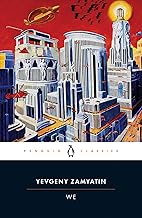
We
Yevgeny Zamyatin and Clarence Brown
4.2 on Amazon
25 HN comments
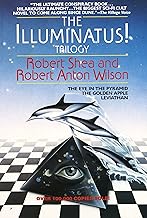
The Illuminatus! Trilogy: The Eye in the Pyramid, The Golden Apple, Leviathan
Robert Shea and Robert Anton Wilson
4.6 on Amazon
22 HN comments

pier25onJune 9, 2020
- The Lord of the Rings
- Siddhartha
- Chaos: Making a New Science
- The Death Gate cycle books
- Neuromancer
- Head First Design Patterns
- Valis
- Dune
- The name of the rose
I'm sure there are more, but these are the ones off the top of my head.
florenonApr 8, 2021
_pdp_onNov 28, 2016
edpichleronSep 21, 2016
I read it recently, I knew it first time because the movie. I read it in English, and it improved my language skills a lot (even the listening, to my surprise).
mattalbieonDec 13, 2020
paultonSep 21, 2016
zeteoonOct 4, 2010
hypertextheroonMar 29, 2020
Narcissus and Goldmund by Hermann Hesse
The Lord of The Rings by J.R.R. Tolkien
5555624onJuly 12, 2018
What's interesting -- to me, anyway -- are the responses that are (a) books you might not be able to pay me to read or (b) books I enjoyed, but have never considered rereading.
I made it a couple of chapters into "The Lord of the Rings," tossed the book across the room, where it fell down behind some furniture and sat for years. I have never thought about reading it again.
I might need to go back and read both "Dune" and the Amber series. I enjoyed them; but, I've never thought about rereading them at all.
electromagneticonMay 23, 2010
4. THE LORD OF THE RINGS by J.R.R. Tolkien
5. TO KILL A MOCKINGBIRD by Harper Lee
6. 1984 by George Orwell
Are the only credible novels there. I'm sorry Ayn Rand and L. Ron Hubbard are not and never have been popular enough amongst the populace to hit 7 out of 10 of the top 10 spots.
Radcliffe's Rival 100 Best Novels List (http://www.randomhouse.com/modernlibrary/100rivallist.html) doesn't have Hubbard anywhere and has Rand's two most read and best respected novels. I'm a wide reader and I can say every novel on this list has been recommended to me by someone or has gotten itself known to me by its own merits. No one has ever recommended me Hubbard, save for once at a garage sale when someone tried to sell me a dozen of his books for a quarter; I opted to pay $10 picking up the Red/Blue/Green Mars series, some Heinlein, Asimov and Clark. The woman joked that she doubts the bookstore will take them; incidentally I've got friends who've worked at Savers/Value Village and they can't shift the books and don't accept them.
BrushfireonFeb 23, 2009
Things that immediately stood out as different:
- 3 Rand books in the top 6? Really?
- 2 Scientology / Anti Psychology books near the top (#2, #11)
A look at the fiction list reveals the same bias:
Top 10 from the 'Novels List'
There are still gems in these lists, I'm just surprised that many of these made the list, especially some of the high ranking ones. Something seems off.
libraryatnightonMay 15, 2012
I can't have a signed copy of my favorite book with an ebook. When I have a party or gathering at home people browse my shelves and spark conversation about certain books they've read, or thumb through others they haven't, this doesn't happen with my kindle sitting on my desk in the office. Buying a book and caring for it can mean you'll have it a lifetime, I don't know that this is the case with ebooks yet. They still feel like rentals. I have a few old books handed down from my parents, they have a charm and character all their own, something lost with ebooks. Some books I own are sentimental, my first copies of The Lord of the Rings, and a Wizard of Earthsea, I've had since I was very young. I can touch and smell and experience those books today.
Now, many teens might not care about the above, but the coolness factor may be tied to similar thought. For instance the vanity of walking around with the hottest teen novel or having it in your bedroom at home. Or, I remember in high school kids carrying copies of Fight Club and Clockwork Orange not just because they were reading them but also as part of whatever counter culture image they were going for. The author sort of touches on this, "But does size really matter that much? My copy of The Perks Of Being A Wallflower was so small I could fit it in my second-hand jacket when I was an angsty high schooler." For teens what they're passionate about and what they're into is part of their identity and trying to set themselves apart, and they like to show it off. Just look at the kids doodling their favorite band names on a binder, or listing every book, TV show, and movie they like on Facebook.
When I worked at Barnes & Noble a lot of teens enjoyed hardcovers that had some sort of unique flair. Embossing, elaborate art, books that opened in non-traditional ways. There's something to be said for the tangible aspects of the book. Appreciating its make.
tripuonJune 8, 2017
• “Don Quixote” (Cervantes): unanimously considered the best work of fiction in the Spanish-speaking world… and on many lists, even #1 of world literature, ever (!). Often overlooked (at least in Spain) by young folks as it is long, the language is archaic, and its themes appear quaint and silly today at first sight. But there's a reason it has been praised for centuries. It's funny and tender. Themes are also modern, and Cervantes' style is playful and innovative, making use of devices such as meta-references, alternative pasts, removal of the fourth wall, etc. I'm not sure how much non-native audiences can enjoy translations, though.
• “The Lord of the Rings” (Tolkien) for the original epic and touching fantasy. (I know many people devour it in their teens, or in their early youth… But I read it as an adult; quite late. Mainly because it seemed to be the only “difficult” book that many of my friends bothered to read, and that predisposed me negatively towards it. Also, my family hadn't read it, and there was no copy of it in our house.)
• “Brief History of Time” (Stephen Hawking): mind-boggling introduction to (astro-)physics, modern cosmogony, etc.
twodaveonJan 16, 2020
I adopted voices for the different characters to keep them interested, and to give them something to look forward to, I would not let them watch the movies until we finished reading the corresponding volume of the series. We had so much fun with this!
I'm extremely thankful for Christopher's work because the movies (which were released when I was a teenager) were my first introduction to his father's work.
simonebrunozzionDec 24, 2020
Probably the biggest impact a book ever had on me.
notacowardonJune 11, 2018
“There are two novels that can change a bookish fourteen-year old’s life: The Lord of the Rings and Atlas Shrugged. One is a childish fantasy that often engenders a lifelong obsession with its unbelievable heroes, leading to an emotionally stunted, socially crippled adulthood, unable to deal with the real world. The other, of course, involves orcs."
nf05papsjfVbconNov 6, 2018
- The Lord of The Rings
- The Hobbit
- Dracula
- The Little Prince
- Animal Farm
- Asterix and Obelix comicbooks
- Siddhartha
For the next time, I'm going to try "Necronmicon" (H. P. Lovecraft!)
(EDIT: Formatting and added "Siddhartha")
olavkonMay 14, 2018
eslaughtonOct 31, 2020
AnnataronNov 1, 2018
...
...
...
JY does not offer a moral lesson here, he simply explores characters in morally complex situations."
Tolkien doesn't do that at all: the depth of his characters is never expounded upon, their decisions and choices flow from their roles (for example Elrond as the healer, or Aragon as the king of men, or Gandalf with the mission to stop Sauron). His characters are aware of the consequences and the effect the Ring will have: not even for Boromir is that a dilemma. That's why my position is that the comparison doesn't even apply because Tolkien's characters don't undergo those dilemmas. For example, the biggest dilemma is Frodo's fear of whether and how he'll be able to complete his task, not whether he should complete it. That is light years removed from character complexity and moral choices. These two authors wrote about completely different things: there isn't any overlap to compare on.
As for the rudeness: if based on your comments I think that you should re-read the Silmarillion and The Lord of the Rings much more critically because they reduce both works to satisfaction with the story and good being triumphant, and was subtly trying to suggest that, is that rude?
phaemononDec 30, 2014
You haven't read "The Lord of The Rings"?!
JetSpiegelonDec 31, 2013
alanthonyconAug 3, 2009
I thought to myself, "Two days, that doesn't sound too bad. I think I could do that." It seemed reasonable at the time.
khrmonMay 14, 2018
eevilspockonSep 23, 2014
"There are two novels that can change a bookish fourteen-year old’s life: The Lord of the Rings and Atlas Shrugged. One is a childish fantasy that often engenders a lifelong obsession with its unbelievable heroes, leading to an emotionally stunted, socially crippled adulthood, unable to deal with the real world. The other, of course, involves orcs."
~John Rogers
jseligeronOct 3, 2015
* Jonathan Haidt's The Righteous Mind, for explaining so much personally and culturally so concisely.
* Everything on this list: http://jakeseliger.com/2010/03/22/influential-books-on-me-th....
* The Lord of the Rings, for its combination of story, interior drama, and (underrated) political economy.
* Blindsight by Peter Watts.
* Heart of Darkness by Conrad, who seems more prophetic all the time.
shawndumasonDec 21, 2010
alfyboyonNov 17, 2020
I also tried researching some more books that are travel related that I am planning to read next:
* Rita Golden Gelman - Tales of a Female Nomad: Living at Large in the World
* Douglas Adams - Last Chance to See
* Italo Calvion - Invisible Cities
* Rolf Potts - Vagabonding
tallanvoronApr 9, 2015
roguecoderonMay 14, 2013
Or, more succinctly, "There are two novels that can change a bookish fourteen-year old's life: The Lord of the Rings and Atlas Shrugged. One is a childish fantasy that often engenders a lifelong obsession with its unbelievable heroes, leading to an emotionally stunted, socially crippled adulthood, unable to deal with the real world. The other, of course, involves orcs." - John Rogers
VektorwegonAug 4, 2013
“There are two novels that can change a bookish fourteen-year old’s life: 'The Lord of the Rings' and 'Atlas Shrugged'. One is a childish fantasy that often engenders a lifelong obsession with its unbelievable heroes, leading to an emotionally stunted, socially crippled adulthood, unable to deal with the real world. The other, of course, involves orcs.” – John Rogers
TichyonApr 4, 2008
Sidenote:
Recently somebody posted a comment on news.YC about starting a blog with 4 authors, one of them gets exchanged every week by public vote. Can't find it anymore - does anybody know the URL?
Turing_MachineonDec 31, 2013
Distributing "Romeo and Juliet by William Shakespeare": not plagiarism or copyright violation.
Distributing "Romeo and Juliet by Turing Machine": plagiarism, but not copyright violation.
Distributing "The Lord of the Rings by J.R.R. Tolkien": Copyright violation, but not plagiarism.
Distributing "The Lord of the Rings by Turing Machine": both plagiarism and copyright violation.