
The Name of the Wind: 10th Anniversary Deluxe Edition (Kingkiller Chronicle)
Patrick Rothfuss and Dan dos Santos
4.9 on Amazon
36 HN comments

The Alchemist: A Graphic Novel (an illustrated interpretation of The Alchemist)
Paulo Coelho
4.4 on Amazon
36 HN comments

Gravity's Rainbow
Thomas Pynchon, Frank Miller (cover design), et al.
4.3 on Amazon
35 HN comments

A Game of Thrones: The Illustrated Edition: A Song of Ice and Fire: Book One (A Song of Ice and Fire Illustrated Edition)
George R. R. Martin and John Hodgman
4.8 on Amazon
34 HN comments

Breakfast of Champions: A Novel
Kurt Vonnegut
4.5 on Amazon
33 HN comments

The Lord of the Rings
J. R. R. Tolkien and Alan Lee
4.9 on Amazon
33 HN comments

Stories of Your Life and Others
Ted Chiang
4.5 on Amazon
33 HN comments

The Circle
Dave Eggers
3.7 on Amazon
30 HN comments

The Man in the High Castle
Philip K. Dick
3.9 on Amazon
29 HN comments

Anthem
Ayn Rand
4.4 on Amazon
25 HN comments

A Canticle for Leibowitz
Walter M. Miller Jr., Tom Weiner, et al.
4.5 on Amazon
25 HN comments

Kafka on the Shore
Haruki Murakami, Sean Barrett, et al.
4.6 on Amazon
25 HN comments

Contact
Carl Sagan, Laurel Lefkow, et al.
4.6 on Amazon
25 HN comments
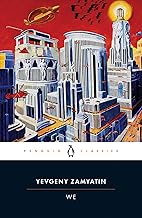
We
Yevgeny Zamyatin and Clarence Brown
4.2 on Amazon
25 HN comments
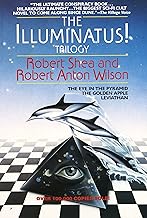
The Illuminatus! Trilogy: The Eye in the Pyramid, The Golden Apple, Leviathan
Robert Shea and Robert Anton Wilson
4.6 on Amazon
22 HN comments

jhallenworldonJan 11, 2021
https://www.goodreads.com/list/show/32198.Monasteries_and_Co...
__turbobrew__onJune 3, 2021
omegaworksonJuly 5, 2014
A Canticle for Leibowitz by Walter Miller :)
The world needs more of this stuff.
kossmoboleatonDec 9, 2012
Jules Verne's "They Mysterious Island"
http://archive.org/details/mysterious_island_ms_librivox
Walter M. Miller's "A Canticle for Leibowitz"
http://archive.org/details/ACanticleForLiebowitz
argimenesonApr 22, 2015
#2. Frank Herbert's "The Eyes of Heisenberg".
#3. Alfred Bester's "The Stars My Destination".
#4. "A Canticle for Leibowitz" by Walter Miller.
#5. Arthur C. Clarke's "The City and the Stars".
4thaccountonFeb 25, 2019
Taylor_ODonDec 12, 2018
The Sparrow by Mary Doria Russell
I Have No Mouth And I Must Scream by Harlan Ellison
Stories of Your Life by Ted Chiang
Like Brothers by Mark and Jay Duplass
A Canticle for Leibowitz by Walter Miller Jr
Endymion by Dan Simmons
Hyperion by Dan Simmons
A few classics that I'd never read before. Really great year of books for me.
brudgersonMay 9, 2011
noufalibrahimonOct 28, 2016
As for the book, I think if The Archive had novel for a totem, it'd be "A Canticle For Leibowitz". Very much affected my world view when I read it and this thread has just kindled my interest again. :)
noufalibrahimonJuly 2, 2019
If you prefer fiction, I highly recommend "A Canticle for Leibowitz" by Walter M. Miller Jr. One of my alltime favourite books.
mattmanseronDec 16, 2014
The beginning is actually really tough going as a completely new reader today. It's just so ridiculous. I can see where he was coming from, as I grew up in that era, but it's actually pretty bizarre now given the reality is nation states, religion and banks turned out to be so much more powerful than corporations.
Which is one of the perils of predictions in ageing sci-fi.
I've been on a sci-fi kick recently of all the classics I never read (William Gibson, Ender's Game, The Mars Trilogy, Forever War, Starship Troopers, A Canticle For Leibowitz, Philip K. Dick, Hyperion Cantos, Ringworld) and re-reading some I've not read for a long time (Foundation Series).
I personally found that Snow Crash is by far the most dated book. Even Ringworld and the foundation series were better.
abernard1onFeb 27, 2021
- The Machine Stops, E.M. Forster
- Erewhon, Samuel Butler
- The Alchemist, Paulo Coelho
The styles and formats are completely different. The only common thing I can think of is that there's this invisible guiding force in all of them, whether it's good or bad. The Machine Stops is a dystopia about technology in absence of a soulful humanity. Erewhon is wild. Truly wild. It has to be a genre all its own, something akin to Darwinian technopunk. The Alchemist is probably one of those novels you could riff on with a yoga instructor and have a good conversation :joy:. It's classical magical surrealism, but it's a good story about a person's lifetime journey. Nothing deep, but it's wholesome.
Edit: also will add A Canticle for Leibowitz by Walter Miller Jr., and Titus Groan by Mervyn Peake.
doomroboonNov 30, 2020
It was originally just 1 story, Fiat Homo, and then was expanded into a novel. Fiat Homo is freely available in audio form from the BBC
https://www.bbc.co.uk/programmes/b03w355l/episodes/guide
bdunbaronJan 15, 2014
Because it helped bring me to the Catholic faith.
ciceroonDec 22, 2016
The Chronicles of Narnia - C.S. Lewis (an old favorite, recommended)
The Name of the Rose - Umberto Eco (some interesting parts, but overall a disappointment)
Theology and Sanity - Frank Sheed (recommended; a very written description of the Catholic faith; weaknesses are it's long and it's aimed to a mid 20th c. audience)
Christianity for Modern Pagans: Pascal's Pensees - Peter Kreeft (recommended; a good exposition of Blaise Pascal's thought)
Catholicism: A journey to the heart of the faith - Robert Barron (recommended; a good explanation of Catholicism for the common person)
His Master's Voice - Stanislaw Lem (recommended; very intellectual look at the problem of first contact)
The Industries of the Future - Alec Ross (the robotics chapter is best; other parts are more light-weight; easy read)
Clouds of Witnesses - Dorothy Sayers (not my favorite Sayers mystery, but enjoyable)
A Study in Scarlet - Arthur Conan Doyle (recommended)
Why Gender Matters - Leonard Sax (recommended; most of the book is based on good science, but he does go out on a limb a time or two.)
Old School - Tobias Wolff (recommended; a world before widespread TV where high school boys actually got excited about literature)
Infinite Space, Infinite God - Karina and Robert Fabian editors (story quality varies; I enjoyed some of them)
The Sign of Four - Arthur Conan Doyle (recommended)
On Stranger Tides - Tim Powers (recommended; I love Powers, but Anubis Gates and Last Call are better. Still, if you like pirates you should like this)
The Art of Worldly Wisdom - Baltasar Gracian (interesting)
Aquinas at Prayer: the Bible, Mysticism, and Poetry - Paul Murray (recommended; this shows a different side of Thomas Aquinas)
Aristotle for Everybody: Difficult Thought Made Easy - Mortimer Adler (recommended; I almost think this should be required reading)
The Pilgrim's Regress - C.S. Lewis (I enjoyed it, but the ideas Lewis argues against are somewhat dated.)
Edit for formatting
mglheureuxonApr 22, 2015
I would be completely contented with a three- or six-part series, but I could also see it being turned (well) into a longer thing by interpolating.
Similarly, but probably more accessible, "The Sparrow" by Mary Doria Russell (and it's sequel "Children of God"). It would definitely do better as a long series.
srtjstjsjonOct 18, 2020
A Canticle for Leibowitz by Walter M. Miller Jr.
ChaebixionApr 26, 2017
In this case, any disaster that prevents the regular maintenance and operation of something like an advanced hospital for at least a few decades. This includes various types of war, energy crises, or the classic SF theme of a society stagnating to point where it can no longer build certain necessary technologies but only operate them.
There's also the related threat to societies/nations that require technology to reproduce. If they get in a war with rivals that can reproduce unassisted, they have extra weak points that can be attacked.
> † See the book The Knowledge, and then consider a world where you have access to not only that, but also hard copies of the US Patent filing database, and 6 billion people to parallelize the bootstrapping process across.
Any scenario where you have to reconstruct knowledge like that will likely be accompanied by strife that will prevent the reconstruction for a time (of decades or more).
Have you ever read A Canticle for Leibowitz?
spudlyoonOct 12, 2009
A Canticle for Leibowitz, Walter M. Miller, Jr.
noufalibrahimonOct 27, 2016
I worked at The Archive for a little while and one of the projects I worked on was to unpack about 300 TB of crawl data from the defunct search company cuil.com. It was mostly decent quality data in a standard format and after some grinding, the whole thing was converted into warc files which the wayback machine could use to show the URLs. The end result was that about 60 billion URLs came "back onto the web".
During the work, I was looking at the stones rather than cathedral but after I left and thought about it in detail, it was very satisfying. I was reading the book "A Canticle For Leibowitz" at the time and the general theme of cycles of history was in my head. That dovetailed very well with the work I had done.
If you're interested, you can download the dumps over here https://archive.org/details/cuilcrawl
mindcrimeonDec 23, 2018
The Forbidden Door - Dean Koontz
The Crooked Staircase - Dean Koontz
The Outsider - Stephen King
Sleeping Beauties - Stephen King & Owen King
The Fallen - David Baldacci
Zeroes - Chuck Wendig
The Supernatural Enhancements - Edgar Cantero
A Canticle for Leibowitz - Walter M. Miller Jr.
A Wrinkle in Time - Madeleine L'Engle
mindcrimeonDec 23, 2018
The Forbidden Door - Dean Koontz
The Crooked Staircase - Dean Koontz
The Outsider - Stephen King
Sleeping Beauties - Stephen King & Owen King
The Fallen - David Baldacci
Zeroes - Chuck Wendig
The Supernatural Enhancements - Edgar Cantero
A Canticle for Leibowitz - Walter M. Miller Jr.
A Wrinkle in Time - Madeleine L'Engle
argimenesonDec 25, 2013
'Hackers and Painters' by Paul Graham
'Virtual Reality' by Howard Rheingold
'Stack Computers: The New Wave' by Philip Koopman
'Thinking Forth' by Leo Brodie
'WIMP Programming for All on Acorn RISC Computers' by Lee Calcraft and Alan Wrigley
'Frank Herbert' by Timothy O'Reilly
'Modern Painters: volume 1' by John Ruskin
'Aratra Pentelici' by John Ruskin
'The Art and Craft of Drawing' by Vernon Blake
'The Romance of Leonardo da Vinci' by Dmitri Merezhkovsky ('romance' in the old sense of 'biographical novel')
'Prehistoric Avebury' by Aubrey Burl
'A Canticle for Leibowitz' by Walter M. Miller
senkoraonAug 11, 2020
I found the list, it may be missing some poems but this is largely what we covered:
A Canticle for Leibowitz - Walter M. Miller Jr
Arcadia - Tom Stoppard
Dulce et Decorum est - Wilfred Owen
Frankenstein - Mary Shelley
Kindred - Octavia E. Butler
Life of Galileo - Bertolt Brecht
Pygmalion - George Bernard Shaw
Suicide in the Trenches - Siegfried Sassoon
The Beekeeper's Apprentice - Laurie R. King
The Lady's Not for Burning - Christopher Fry
The Mortal Immortal - Mary Shelley
cpetersoonMay 3, 2014
https://en.wikipedia.org/wiki/A_Canticle_for_Leibowitz
Anathem is a Neal Stephenson novel about (again) monastic communities preserving knowledge over hundreds or thousands of years.
https://en.wikipedia.org/wiki/Anathem