
The Name of the Wind: 10th Anniversary Deluxe Edition (Kingkiller Chronicle)
Patrick Rothfuss and Dan dos Santos
4.9 on Amazon
36 HN comments

The Alchemist: A Graphic Novel (an illustrated interpretation of The Alchemist)
Paulo Coelho
4.4 on Amazon
36 HN comments

Gravity's Rainbow
Thomas Pynchon, Frank Miller (cover design), et al.
4.3 on Amazon
35 HN comments

A Game of Thrones: The Illustrated Edition: A Song of Ice and Fire: Book One (A Song of Ice and Fire Illustrated Edition)
George R. R. Martin and John Hodgman
4.8 on Amazon
34 HN comments

Breakfast of Champions: A Novel
Kurt Vonnegut
4.5 on Amazon
33 HN comments

The Lord of the Rings
J. R. R. Tolkien and Alan Lee
4.9 on Amazon
33 HN comments

Stories of Your Life and Others
Ted Chiang
4.5 on Amazon
33 HN comments

The Circle
Dave Eggers
3.7 on Amazon
30 HN comments

The Man in the High Castle
Philip K. Dick
3.9 on Amazon
29 HN comments

Anthem
Ayn Rand
4.4 on Amazon
25 HN comments

A Canticle for Leibowitz
Walter M. Miller Jr., Tom Weiner, et al.
4.5 on Amazon
25 HN comments

Kafka on the Shore
Haruki Murakami, Sean Barrett, et al.
4.6 on Amazon
25 HN comments

Contact
Carl Sagan, Laurel Lefkow, et al.
4.6 on Amazon
25 HN comments
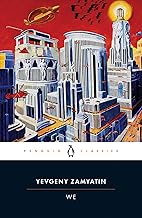
We
Yevgeny Zamyatin and Clarence Brown
4.2 on Amazon
25 HN comments
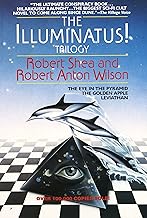
The Illuminatus! Trilogy: The Eye in the Pyramid, The Golden Apple, Leviathan
Robert Shea and Robert Anton Wilson
4.6 on Amazon
22 HN comments

lioetersonAug 23, 2020
> Thomas Pynchon parodies this punctuation mark in his novel Gravity's Rainbow by depicting a middle finger, rather than an index finger, pointing at a line of text.
jamesakirkonNov 21, 2019
https://www.tildedave.com/byron.html
In a book full of strange meandering asides, this was among the most memorable.
tptacekonJune 7, 2015
MrMemberonJan 5, 2020
robterrellonSep 7, 2013
duanebonSep 16, 2016
The Crying of Lot 49 is the foil—short, with a meaningless story only good for the experience reading it.
jlkonMar 22, 2008
Code Complete by Steve McConnell
Walden by Henry David Thoreau
Breakfast of Champions by Kurt Vonnegut Jr.
Watermelon Sugar by Richard Brautigan
Murphy by Samuel Beckett
Gravity's Rainbow by Thomas Pynchon
dbuderonSep 7, 2013
fastaguy88onJuly 17, 2016
http://www.theparisreview.org/blog/2014/10/07/planned-obsole...
blwskonApr 9, 2015
Gravity's Rainbow by Thomas Pynchon - an encyclopedic novel, to say the least
jandreseonJune 24, 2021
1. The reader can't figure out what the hell is going on anymore or who anybody is. They give up and stop reading.
2. The reader can't figure out what the hell is going on anymore or who anybody is. They stop trying to make sense of the book and just read the words.
"Sure this guy has a toilet stuck to his foot now, and can prevent bombs from landing on him by magic or something. That's great, oh I think somewhere in that sentence it became 20 years earlier in a different part of town and there are two entirely different characters I don't know talking about something else. That's neat."
bostikonJan 5, 2020
I tried to read it. Really, really tried. For my head it's utterly unreadable. Had to give up after ~30 pages.
The writing flow and style of that book can be best described as "long-winded, over-extended, bloated and bloviating, rejected entry to Bulwer-Lytton contest".
cwmooreonAug 26, 2018
weeksieonJune 9, 2010
Anyway, I realize that what was censored was a cartoon depicting the book . . . still, censoring something like Ulysses (of all things) is just short-sighted and ignorant.
C1sc0catonNov 4, 2019
That is assuming there is a corrected version the first printing I have confuses what a "redcap" is in the British military
logfromblammoonJune 21, 2017
But it is particularly unfortunate when such an experiment escapes into the wild, and a clique seizes upon it as a test for tribal identification.
It's okay to dislike "great literature" and enjoy "pablum for the lowest common denominator" or "escapism for immature minds". I don't really find a whole lot of value in critiquing other people's preferences. If you don't like a specific artwork, you should just keep sampling until you find something you do enjoy, no matter who else likes it. You're not going to make yourself happy by forcing yourself to like something just to fit in to a social group; you're far better off being honest with yourself. After all, you never really know if it's an Emperor's New Clothes situation until someone speaks up and says "I hated every word of this book, and I have no idea why anyone would think it's a masterpiece."
It may well be that will be followed up by "I only said I liked it so that you guys would think I was intelligent and cultured", "I read it in bed because it was such a reliable way to make me fall asleep", "I only read like a third of Gravity's Rainbow, and faked the rest of the way through for book club".
krylononOct 20, 2016
objclxtonOct 29, 2013
To spin this around a little: we don't talk about authors in the past whose prose isn't worth going back to. Shakespeare had many contemporaries, but you might be hard pressed to name more than a couple.
Good prose can be challenging, and people don't want to be challenged all the time. I admire Pynchon's writing in Gravity's Rainbow - I don't want every book I read to be like that.
Or to put it another way: there are many novels from the 19th century that were massively popular at the time, but totally forgotten about now. They were novels that were pretty average in terms of prose, but had stories that were relevant to people at the time, and gripped them.
I doubt if in a hundred years people will still be reading the Da Vinci Code - but I can guarantee books like Infinite Jest, The Satanic Verses, Nights at the Circus, and the like will be attracting critical attention.
WastingMyTime89onJune 25, 2021
Gravity Rainbow has Pynchon's inimitable prose, constant segue between language register and mingling between the trivial and the profound. Infinite Jest is rambling and convoluted but it is extremely funny from the get go. Both can be a joy to read even if you don't finish them.
Ulysses on the other hand asks more from its readers. You can pretty much ignore the references in Gravity's Rainbow and still get (or not get) the point. Meanwhile, Ulysses is full of oblique metaphors and layered references which make it impossible to understand without knowledge of the referenced material.
subwindowonSep 9, 2011
Sad to see Stanislaw Lem completely left out in favor of some obviously inferior books (Anathem!?). Also a curious choice for the obligatory Atwood novel. Surprised that Gravity's Rainbow was not on there- I'd put it near the top (maybe it wasn't "Sci-Fi" enough?)
Good to see Canticle for Leibowitz as well as a fair amount of Asimov and Dick.
devindotcomonFeb 10, 2021
Sadly many authors don't get the recognition they deserve for generations afterwards... but the important thing is they didn't let that possibility dissuade them from writing!
imrehgonDec 26, 2012
Anna Karenina - just a whole different level, Tolstoy's writing in a way I don't feel many contemporary writes could. Feels creepy how similar the people's lives in the 19th Century was to ours. Creepy but fun too.
If On A Winter's Night A Traveller - Italo Calvino will just punch you in the face, this is a book for people who love reading books.
The Magicians - adult magic fiction, and somehow it feels that if magic was indeed real, it would be like it is depicted here, not like anything in Harry Potter's (no matter how much I loved the storytelling, the magic theory was just so full of plotholes).
The Casual Vacancy - JKRowling's not-Harry-Potter-book. It's very gritty, and feels very real. Still having my cold shivers thinking of small-town living after this.
(Except for the last one the others are older releases, don't usually jump into the newest ones, I just take it casual)
nimihonMay 10, 2021
Your comparison to television is a pretty good one, honestly. I've never really rewatched an episode of a serial television series (other than trying to refresh my memory when picking up a new season), since there usually isn't any substance there beyond the plot and characters, but I'll happily rewatch movies if the directing, cinematography, and/or acting are compelling enough.
unaloneonSep 11, 2009
Then on the Kindle I have all the Asimov, medium-length novels, nonfiction, kid's books, essays, etc. It's a dream set-up and it all fits in a backpack.
fininonFeb 7, 2019
themeekonApr 7, 2015
My favorite parts:
- His treatment of Luddism as class warfare; a recognition that the access to the means of production by the machines paired with their replacement and downward pressure on individual wages concentrates power. We have (had?) a myth that the internet would be 'democratizing' in its power, but it's gone much the same way toward concentration.
- Pynchon eerily predicts biological sciences, AI and robotics starting to converge and how it will catch us flat footed - and already we are seeing the emergence of extremely rough AIs contain people in information bubbles.
- Pynchon spells the paradox of deluge of information available to us so very well; while we might think that anyone can become an expert in anything the opportunity cost and the amount of information immediately relevant to our fields isolates us from being broad renaissance men.
Gravity's Rainbow was more than a pleasure. I wish Pynchon had written more of these short critical lens essays.
swiftonNov 27, 2013
Unfortunately I haven't encountered any ebooks that handle annotations in a pleasant way that takes advantage of the technology. The few I've seen that had annotations just had hyperlinks to a different page in the ebook, which makes you lose the context. With ebooks, endnotes like these seem absurd to me; the annotation should be viewable inline on the original page.
vibrolaxonJan 6, 2020
tritiumonMay 27, 2015
Meanwhile the "blitz" and The Battle of Britain were an entirely different part of the war, taking place about four years earlier, and this map seems to cover that period of time, from late 1940 to mid-1941.
davidgouldonMay 11, 2018
I'll also add another vote for The Myth of Sisyphus by Albert Camus and for Zen and the Art of Motorcycle Maintenance by Robert Pirsig.
On a darker note, if you had any illusions left, Gravity's Rainbow by Thomas Pynchon.
metamemeticsonOct 3, 2010
The Notebooks of Malte Laurids Brigge (Rilke)
The Age of Extremes: A History of the World, 1914-1991 (Hobsbawm)
Bhagavad Gita
Upanishads
Crimes Against Logic: Exposing the Bogus Arguments of Politicians, Priests, Journalists, and Other Serial Offenders (Whyte)
Tractatus Logico-Philosophicus (Wittgenstein)
edit: added 2 more & author names
tmuironJan 20, 2015
I do seek out books from lists like "100 greatest books of the 20th century" and similar, but it doesn't bother me in the slightest to say that War and Peace was dry, repetitive, and completely uninteresting, or that Ulysees' and Gravity's Rainbow's prose were so incoherent, I couldn't make it even 50 pages in either book. On the other hand, The Brothers Karamozov is easily one of the top three books I've ever read, so I don't think its an aversion to classic literature in general.
I think using other people's opinions of books is a good starting point for finding books to read. But I derive no enjoyment whatsoever from knowing that someone else likes the music, or books, or movies that I like, so why should I feel guilty or question my tastes when I disagree with even the most highly regarded opinions?
pokleronFeb 5, 2019
The first is Understanding Power by Noam Chomsky. This was the first political book I had ever read and it completely rocked my world. I knew the US was involved in some nefarious stuff, but never to that extent. Completely changed the way I read news / history & how I react to current events.
The other book is Gravity's Rainbow by Thomas Pynchon.
mlangdononApr 7, 2015
David Foster Wallace writes (in an essay collected in A Supposedly Fun Thing I'll Never Do Again) about the connection for him between higher math and logic and writing fiction. About the "click" that happens when things fall into place. For several years, I chased exactly that in fiction, before returning to my teenage passion for programming. I was immensely pleased to find the same "click" in software. The same challenges of world creation, of collecting, balancing and combining incongruent, contradictory and abstract thoughts in my head before committing them to screen.
What I'm suggesting is Thomas Pynchon, David Foster Wallace and, let's add, William Gass, are programmers' writers.
pemulisonMay 8, 2011