
The Name of the Wind: 10th Anniversary Deluxe Edition (Kingkiller Chronicle)
Patrick Rothfuss and Dan dos Santos
4.9 on Amazon
36 HN comments

The Alchemist: A Graphic Novel (an illustrated interpretation of The Alchemist)
Paulo Coelho
4.4 on Amazon
36 HN comments

Gravity's Rainbow
Thomas Pynchon, Frank Miller (cover design), et al.
4.3 on Amazon
35 HN comments

A Game of Thrones: The Illustrated Edition: A Song of Ice and Fire: Book One (A Song of Ice and Fire Illustrated Edition)
George R. R. Martin and John Hodgman
4.8 on Amazon
34 HN comments

Breakfast of Champions: A Novel
Kurt Vonnegut
4.5 on Amazon
33 HN comments

The Lord of the Rings
J. R. R. Tolkien and Alan Lee
4.9 on Amazon
33 HN comments

Stories of Your Life and Others
Ted Chiang
4.5 on Amazon
33 HN comments

The Circle
Dave Eggers
3.7 on Amazon
30 HN comments

The Man in the High Castle
Philip K. Dick
3.9 on Amazon
29 HN comments

Anthem
Ayn Rand
4.4 on Amazon
25 HN comments

A Canticle for Leibowitz
Walter M. Miller Jr., Tom Weiner, et al.
4.5 on Amazon
25 HN comments

Kafka on the Shore
Haruki Murakami, Sean Barrett, et al.
4.6 on Amazon
25 HN comments

Contact
Carl Sagan, Laurel Lefkow, et al.
4.6 on Amazon
25 HN comments
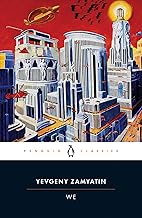
We
Yevgeny Zamyatin and Clarence Brown
4.2 on Amazon
25 HN comments
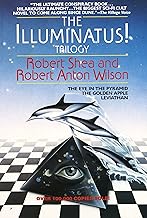
The Illuminatus! Trilogy: The Eye in the Pyramid, The Golden Apple, Leviathan
Robert Shea and Robert Anton Wilson
4.6 on Amazon
22 HN comments

C1sc0catonAug 22, 2020
a_bonoboonApr 9, 2015
[1] https://en.wikipedia.org/wiki/We_%28novel%29
moocowduckquackonNov 24, 2013
It was the first book banned after the Russian revolution and according to Orwell it was his inspiration for 1984. I found it a lot more amusing and poetic than 1984 however.
InitialLastNameonOct 30, 2018
sireatonAug 28, 2009
That said, I don't regret a single over the budget experience I've had.
colechristensenonSep 5, 2017
* anything by & narrated by Bill Bryson
* The Phoenix Project
* We Are Legion (We are Bob)
* SPQR: A History of Ancient Rome
* The Adventure of English: The Biography of a Language
idoubtitonNov 1, 2018
Ironically, Orwell wrote before WWII that Aldous Huxley's Brave New World (1932) was heavily inspired by We (1921). Then he wrote 1984 (1949) which borrows even more: it's the same story, with more romance and a more mainstream narrating style.
sudostephonJan 8, 2019
And this coming is from someone who loved 1984 and Brave New World and was eagerly looking forward to reading "We" at one point.
heisenbergsonFeb 3, 2021
Reading his back story makes this even more interesting, given that he was living in a totalitarian state. I'd recommend reading his Wikipedia entry too.
In short: highly recommended reading.
pjc50onJan 2, 2016
Remember, Churchill was a member of the hereditary aristocracy with inherited wealth, which he seems to have spent or misinvented to a great extent - that's the point of the book being reviewed here. That was a big key to power.
baddoxonOct 6, 2014
I had not heard of We, but I will look into it.
shantanubalaonMar 15, 2011
Read The Black Swan by Nassim Nicholas Taleb (Fooled By Randomness is also good) if you want to peer into the mind of an investor.
Read Hesse's Siddhartha if you're thinking along the lines of culture/religion/philosophy.
Read a few Ayn Rand books if you like libertarianism and don't really care to relate to the characters.
Read We by Yevgheny Zamyatin if you want an interesting allegory that metaphorically compares heaven to a dystopian dictatorship.
Read Unweaving the Rainbow by Richard Dawkins if you're very interested in the sciences.
I remember Sebastian Marshall recommending Musashi by Eiji Yoshikawa -- I'd recommend it too. It's pretty good, and I was especially interested since I've been doing marshal arts for over 10 years now.
And read Surely You're Joking, Mr. Feynman! no matter how you think. It's fantastic.
EDIT: More Books!
I read these when I was in elementary school, but they still hold their value:
The Giver by Lois Lowry if you want more dystopias.
The Little Prince by Antoine de Saint-Exupery if you're feeling especially playful.
jordanbonJuly 6, 2011
The problem is that the copywriter works at an organization that has contemptible business practices. Given that state of affairs she could either:
1) Tell the truth and produce a highly cynical document that would cost her job plus blowback.
2) Tell lies (the original version), causing blowback and probably costing her and several others their jobs.
3) Write a bunch of pleasant-sounding meaningless nothings (the final version) which fulfills her assignment of writing a value statement free of both lies and brutal honesty. Interestingly, on a meta level, this is actually a very honest document, as it ends up reading "We have no values."
neadenonDec 19, 2018
Spoilers follow:
Both books follow the journey of a single man as he has a romance with a rebellious woman, get involved with a rebellion but then find out that an older man who they thought they could trust was really part of the secret police. Both novels end with the protagonist getting brainwashed and once again loyal to the state. While I like and respect Orwell immensely as an author, it's clear that he owes a great debt to Zamyatin for his most famous novel.
banmeagaindan2onSep 6, 2020
Our Fair City podcast
The Lost Cat podcast.
The Mabel podcast
The SHWEP podcast
The House of Sunshine podcast
We're Alive podcast
If you're ready for a challenge - The book of the new sun audiobooks. Deep, intense and multiple listens would be required for understanding - but very rewarding.
segmondyonJune 23, 2018
BakaryonMar 7, 2021
In We by Zamyatin and Brave New World, the non-medicated elements of society eventually rebel against the new order. In our case, the scope of medication is already starting to show its limits so I don't think we will get to the scenario you describe. This sort of life is just too inherently unsatisfying to be masked by meds, not to mention that workers now can directly see just how poor they are compared to their masters and just how much surplus the masters capture.
toygonFeb 12, 2017
Personally, I've soured on the idea of being ironic in songs. Most people will miss the irony, they only listen to the catchy chorus, and more often than not, the lines you meant as absurd will be proudly paraded by the same people you were mocking. Take the recent "We the people" by A Tribe Called Quest: the chorus, taken alone, is a bigots' anthem on a catchy tune; I bet it will soon become a mainstay at neonazi rallies and the likes.
curi0ustttonOct 1, 2020
(Note: All books are new and I calculated the price from Book Depository [0], you might be able to purchase more from Better World Books [1]):
- The Holy Bible
- Moby Dick by Melville
- The Brothers Karamazov by Dostoevsky
- The Master And Margarita by Bulgakov
- Don Quixote by Miguel de Cervantes
- The Iliad by Homer
- The Odyssey by Homer
- Meditations by Marcus Aurelius
- The Count of Monte Cristo by Alexandra Dumas
- The Decline of the West by Oswald Spengler
- The Qur'an
- The Prince by Machiavelli
- The Art of War by Sun Tzu
- Crime and Punishment by Dostoevsky
- The Confessions by Saint Augustine
- Les Miserables by Victor Hugo
- We by Yevgeny Zamyatin
- The Book Of Five Rings by Miyamoto Musashi
- The Bridge on the Drina by Ivo Andric
- Bosnian Chronicle by Ivo Andric
- Growth of the Soil by Knut Hamsun
- Storm of Steel by Ernst Junger
- All Quiet on the Western Front by Remarque
- The Divine Comedy by Dante
--- This list totals out at 311.14EUR and has 23 books.
[0] - https://www.bookdepository.com/
[1] - https://www.betterworldbooks.com/
js2onAug 3, 2015
Edit: yes, apparently: "In 1966, the late Philip K. Dick published the novelette "We Can Remember It for You Wholesale." A movie based on the story will be released next year; this book is a novelization of the script and the original novel" -- http://www.amazon.com/Total-Recall-Piers-Anthony/dp/06880520...
clarkmonJune 27, 2013
On the other hand, I found a decent comment [2] from someone who seems to know what they're talking about that suggests he was just an eager journalist that got pulled too far into this whole thing.
For a quick overview of much of Anonymous's history, I recommend the documentary We are Legion [3]. It features an interview with Barrett Brown, and I think has a much better handle on the whole situation than most MSM reporting does.
[1] https://encyclopediadramatica.se/Barrett_Brown
[2] http://www.reddit.com/r/anonymous/comments/zt41f/barrett_bro...
[2] http://wearelegionthedocumentary.com/
dallosonJan 22, 2014
George Orwell averred that Aldous Huxley's Brave New World (1932) must be partly derived from We.
Orwell began Nineteen Eighty-Four (1949) some eight months after he read We in a French translation and wrote a review of it. Orwell is reported as "saying that he was taking it as the model for his next novel."
samlittlewoodonMar 29, 2010
The foundations of computational neroscience - and lots of practial demonstrations of how your eyes and brain work.
- Daniel Dennett "Consciousness Explained"
How the mind works?
- J.E Gordon: "The new Science of Strog Materials" & " Structures, or why things don't fall down."
How is 'stuff' strong/hard?
- Steve Grand: "Creation" & "Growing up with Lucy"
The programmer behind the game 'Creatures' and his adventures in artificial life.
- Joseph Campbell: "The Hero with a Thousand Faces"
Never look at Star Wars in the same way again.
- David Deutch: "The Fabric of Reality"
Many worlds or mad as a box of frogs?
- Richard Leakey & Roger Lewin: "The Sixth Extinction"
We're doomed - maybe
- Braitenberg: "Vehicles"
Emergent behaviour from simple rules
- Ian Wilmut, Keith Cambell & Colin Tudge: "The Second Creation"
How Dolly the Sheep was made. Takes you through the background such that you can read & understand their paper which appears at the end.
- John Brunner: "The Shockwaver Rider"
Snowcrash - hah! - 1975 and this dude got it already.
Other general authors:
Martin Gardner, Greg Egan (lots of free stuff on his site).
ArkyBeagleonDec 25, 2014
The American version was also very slow-motion and not all that universal. If you take the tack of "We Shall Remain", that part of Manifest Destiny looks cast around the time of King Phillip's War. Throw in Jackson's denial of Worcester v. Georgia...
Various figures treated the Amerind at least as distinctly human, just ... unfortunately placed. General George Crook seems to be one of the more sympathetic. I'm also biased by Daniel Goldhagen's work in what he calls "eliminationism" and it's not clear that the... management of the Amerind qualifies, by his own words. IMO, Goldhagen clarifies many of the touchy rough edges of "genocide" in an attempt to make it distinct from plain old warfare.
cambalacheonFeb 3, 2021
People in the west dont know how to calibrate the experience of people in other societies, for the man in the street what really sucked was the economy, not the totalitarianism, because an argument for the same lack of control of ACTUAL political and economical power can be made for the citizens in western countries.
By the way, Zamyatin also wrote "Islanders" where he satirized, and criticized all the hypocrisy, frivolities and arrogance of the English middle classes which he apparently detested, but you rarely see that work lionized in The Guardian or here, I wonder why.