
The Boy Crisis: Why Our Boys Are Struggling and What We Can Do About It
Warren Farrell PhD and John Gray PhD
4.7 on Amazon
7 HN comments

Bury My Heart at Wounded Knee: An Indian History of the American West
Dee Brown and Hampton Sides
4.7 on Amazon
7 HN comments

Jonathan Livingston Seagull: The Complete Edition
Richard Bach and Russell Munson
4.7 on Amazon
7 HN comments

The Pearl
John Steinbeck
4.6 on Amazon
6 HN comments
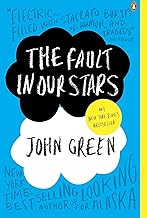
The Fault in Our Stars
John Green
4.7 on Amazon
6 HN comments

Pet
Akwaeke Emezi
4.6 on Amazon
6 HN comments

A Whole New World: A Twisted Tale
Liz Braswell
4.7 on Amazon
5 HN comments

Redwall
Brian Jacques and Gary Chalk
4.8 on Amazon
5 HN comments

The Green Mile
Stephen King, Frank Muller, et al.
4.8 on Amazon
5 HN comments

Armada: A Novel
Ernest Cline, Wil Wheaton, et al.
4.1 on Amazon
5 HN comments

The Hunger Games Trilogy: The Hunger Games / Catching Fire / Mockingjay
Suzanne Collins
4.8 on Amazon
4 HN comments

The Awakening: The Dragon Heart Legacy, Book 1
Nora Roberts
4.8 on Amazon
4 HN comments

Mythology: Timeless Tales of Gods and Heroes
Edith Hamilton
4.6 on Amazon
4 HN comments

As I Lay Dying: The Corrected Text
William Faulkner
4.4 on Amazon
4 HN comments

The Search
Nora Roberts
4.7 on Amazon
4 HN comments

steinuilonFeb 6, 2017
https://www.destroyallsoftware.com/talks
z1mm32m4nonSep 20, 2015
[1]: https://www.destroyallsoftware.com/talks/a-whole-new-world
Analemma_onNov 2, 2016
j88439h84onMay 25, 2019
I hope you can do the data flow analysis. That would be so cool and SO useful.
Python certainly has the ability to collect the data. A couple existing tools make use of this.
For example, MonkeyType and Birdseye observe the values that are passed around by tracing execution during test runs (or even during a production run, but the performance impact can be substantial). https://github.com/Instagram/MonkeyType https://github.com/alexmojaki/birdseye
Even more information can be gleaned from the gc module (see https://mg.pov.lt/objgraph/ for a tool using it).
These tools make good progress, but I'd be very interested to see what a software-visualization expert would come up with.
I'd also love to see how a concurrent execution tree can be visualized. For example, the wonderful Trio concurrency library is built on a tree of concurrent tasks. It would be so cool to see which events are happening at the same time. I've never seen a visualization of how it'd work. (The Trio team is also extremely friendly on their Gitter chat.) https://github.com/python-trio/trio
Structured logging is yet another exciting area. Can we generate visualizations from logs in OpenTracing/OpenCensus format? Some existing work is https://github.com/jonathanj/eliottree
Gary Bernhardt's "A whole new world" talk https://www.destroyallsoftware.com/talks/a-whole-new-world proposes extracting data from logs and highlighting important lines from tracebacks and and slow lines from trace timings in the editor.
I haven't used Structurizr, but it seems interesting. Do you have thoughts on it? https://structurizr.com/ has a python port at https://github.com/sixty-north/structurizr-python
angleofreposeonMar 6, 2019
Seems to me there is a desire for editors that allow a user to transform code, whether it be annotations or raster graphics as Bernhardt puts it. The closest I know of is org mode, and how it works on a plaintext interface but has no qualms about displaying it in wildly different ways than an org file might look opened up in vim, though it still does maintain readablity. I think this is the way to go and I've been playing around with a personal workflow on top of org mode lately. What do you think?
[1]: https://www.destroyallsoftware.com/talks/a-whole-new-world