
The Boy Crisis: Why Our Boys Are Struggling and What We Can Do About It
Warren Farrell PhD and John Gray PhD
4.7 on Amazon
7 HN comments

Bury My Heart at Wounded Knee: An Indian History of the American West
Dee Brown and Hampton Sides
4.7 on Amazon
7 HN comments

Jonathan Livingston Seagull: The Complete Edition
Richard Bach and Russell Munson
4.7 on Amazon
7 HN comments

The Pearl
John Steinbeck
4.6 on Amazon
6 HN comments
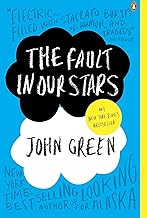
The Fault in Our Stars
John Green
4.7 on Amazon
6 HN comments

Pet
Akwaeke Emezi
4.6 on Amazon
6 HN comments

A Whole New World: A Twisted Tale
Liz Braswell
4.7 on Amazon
5 HN comments

Redwall
Brian Jacques and Gary Chalk
4.8 on Amazon
5 HN comments

The Green Mile
Stephen King, Frank Muller, et al.
4.8 on Amazon
5 HN comments

Armada: A Novel
Ernest Cline, Wil Wheaton, et al.
4.1 on Amazon
5 HN comments
The Hunger Games Trilogy: The Hunger Games / Catching Fire / Mockingjay
Suzanne Collins
4.8 on Amazon
4 HN comments

The Awakening: The Dragon Heart Legacy, Book 1
Nora Roberts
4.8 on Amazon
4 HN comments

Mythology: Timeless Tales of Gods and Heroes
Edith Hamilton
4.6 on Amazon
4 HN comments

As I Lay Dying: The Corrected Text
William Faulkner
4.4 on Amazon
4 HN comments
The Search
Nora Roberts
4.7 on Amazon
4 HN comments

kp25onAug 8, 2016
"P.S. I Love You" by Cecelia Ahern,
"To Kill a Mockingbird" by Harper Lee,
TazeTSchnitzelonJan 21, 2015
Depression Quest springs to mind. Or way the book the protagonist of The Fault In Our Stars loves cuts off abruptly once the main character dies, which upsets her to no end.
kinghtownonOct 3, 2020
Goodreads is kind of a weird space which shows that the popular vote is kind of useless. It’s hard to find a good book based on ratings. Everything seems to be either 4+ stars or garbage. The Fault in our Stars probably has a better rating than print copies of Hamlet. Actually, all classics seem to hover around 3.68 stars. Never 2. In fact, I don’t think any books published in the history of the world have a rating less than 3.
Anyways, the language you google in heavily affects recommendations. Searching in general is not a useful way to find anything cool. It’s much better to happen upon a good source of reviews or criticism which align with whatever gets your rocks off and settle for curated entertainment/art.
InclinedPlaneonSep 7, 2016
One of the dividing lines I have personally for "good" versus "bad" art is whether or not it blooms or withers upon further thought. Diamond Age, I would say, definitely rewards the reader for further thought, because it's a deep and fascinating world with interesting characters and stories. True, the ending of the book doesn't provide complete closure, but to be honest if you want that you can have it just by making up your own ending. That's part of the fun of that book, is that it leaves it open for you to fill in the blanks afterward, and seemingly things looked like they might have worked out alright for Nell.
One of the best books at getting across the concept of not needing complete closure at the end of a book is The Fault in Our Stars by John Green, though that book primes the reader for it whereas Diamond Age doesn't.
victoriasunonNov 1, 2018
For one, I think the marketing term is really used to explain Jin Yong's scope and impact, rather than a flat comparison of genre. In this sense, Jin Yong is, to Chinese literature, as impactful Tolkein is to Western literature.
It is a tradition within Chinese literature to prefer setting your work within our history. Romance of the Three Kingdoms is perhaps the most well-known in this vein. So to be critical of "creativity" here, is, I think a little bit short-sighted. It's like saying a Ken Burns documentary lacks the creativity of The Avengers, because magic powers and superheroes don't exist in the prior. Or trying to compare a book about the personal relationships of a cancer patient (I'm thinking "The Fault In Our Stars" specifically here) to the Harry Potter series. They are just fundamentally different things where creativity is executed in different ways. Who is to say that it is not equally powerful or creative to create characters that are deeply relatable, like Jin Yong's? In my opinion, his characters tended to ask morally difficult questions more often than Tolkein's.
Jin Yong wrote stories that were rooted in Chinese tradition, but his impact among young Chinese minds is greater than what even I can describe in a Hacker News comment. He wrote books that were about strength of self, moral character, freedom, and defiance in a time when the Chinese government strictly punished all of these things. I confess that I know nothing about Tolkein's backstory or history, but I can plainly see his impact. I think it is reasonable to say that Jin Yong's impact is as important and wide spread as Tolkein's.
leoconNov 1, 2018
It sounds like the most obvious eng-lit analogy to Jin Yong in this respect would be T.H. White https://en.wikipedia.org/wiki/T._H._White . White is possibly better regarded than Tolkien overall, though he's a bit less well-known. OTOH White tends to shy away from descriptions of fighting and supernatural conflict to a much greater extent than Tolkien, so maybe Jin Yong (whom I don't know at all) is more like Tolkien in that respect.