
Understanding Comics: The Invisible Art
Scott McCloud
4.7 on Amazon
22 HN comments

The Iliad
Gareth Hinds
4.8 on Amazon
22 HN comments
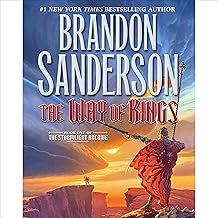
The Way of Kings: The Stormlight Archive, Book 1
Brandon Sanderson, Kate Reading, et al.
4.8 on Amazon
15 HN comments

The Lies of Locke Lamora: Gentleman Bastard, Book 1
Scott Lynch, Michael Page, et al.
4.5 on Amazon
15 HN comments

Artemis
Andy Weir, Rosario Dawson, et al.
4.2 on Amazon
15 HN comments

Watership Down
Richard Adams, Peter Capaldi, et al.
4.7 on Amazon
14 HN comments

Live: Remain Alive, Be Alive at a Specified Time, Have an Exciting or Fulfilling Life
Sadie Robertson Huff and Beth Clark
4.9 on Amazon
13 HN comments
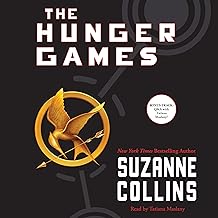
The Hunger Games: Special Edition
Suzanne Collins, Tatiana Maslany, et al.
4.7 on Amazon
12 HN comments

Apple: (Skin to the Core)
Eric Gansworth
4.4 on Amazon
12 HN comments

1776
David McCullough and Simon & Schuster Audio
4.7 on Amazon
11 HN comments

Women in Science: 50 Fearless Pioneers Who Changed the World
Rachel Ignotofsky
4.8 on Amazon
11 HN comments

The Phantom Tollbooth
Norton Juster and Jules Feiffer
4.8 on Amazon
9 HN comments

Life of Pi
Yann Martel
4.4 on Amazon
9 HN comments

Fable: A Novel (Fable, Book 1)
Adrienne Young, Emma Lysy, et al.
4.6 on Amazon
8 HN comments

The Boy Crisis: Why Our Boys Are Struggling and What We Can Do About It
Warren Farrell PhD and John Gray PhD
4.7 on Amazon
7 HN comments

RNeffonJuly 4, 2020
http://scottmccloud.com/2-print/1-uc/index.html
The four printed books by Edward Tufte
https://www.edwardtufte.com/tufte/
Successful Drawing by Andrew Loomis
Composition: Understanding Line, Notan and Color by Arthur Wesley Dow
thrownblownonOct 31, 2019
https://en.wikipedia.org/wiki/Understanding_Comics
yesenadamonNov 17, 2018
[0] Library Genesis's comics section helped with that http://libgen.io/comics/index.php
sovaonOct 4, 2017
SJMosleyonDec 19, 2017
1) Einsteins Dreams - This book is a quick read, but shows a bunch of different perceptions of time. Fantastic.
2) Rock warriors way - Even if you aren't a climber, I feel like this book has a lot of great lessons about committing without fear. Much more accessible as a climber though.
3) Understanding Comics: The Invisible Art - Quick read, I learned a lot about storytelling in general.
4) Agnotology: The Making and Unmaking of Ignorance - This is a series of essays and the first few were great views into companies creating ignorance in the 50's around smoking and link to cancer. Gets a little dense after a while.
Full list:
https://www.goodreads.com/review/list/18975415-samuel-mosley...
yesenadamonNov 20, 2018
The first half of To The Finland Station (1940) was absolutely fascinating (the second half is the story of Marx, Lenin etc which I know more about so didn't read) - about 19th C French historians, and the origins of socialism. I had no idea that 'socialisms' was the name given to those experimental farms/communities all over the US in the early-mid 19th C - that's what the word meant at the time - there's a lot on the history of those. Brilliantly written.
Scott McCloud's Understanding Comics - the history, science and philosophy of comics. Plus it's a comic.
Crucial Conversations - I added this to You Just Don't Understand on my 'Essential Guides for Anyone in a Relationship' list. Equally important for other areas of life.
Deep Work on different ways people like/need to work.
On Not Being Able To Paint (1950) by Joanna Field (Marion Milner). I read her A Life Of One's Own and An Experiment in Leisure (both from the 1930s) 25+ years ago, and loved them dearly. A Life Of One's Own is about her using her diary to learn about herself, something I'd started doing at the time. I owned a copy of On Not Being Able To Paint for many years, but never read it through until very recently. It's surprisingly great. It's about her learning to paint, or rather, learning what painting is, and I found she learns pretty much exactly the things I learnt when I spent 5 years writing orchestral music. (after having been a pianist and painter for many years) Well, maybe I was too young to appreciate it before.
Books I'd read before, but read at least twice more this year: the Zanders' Art of Possibility, Austin Kleon's Steal Like an Artist and Share Your Work!. Various essays of G.K. Chesterton and Robert Louis Stevenson.
smogcutteronOct 2, 2020
That’s quite a strong statement, and one that I think many photographers would disagree with.
Snapshots aside, this severely understates the artistic choices a photographer makes. For one thing, black & white and color read very differently to the eye, and offer different palettes for composition (although it’s not about photography, Scott McCloud’s “Understanding Comics” has a great exploration of the effects of b&w vs color and is a fun read to boot). Basically all b&w cinematography also gives the lie to this statement: it’s impossible to honestly argue that a colorization of, say, the stark expressionism of Night of the Hunter would be a repaired version.
The extent to which a photo is, or is even intended to be, a representation of “primary-source ground truth” is something we’ve been arguing since, like, Edward Said. I’m not saying images should never be colorized, or upscaled, or whatever. Obviously that’s not the case. Peter Jackson’s WWI documentary, as another poster mentioned, is a triumph. But it’s too complicated a conversation to dismiss by declaring, in one sentence like Moses coming down from the mountain, that the purpose of photography is the “lossless communication of information”.
igraviousonNov 12, 2020
If a counting numbers tutorial can be taught by a vampire puppet in a TV show then a programming tutorial can be couched in the form of a comic strip with talking foxes.
Maybe I'm taking you too literally. I mean, are you saying that the Poignant Guide is not to your taste? I'd understand if you were saying that it isn't to your taste. But you don't appear to be saying that -- you appear to be saying that you essentially don't get how the genre is meant to work.
Consider Logicomix: An Epic Search for Truth https://smile.amazon.co.uk/Logicomix-Search-Truth-Apostolos-... -- a biographies of Frege, Russell, and Gödel and the history of predicate logic in comic book form …
Or consider The Thrilling Adventures of Lovelace and Babbage: The (Mostly) True Story of the First Computer https://smile.amazon.co.uk/Thrilling-Adventures-Lovelace-Bab... -- a history of early mechanical computer science in comic book form …
Or consider Understanding Comics: The Invisible Art by Scott McCloud https://smile.amazon.co.uk/Understanding-Comics-Invisible-Sc... -- literary criticism of the comic book form in comic book form!
latexronJuly 13, 2018
A comic about comics, but I don’t think you have to enjoy the medium to get something out of the book. If you enjoy exploring subjects to their core, give it a shot.
2. The Sculptor, by Scott McCloud
The latest fiction graphic novel by the person who wrote a seminal book on comics. No surprise it does a lot of things right.
3. S-Town, by Brian Reed
Technically a podcast, but it was released all at once and is a contained story that lasts for seven hours. I’d say a fairer assessment would be to call it a well produced non-fiction audiobook, which is what you’d expect from the producers of Serial and This American Life. When I recommend it I always tell people to give it until the end of the second episode before deciding if they’ll stick with it.
4. Mindhunter, by John Douglas
Enjoyed the Netflix show? There’s a good chance you’ll enjoy this.
thedudemabryonSep 6, 2012
I think it's pretty cool that a new medium for legal discourse has been actually used. Several years after absorbing Scott McCloud's phenomenal book Understanding Comics (http://en.wikipedia.org/wiki/Understanding_Comics), I set out to argue for a very technical (programming) project at work through a goofy comic. It was surprisingly effective, and got more eyes on it than the more traditional internal wiki plea. I assume that the novelty and incongruence of the medium brings the audience out of whatever comfort zone they routinely occupy.
lackbeardonSep 2, 2017
Fooled By Randomness - a) Survivorship bias. b) If you look at revealed preferences, people choose regular small gains with a rare huge loss over regular small losses and a rare huge gain even though that choice is -ev. c) Much more!
Hackers and Painters - One of the most insightful, subversive, and surprising texts out there.
C Interfaces and Implementations - Great examples of good API design and how to build clean modular code.
The Paleo Manifesto - Explains how the origin of religion was probably as a set of models for coping with the transition from hunting/gathering to civilized agriculture. The part of the book where he points out that the story of the fall of man in the Bible is probably the story of this transition is super interesting.
The Game - Made me realize that the narrative told by boomer and gen-x parents about how to attract a woman is probably doing young men (and women) more harm than good. I would not try to treat this as a how-to manual, though. A fun yarn.
Starting Strength - After years of fumbling around in the gym this cut through a lot of bad ideas about fitness, exercise, strength, and health. It lead to the first real (and lasting) progress I've ever made physically.
Understanding Comics - Understanding art and visual communication.
Surely You're Joking, Mr. Feynman! - Up there with Hackers & Painters in its rate of insight & surprise per page.
Fail Safe Investing - Thought provoking ideas about why we invest and how best to go about doing that. (The ideas stand up, IMO, but some of the concrete advice on how to implement those ideas is very dated.)
Good Calories, Bad Calories - It turns out that even scientists can be dishonest and corrupted by politics.
petercooperonNov 2, 2008
It did focus mostly on online PR, however, so perhaps others could provide deeper coverage on this question on areas I know of but have not tried (or no longer use). For example:
- trade shows
- schwag
- guerrilla marketing
- speaking at events (supposedly can work wonders if you do it right)
- publicity stunts (think Richard Branson)
- becoming a press contact who's quoted a lot
- producing an event for your industry / sector yourself (worked wonders for Carsonified!)
- presenting your product in a remarkable way (think of how Google presented Chrome with the comicbook approach - get inspired by Understanding Comics by Scott McCloud - http://www.scottmccloud.com/ - or see http://xplane.com/ for a more corporate look)
- paying for word of mouth (risky)
- on the street promotion (booths, etc)
- leveraging networks like LinkedIn
- sponsorships
- cross promotions
- affiliate marketing
- e-mail list marketing (not spam)
- lead development and phone calls (surprisingly effective in many areas, though I don't do it as it's not relevant to my sector)
- writing a book on your topic (works better if you're a consultant OR you're happy to be the "face" of your product)
- social objects (look at Hugh MacLeod's career as of the last 3 years)
- be interviewed
- do your own interviews of people in your industry for your company's blog (see FiveRuns' blog for this in action - it's been very successful)
In terms of books, some personal recommendations (as in, I've read them and they rock):
- Dirty Little Secrets of Buzz by David Seaman (this is like dynamite)
- Whatever You Think, Think the Opposite by Paul Arden
- Any of the "Guerrilla Marketing" books by Jay Conrad Levinson
- Ready, Fire, Aim by Michael Masterson.
enobrevonJune 18, 2016
1: http://scottmccloud.com/2-print/1-uc/
erikpukinskisonMar 28, 2017
The fact that you have control over your attention... you can direct it to arbitrary things you could do or feel with an orange... that gives you the subjective impression of seeing the whole thing all at once, but that's just a lie your brain tells you. You only actually experience tiny vignettes.
You imagine your experience of "orange" is this massive huge bandwidth cognitive experience, but you only really need a handful of neurons to maintain a weak signal signifying orange.
A crude drawing of an orange in an app can trigger exactly those same neurons. As long as your mind is busy with other things, you won't even notice the difference. This is why novels work. And it's why comics work. "Understanding Comics" by Scott McCloud does a great job of showing how abstract representations of things can provide richer experiences than realistic ones.
Of course, if you direct your attention to the differences between the crude drawing and a "real" orange, you can interrogate those differences. But the fact that you can explore a rich representation of an orange in your brain doesn't mean that you do when you experience one in daily use.
Minor49eronMay 10, 2021
TV shows, movies, and albums are often revisited by people who enjoy them. Even as I write this, I'm listening to an album right now that I've heard dozens of times before. I may not always be in the mood to listen to it, but my enjoyment of the music has not been eroded by how many times I've already heard it. Rather, being familiar with it, I appreciate both how it's composed, played, and the nuances that are now apparent to me that I certainly missed on my first listens.
One of my favorite books when I was younger was "Understanding Comics: The Invisible Art" by Scott McCloud. It was visually appealing to me at the time, but after several readings, I started to really grasp its concepts as an educational art book.
muraikionDec 6, 2012
One way to appreciate this approach is to contrast the storytelling techniques of western comics vs Japanese manga in the 90s (as they have since borrowed a lot from each other). The book "Understanding Comics" explains how in a western comic book each frame, while containing art, typically contains a lot of text. The story in western comics at the time was very textually driven, with the art as an accompaniment to help illustrate (ha!) what occurred in the text.
In contrast, manga could spend pages on images where the only "text" would be textual sound effects, devoting much space to creating an ambiance or mood. Furthermore, dialog might be more sparse and short, with greater reliance upon illustrating emotion. In fact, one of the reasons that the stereotypical anime style of big heads / large eyes developed was because of the realization that it was an effective technique to wordlessly convey emotions in characters (although this style actually originated in a western comic, Betty Boop).
Sorry, my memory is a bit fuzzy as to how Understanding Comics explained this all, but if you consider this difference in approach to storytelling, you might better understand what "slice of life" anime are doing. The intent isn't necessarily to pull you into a series of events and "go somewhere" immediately.
That being said, I heartily recommend this series. I had always found jazz interesting, although it was a bit too esoteric for me to know where to start. This series introduces jazz through some songs that are very easy to get into, even though they have a lot of depth. The end result of this, for me, was that I ended up taking up the sax and loving it. :)
felipeeriasonDec 12, 2018
→ "Sketching User Experiences", Bill Buxton
→ "The Elements of Typographic Style", Robert Bringhurst
→ "Understanding Comics", Scott McCloud
There are lots of books on concrete design methodologies and particular aspects of the field, but they tend to become dated rather quickly. If they are tied to specific technologies, they become dated even faster.
Having said that, a clear and concise introduction to the modern design process is:
→ "Designing for Interaction", Dan Saffer
PeterMcCanneyonMar 17, 2011
It won't teach developers anything about Photoshop or CSS, but it's an incredible book in terms of Visual Iconography and its effects on readers/users.
His follow up 'Reinventing Comics' is also a must read.
To quote Will Wright (The Sims, Spore)
"Anyone involved in interactive entertainment (games, web, etc.) should read this book. Scott McCloud has once again transcended the world of comics and tapped into much deeper issues of creativity, entertainment and economics."
mortenjorckonDec 12, 2018
If you want to focus on visual language, iconography, and how graphics communicate, an unconventional, yet highly-regarded choice is Scott McCloud’s Understanding Comics. What Norman does for interaction, McCloud does for visual communication (and does so, appropriately, in the form of a comic book).
VaskivoonJan 29, 2014
"[Tom] saw a new girl in the garden--a lovely little blue-eyed creature with yellow hair plaited into two long-tails, white summer frock and embroidered pantalettes."
(Tom Sayer, by Mark Twain)
Reading this, we all pictured the girl in our minds. But I believe the exact image of the girl I have is different from yours. This is our mind working and filling in the gaps of the information that it believes to be missing. Some people may see the girl vividly, filling it with details like some freckles and an embroidered dress while others will simply see a blonde girl with blue eyes. But our ming WORKED to make that.
In the book Understanding Comics by Scott McCloud, he says that the most import place in a comic book is the place between the pannel, where our mind rushes in to fill in the gaps, to connect the action.
Even movies have this. We have the jump cut, that can be considered a jump from one panel to another (with the implicit "space in between"). We also have the "places outside the scene". If someone goes away to get a coffee, we can picture it happening. If the scene is being filmed in a room, and we can only see 3 of the walls, we KNOW there is a fourth one.
And, besides it all, with every medium we consume, we have the "baggage" we take with us. Our knowledge of previous stories, movies, songs, books; our own opinions on the theme and even if we had a good or bad day will influence our experiencing of the "object" (book, movie, etc.)
It isn't because we're not moving our hands that the medium becomes "passive".
Books are what they are. And they are good at it. The author's fault is that he is trying to change books while what he should really be doing is creating a new medium.
RodgerTheGreatonJune 5, 2010
tuhinonMay 13, 2011
Not a designer? Here’s how to make your web apps look awesome
A) Please hire a designer. You might hire someone who is not very costly and fits your budget but I cannot over emphasize the value someone who does this day in day out brings to the table.
OR
B) If you were a designer and wanted to build something, what would you do? Use one of the million ready made coding junks like "Digg Template" or "Twitter template"? No you know very well that innovation does not work that ways. You would pick up a book and learn to program or find someone who knows it and will help you.
Just because "everybody" thinks they can design or make things "look" good, it does not mean it is design. Read a few books like the following to get started:
1)The Design Of Everyday Things by Donald A. Norman, Don Norman (basics of design)
2)Visual Grammar by Christian Leborg (basics of visual design)
3)Stop Stealing Sheep & Find Out How Type Works by Erik Spiekermann (typography)
4)Don't Make Me Think!: A Common Sense Approach To Web Usability by Steve Krug (basics of UX)
5)Understanding Comics by Scott Mccloud (basics of storytelling- useful in web interfaces too)
6)The Visual Display Of Quantitative Informations by Edward R. Tufte (useful in information design and dashboards)
If you have read them and want to learn more, please feel free to contact via my HN Profile.