
Understanding Comics: The Invisible Art
Scott McCloud
4.7 on Amazon
22 HN comments

The Iliad
Gareth Hinds
4.8 on Amazon
22 HN comments

The Way of Kings: The Stormlight Archive, Book 1
Brandon Sanderson, Kate Reading, et al.
4.8 on Amazon
15 HN comments

The Lies of Locke Lamora: Gentleman Bastard, Book 1
Scott Lynch, Michael Page, et al.
4.5 on Amazon
15 HN comments

Artemis
Andy Weir, Rosario Dawson, et al.
4.2 on Amazon
15 HN comments

Watership Down
Richard Adams, Peter Capaldi, et al.
4.7 on Amazon
14 HN comments

Live: Remain Alive, Be Alive at a Specified Time, Have an Exciting or Fulfilling Life
Sadie Robertson Huff and Beth Clark
4.9 on Amazon
13 HN comments
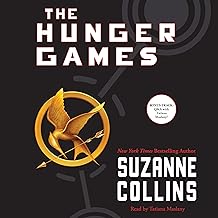
The Hunger Games: Special Edition
Suzanne Collins, Tatiana Maslany, et al.
4.7 on Amazon
12 HN comments

Apple: (Skin to the Core)
Eric Gansworth
4.4 on Amazon
12 HN comments

1776
David McCullough and Simon & Schuster Audio
4.7 on Amazon
11 HN comments

Women in Science: 50 Fearless Pioneers Who Changed the World
Rachel Ignotofsky
4.8 on Amazon
11 HN comments

The Phantom Tollbooth
Norton Juster and Jules Feiffer
4.8 on Amazon
9 HN comments

Life of Pi
Yann Martel
4.4 on Amazon
9 HN comments

Fable: A Novel (Fable, Book 1)
Adrienne Young, Emma Lysy, et al.
4.6 on Amazon
8 HN comments

The Boy Crisis: Why Our Boys Are Struggling and What We Can Do About It
Warren Farrell PhD and John Gray PhD
4.7 on Amazon
7 HN comments

jseligeronAug 31, 2012
EDIT: BTW, a friend and I also wrote a longish essay about how to think about science from the perspective of undergrads trying to get in: http://jseliger.wordpress.com/2012/04/17/how-to-think-about-... , but we included a section about the anti-science-lifestyle literature.
jseligeronApr 18, 2012
The ones I know who are actually grad students or professors tend to take a much more pragmatic view.
I wrote this in another thread: "'Science is a wonderful thing if one does not have to earn one's living at it.' -- Albert Einstein" -- from Philip Greenspun's Women In Science: http://philip.greenspun.com/careers/women-in-science .
japhyronNov 22, 2017
The Boy Who Loved Math: The Improbable Life of Paul Erdos
- https://www.amazon.com/Boy-Who-Loved-Math-Improbable/dp/1596...
Bedtime Math: A Fun Excuse to Stay Up Late
- https://www.amazon.com/Bedtime-Math-Excuse-Stay-Late/dp/1250...
We also started this book recently, and he has really enjoyed it so far:
Women in Science: 50 Fearless Pioneers Who Changed the World
- https://www.amazon.com/Women-Science-Fearless-Pioneers-Chang...
jseligeronApr 17, 2009
jseligeronFeb 27, 2012
"'Science is a wonderful thing if one does not have to earn one's living at it.' -- Albert Einstein" -- from Philip Greenspun's Women In Science: http://philip.greenspun.com/careers/women-in-science .
I would guess the Apple VP has enough money to never have to worry about money, which probably makes the grad school experience quite different than yours.
euroclydononNov 4, 2013
Women in Science:
http://philip.greenspun.com/careers/women-in-science
jseligeronJune 15, 2010
Anyone interested in this subject should read Philip Greenspun's essay Women in Science: http://philip.greenspun.com/careers/women-in-science. Ignore the borderline sexist stuff about women and pay attention to his comments about the structure of science in the United States and the opportunity costs of pursuing a career in science.
<p>As he observes: "Adjusted for IQ, quantitative skills, and working hours, jobs in science are the lowest paid in the United States." And he's right. And then people wonder why more Americans don't go into science.
jseligeronMay 5, 2010
The big problem is opportunity cost: if you're a top-nerd American, you can probably make a relatively large amount of money right out of school as a hacker, engineer, consultant, and so forth. Why, then, go to grad school, get paid relatively little, toil for a job that might not exist, and deal with the uncertainties of academia? On the other hand, if you come from a developing country, grad school stipends can seem relatively large, your home labor market for advanced grads might be saturated, and an American PhD might be the key to advancement.
jseligeronJuly 8, 2012
Stuff like this: "Although the overall unemployment rate of chemists and other scientists is much lower than the national average, those figures mask an open secret: Many scientists work outside their chosen field" should demonstrate why the smartest or most economically aware people who are interested in science might want to think about ancillary fields (like hacking).
I've also co-written a longish guide for undergrads interested in science: http://jseliger.wordpress.com/2012/04/17/how-to-think-about-... , since many of them don't fully understand how science really works in an institutional setting.
giardinionJune 21, 2009
http://philip.greenspun.com/careers/
Also read "Women in Science" by Philip Greenspun at
http://philip.greenspun.com/careers/women-in-science
The latter isn't limited to women's careers; in it Greenspun discusses working in science with an advanced degree.
jseligeronSep 16, 2013
That's true. I think it's telling, however, that the writer doesn't mention getting an academic job, or tenure. I hope his PhD works out for him and his family, who are implicitly along for the ride.
I also hope that, in three to four years, the OP writes an essay about what he thinks after he's gone through the academic grinder.
For an alternate perspective on academia, see Philip Greenspun's "Women in Science" (http://philip.greenspun.com/careers/women-in-science).