
Hillbilly Elegy: A Memoir of a Family and Culture in Crisis
J. D. Vance and HarperAudio
4.5 on Amazon
16 HN comments

Freedom
Sebastian Junger
4.4 on Amazon
16 HN comments

Billion Dollar Whale
Bradley Hope, Tom Wright, et al.
4.5 on Amazon
16 HN comments

The Lessons of History
Will Durant
4.6 on Amazon
16 HN comments

How to Be an Antiracist
Ibram X. Kendi
4.7 on Amazon
14 HN comments

The Decline and Fall of the Roman Empire: Volumes 1-3, Volumes 4-6
Edward Gibbon and Hugh Trevor-Roper
4.5 on Amazon
13 HN comments

The Power of Myth
Joseph Campbell and Bill Moyers
4.7 on Amazon
13 HN comments

Open Veins of Latin America: Five Centuries of the Pillage of a Continent
Eduardo Galeano and Isabel Allende
4.8 on Amazon
13 HN comments

The Fire Next Time
James Baldwin
4.9 on Amazon
12 HN comments

Maverick: A Biography of Thomas Sowell
Jason L Riley
5 on Amazon
11 HN comments

Ordinary Men: Reserve Police Battalion 101 and the Final Solution in Poland
Christopher R. Browning
4.7 on Amazon
11 HN comments
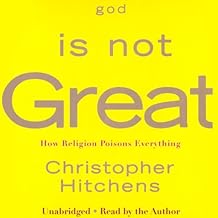
God Is Not Great: How Religion Poisons Everything
Christopher Hitchens and Hachette Audio
4.7 on Amazon
10 HN comments

This Is Your Brain on Music: The Science of a Human Obsession
Daniel J. Levitin
4.6 on Amazon
10 HN comments

Why Buddhism Is True: The Science and Philosophy of Meditation and Enlightenment
Robert Wright, Fred Sanders, et al.
4.5 on Amazon
10 HN comments

Genghis Khan and the Making of the Modern World
Jack Weatherford, Jonathan Davis, et al.
4.6 on Amazon
9 HN comments

ivankiriginonJan 7, 2008
Give it as a gift to anyone who thinks today's political and social class is at all historically unique.
thretonJan 13, 2015
http://www.ccel.org/g/gibbon/decline/volume2/chap50.htm
ohduranonFeb 27, 2021
anigbrowlonJuly 9, 2014
ajlburkeonSep 5, 2012
The Audible edition of Gibbon's "Decline and Fall of the Roman Empire" has worked really well for me: it's a fascinating panorama of history, but very episodic so you don't miss out on plot points if you actually fall asleep; the writing style is clear, elegant, and often funny; and the narrator has a calming voice and a smooth even tone throughout all 1300+ years of history so you won't be jarred awake by changes in volume.
PIonMay 16, 2008
If you're into sci-fi try the old BBC radio series Journey into Space, Operation Luna (the first in the series).
BuckRogersonJuly 7, 2016
And I doubt that the next "The Decline and Fall of the Roman Empire" will originate online either. It might be advertised online, eventually people will pirate it in epub form but no one is putting a great work online first. Because what I'm saying is true.
"I've read a ton of truly insightful, well worded and interesting stories, posts, discussions online"
As have I. It's not worthless, I love the internet. It's just not replacing books. When all the drives fail that store this conversation, there will be a million copies of The Iliad still in existence. I stand by my original statement, books dwarf all these other mediums.
dmixonMar 25, 2018
Agreed, the author is not only making the point that it's a dynamic of modern games (to our detriment) but a reflection of a popular 'myth' held within our post-industrial revolution societies.
>> We live in a brief historical blip where abundant resources and a few centuries of astounding progress have allowed many to believe that the good times will roll forever.
Which is strange worldview considering "The Decline and Fall of the Roman Empire" is one of the most popular and well known books in history, and a widely debated topic in academia. Always with undertones comparing to the unique growth of the modern western society.
There has always been plenty of anxiety about growth throughout our recent history...
cfmcdonaldonJuly 5, 2017
...I shall not descant on the vulgar topics of the misery of kings; but I may surely observe, that their condition, of all others, is the most pregnant with fear, and the least susceptible of hope.
-- Edward Gibbon, The Decline And Fall Of The Roman Empire
mitchtyonJuly 18, 2013
But they had a much harder time dealing with the huge influx of displaced Germanic tribes due to the (Mongols iirc?). The western half of the empire started down the road to things like castles and other behavior like large estates that directly fed into the middle ages. Diocletian and his division of things into dioceses also helped, but I think once they started down the path of dual Augustus/Caesar rule it was bound to fail due to the inevitable clashes of personality.
That said its a great story. A good overview of things is in the "History of Rome" podcast. http://thehistoryofrome.typepad.com/
Its long, but not as bad as The Decline and Fall of the Roman Empire. That book, the horrors.
jackfoxyonSep 18, 2011
I used to consider my knowledge of history better than at least 95% of the population, but while reading The Decline and Fall of the Roman Empire I realized how sketchy my view of history really was. So at the ripe old age of 35 I set off on a course of study centered on two series of books, The Story of Civilization, by Will and Ariel Durant, and Timeframe, a Time-Life series focusing on a timeframe in human history and what was going on in all parts of the world inhabited by man: lots of pictures and of course superficial, but it painted in a lot of gaps I othewise would have never covered. The Timeframe series starts much earlier than the Durant's, but once both series were in sync I would read the books in both series for an epoch, as well as at least two other books, either written in the era or about the era, drawing mostly from science, culture, and biography. For instance I read all the books of Euclid, Newton's Optiks and Principia (I slogged through the Motte transaltion before the first modern English translation became available), The Wealth of Nations, Shelby Foote's 3-volume history of the Civil War, and The Origen of Species. (It's real easy for me to spot folks who spoot-off about Wealth or Origen who have not actually read the books.) My program culminated with Tragedy and Hope, which being such an inflammatory work, I did not trust to read without the full background of history. The process was like watching Western Civilization unfolding.
Now for the unintended consequences: I became a bore at cocktail parties. I wanted to talk about the ideas in the fascinating book I was reading. I used to love arguing politics. Even with my prior knowledge it was hard enough finding opponents who would engage in rational discourse, now it is impossible. It's been so long my debating skills have totally gone down the tubes. The sad thing is I believe my problem is really society's. Political correctness (among other problems) in academia, has produced a generation of intellectually crippled intellectuals; and the entertainment industry, including the 24-hour news cycle as entertainment, has just stupefied people. I fear for democracy and republican government.
AmezarakonJan 25, 2015
caublestoneonFeb 7, 2017