
Hillbilly Elegy: A Memoir of a Family and Culture in Crisis
J. D. Vance and HarperAudio
4.5 on Amazon
16 HN comments

Freedom
Sebastian Junger
4.4 on Amazon
16 HN comments

Billion Dollar Whale
Bradley Hope, Tom Wright, et al.
4.5 on Amazon
16 HN comments

The Lessons of History
Will Durant
4.6 on Amazon
16 HN comments

How to Be an Antiracist
Ibram X. Kendi
4.7 on Amazon
14 HN comments

The Decline and Fall of the Roman Empire: Volumes 1-3, Volumes 4-6
Edward Gibbon and Hugh Trevor-Roper
4.5 on Amazon
13 HN comments

The Power of Myth
Joseph Campbell and Bill Moyers
4.7 on Amazon
13 HN comments

Open Veins of Latin America: Five Centuries of the Pillage of a Continent
Eduardo Galeano and Isabel Allende
4.8 on Amazon
13 HN comments

The Fire Next Time
James Baldwin
4.9 on Amazon
12 HN comments

Maverick: A Biography of Thomas Sowell
Jason L Riley
5 on Amazon
11 HN comments

Ordinary Men: Reserve Police Battalion 101 and the Final Solution in Poland
Christopher R. Browning
4.7 on Amazon
11 HN comments
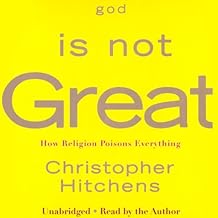
God Is Not Great: How Religion Poisons Everything
Christopher Hitchens and Hachette Audio
4.7 on Amazon
10 HN comments

This Is Your Brain on Music: The Science of a Human Obsession
Daniel J. Levitin
4.6 on Amazon
10 HN comments

Why Buddhism Is True: The Science and Philosophy of Meditation and Enlightenment
Robert Wright, Fred Sanders, et al.
4.5 on Amazon
10 HN comments

Genghis Khan and the Making of the Modern World
Jack Weatherford, Jonathan Davis, et al.
4.6 on Amazon
9 HN comments

mindfulgeekonNov 9, 2016
exolymphonOct 18, 2016
adrronNov 9, 2016
nkzednanonDec 21, 2017
- Hillbilly Elegy By JD Vance
- Golden Son by Pierce Brown (second book in a trilogy) liked the whole trilogy
- Rosie Project/Rosie Effect by Graeme Simsion
- Graceling by Kristin Cashore
- Station Eleven by Emily St. John Mandel
humanrebaronJuly 1, 2017
harryhonJuly 7, 2021
He wrote Hillbilly Elegy which was a NYTimes #1 bestseller, an Oprah book club pick, and sold over a million copies.
It also go made into a movie by Netflix.
He's now running for Senate in Ohio where he stands a decent chance of winning (though Josh Mandel is probably the current frontrunner).
sct202onJune 16, 2020
nkzednanonNov 30, 2017
Red Rising and sequels by Pierce Brown
The Rosie Project by Graeme Simsion
(I read Three Body Problem + sequels in 2016. The first book I thought was ok. I really liked the second book - The Dark Forest - the Dark Forest theory of the universe I thought was quite interesting)
replicatorblogonMar 23, 2017
pkaleronDec 22, 2016
- Hillbilly Elegy by JD Vance
- Tools of Titan by Tim Ferriss
- Competing Against Luck by Clayton Christensen
- Scrum: A Breathtakingly Brief and Agile Introduction by Chris Sims
- Build Better Products by Laura Klein
- Capital in the Twenty-first Century by Thomas Picketty
- Shoe Dog by Phil Knight
- Lean Customer Development by Cindy Alvarez
- Impossible to Inevitable by Aaron Ross & Jason Lemkin
- Grit by Angela Duckworth
- Love Sense by Sue Johnson
- Thinking, Fast and Slow by Daniel Kahneman
- Working Effectively With Legacy Code by Michael Feathers
- Smarter Faster Better by Charles Duhigg
- Sprint by Jake Knapp
- Fooled by Randomness by Nassim Taleb
- Becoming a Supple Leopard by Kelly Starrett
- Superforecasting by Philip Tetlock
- The Inner Game Of Tennis by Timothy Gallwey
- Design Sprint by Richard Banfield
- The Structure of Scientific Revolutions by Thomas Kuhn
- The Signal and the Noise by Nate Silver
- Advanced Swift by Chris Eidoff
- Siddhartha by Hermann Hesse
Some of these books are older and had been on my list for awhile. Some were released this year. Most of these books are very good. I usually stop reading bad books by the end of the first chapter.
jcburnsonJuly 3, 2019
I read Hillbilly Elegy when it came out and my first reaction was “hey, wait, Middletown is really more blue collar, rust belt.” My second reaction is “boy, Vance sure is willing to speak for a huge geographic area that he’s at best only on the edge of.”
But to the Bitter Southerner piece, I want to say that the whole “you have to be from a place to talk about a place” thesis has, for me, been as wobbly as anything Vance puts out. So, what, born there? And the deeper inside the geographic boundaries, the better? Nah. But maybe the author (of the Bitter piece) makes a stronger point that ANY generalization of people tied to a geographic area is weak, shallow, insufficient by definition. People will surprise you. (That’s my generalization.)
gumbyonJan 7, 2017
mrhektoronSep 5, 2017
I wouldn't be surprised if part of the success of Asians (South Asians + East Asians) also stems from the fact that divorce is looked down upon and extraordinary efforts are made to prevent it from happening. Divorcees are often social pariahs in these cultures.
mlthoughts2018onAug 13, 2018
I both read Hillbilly Elegy and also grew up in a small rural Ohio town near Kentucky, very much in the epicenter of the book’s described culture.
I don’t think the book or rural culture has any type of “cone of silence” like that. People do take the law into their own hands more often, but are usual quite loudmouth about it, especially to outsiders and law enforcement.
If anything, I think this type of culture breeds an entitlement complex where people believe their armchair opinions about local justice ought to be treated as serious matters of policy and law, and are more than happy to run their mouths about it and express anger at local law enforcement using accepted standards in an investigation.
acconradonNov 6, 2018
Then I started reading books on skills I wanted to acquire (i.e. Traction for marketing and SPIN Selling for sales).
All of those books lead to recommendations into other books.
Listening to podcasts that recommend books increase the breadth of books I'm reading.
My wife brings home books from the library and I read whatever she reads (i.e. Hillbilly Elegy and The People vs Democracy), and those lead to other nonfiction books I become interested in. And then there are the "classic" novels I interleave from time to time (i.e. Siddhartha and Meditations).
It just starts with maybe a handful of books you are dying to read, try to read for 15 min before bed, and before you know it, you're 50 books into the year!
sudostephonOct 16, 2019
But this article, and others like it, make me cringe like nothing else. A well-off academic type from the north reads "Hillbilly Elegy", decides to take a temp job / vacation in Boone and then writes about how much he learned about "America's divide" from a bunch of 18 year olds at a school for teachers and liberal arts students. Spare me please.
It's a tired trope. A well-heeled, educated outsider who comes down to teach the poor, ignorant working-class mountain folks the ways of civilization , but leaves having learned something heartwarming that money just doesn't buy.
Dudes like this need to stop using Appalachians as pawns for their narratives. The discussions he outlined could have happened anywhere. He just wants to get social credit for trying to "reach out", when all he really did was take a working vacation.