
Hillbilly Elegy: A Memoir of a Family and Culture in Crisis
J. D. Vance and HarperAudio
4.5 on Amazon
16 HN comments

Freedom
Sebastian Junger
4.4 on Amazon
16 HN comments

Billion Dollar Whale
Bradley Hope, Tom Wright, et al.
4.5 on Amazon
16 HN comments

The Lessons of History
Will Durant
4.6 on Amazon
16 HN comments

How to Be an Antiracist
Ibram X. Kendi
4.7 on Amazon
14 HN comments

The Decline and Fall of the Roman Empire: Volumes 1-3, Volumes 4-6
Edward Gibbon and Hugh Trevor-Roper
4.5 on Amazon
13 HN comments

The Power of Myth
Joseph Campbell and Bill Moyers
4.7 on Amazon
13 HN comments

Open Veins of Latin America: Five Centuries of the Pillage of a Continent
Eduardo Galeano and Isabel Allende
4.8 on Amazon
13 HN comments

The Fire Next Time
James Baldwin
4.9 on Amazon
12 HN comments

Maverick: A Biography of Thomas Sowell
Jason L Riley
5 on Amazon
11 HN comments

Ordinary Men: Reserve Police Battalion 101 and the Final Solution in Poland
Christopher R. Browning
4.7 on Amazon
11 HN comments
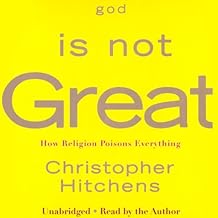
God Is Not Great: How Religion Poisons Everything
Christopher Hitchens and Hachette Audio
4.7 on Amazon
10 HN comments

This Is Your Brain on Music: The Science of a Human Obsession
Daniel J. Levitin
4.6 on Amazon
10 HN comments

Why Buddhism Is True: The Science and Philosophy of Meditation and Enlightenment
Robert Wright, Fred Sanders, et al.
4.5 on Amazon
10 HN comments

Genghis Khan and the Making of the Modern World
Jack Weatherford, Jonathan Davis, et al.
4.6 on Amazon
9 HN comments

seniorThrowawayonJune 21, 2021
I think that most of us like to think we would be the moral exception, it offers some mental comfort, but it's far more likely that we won't.
bitexploderonDec 21, 2018
skraponFeb 25, 2018
The conclusion that book drew was different than this article, and makes more sense to me — that it's not "mean people 'go nazi'", but ordinary people who 'go nazi', given a system which relieves them of responsibility for their actions. "Just following orders" was the typical & honest answer, if I recall. The men didn't feel they bore a moral duty to disobey, because these things just had to be done, or so they were told.
So, if I can riff a bit on the article's themes... maybe mean people will hand you the gun, but anyone will pull the trigger, if they're told to do so.
jayessonJuly 16, 2015
- Ordinary Men by Christopher Browning
- Into that Darkness by Gitta Sereny
Into that Darkness is the most depressing book I've ever read. It is essentially an interview with Franz Stangl, one of the commandants of the Treblinka camp which, if it's possible to believe, was far worse than Auschwitz. He was an ordinary guy who simply went where things took him, ultimately into a place I can't imagine existing.
sebmellenonJuly 22, 2021
There’s a somewhat terrifying book on said topic: Ordinary Men: Reserve Police Battalion 101 and the Final Solution in Poland.
A book review reads: “[this is] a shocking account of how a unit of average middle-aged Germans became the cold-blooded murderers of tens of thousands of Jews”.
The real lesson of the book is that each and any of us could be these ordinary men.
So I’m not sure there really is a tipping point. Maybe we can invent one in retrospect, but as the slow-motion train wreck happens, it’s hard to find any one point where things really go awry. It’s an integrated process.
It’s possible to pass the the buck back forever. The root cause of WW1 is that a group of primitive apes became intelligent and migrated through and out of Africa.
The only thing we can hope to do is fix things as they stand now. We’re probably far past the tipping point already, what with all the damage social media has caused our society.
chewzonJune 16, 2020
> Christopher R. Browning’s shocking account of how a unit of average middle-aged Germans became the cold-blooded murderers of tens of thousands of Jews
https://www.goodreads.com/book/show/647492.Ordinary_Men
https://www.amazon.com/Ordinary-Men-Reserve-Battalion-Soluti...
> The first mass murder takes place in a Polish town called Jozefow. The commander of the unit was teary-eyed and choked up when he gave the order to his men. Accounts hold that he even gave them a way out, stating that if any man didn’t think they were up for the challenge (of murdering thousands of Jews on that day), they were free to step down. About twelve men (among hundreds) decided to step down and opt out of the killing.
> Ultimately, these bakers, salesmen, and police officers were directly responsible for the deaths of 38,000 men, women and children through mass-shootings, and another 45,200 through collecting people from the ghettos and forcing them onto trains for Treblinka (a Nazi extermination camp).
> Browning offers up a variety of reasons that these ordinary men participated in genocide, some more pertinent than others. Among those reasons are deference to authority, psychological need for conformity, fear of a brutal regime, fear of looking “weak” in front of other members of the battalion, detachment from the people they were killing, and indoctrination via the Nazi propaganda machine. None of these individual reasons would have been enough to drive ordinary men to mass murder, but altogether, the reasons became enough for many of them.
Also Masters of Death: The SS-Einsatzgruppen and the Invention of the Holocaust is a good detailed telling of logic of events that lead to invention of extermination camps (it was easier on the consience of Einsatztruppen)
https://www.goodreads.com/book/show/16891.Masters_of_Death
PS. Also reading president Weizsäcker's speech kep in mind that Germany and Austria actively opposed justice upon perpetrators of Holocaust and other war crimes in the East.
gullywhumperonAug 20, 2020
matwoodonAug 13, 2019
From the description:
Browning argues that most of the men of RPB 101 were not fanatical Nazis but, rather, ordinary middle-aged, working-class men who committed these atrocities out of a mixture of motives, including the group dynamics of conformity, deference to authority, role adaptation, and the altering of moral norms to justify their actions.
[1] https://www.amazon.com/Ordinary-Men-Reserve-Battalion-Soluti...
chewzonApr 21, 2019
Well researched (based on testimonials) and well written.
Some men get used to the job, some enjoyed it, some kept refusing.
> Twelve out of 500 soldiers opted out when allowed to leave freely.[34] Those of them who felt unable to continue shooting at point-blank range of prisoners begging for mercy, were asked to wait at the marketplace where the trucks were loaded.[35] The action was finished in seventeen hours. The bodies of the dead carpeting the forest floor at the Winiarczykowa Góra hill (about 2 km from the village, pictured)[36] were left unburied. Watches, jewelry and money were taken.[3]
Unfortunately some of those men who refused were hanged after the war for made up war crimes. History has bitter sense of humor.
> For a battalion of less than 500 men, the ultimate body count was at least 83,000 Jews.[50]
[1] https://www.amazon.com/Ordinary-Men-Reserve-Battalion-Soluti...
[2] http://hampshirehigh.com/exchange2012/docs/BROWNING-Ordinary...
[3] https://en.wikipedia.org/wiki/Reserve_Police_Battalion_101
freehunteronOct 4, 2017
The Art of Software Security Assessment is 1200 pages long. Hitler: A Biography is 1000 pages long. Ordinary Men is shorter at around 400 pages, Ordinary Injustice is about 300, Blood in the Water is 750, Reversing is 600, The Box is 550. Combined those are about 5,000 pages.
I'm even ignoring the programming-specific books because they may not be read cover-to-cover (even though they're likely read at a slower pace in order to try their concepts), but that still seems like too many pages to read and absorb in a three-month period.
AriaMinaeionJune 7, 2021
Not to mention Ordinary Men [0], the dynamic that makes your average citizens with no ideological indoctrination become the murderers of tens of thousands of Jews, to the point they'd shoot at small children with a clear conscience. They'd even have the option not to directly take part in the murders, but still do.
Again, these were average, ordinary people. No strong party affiliation, SS membership or anything.
The fact that Christopher Browning's book was a revelation when it came out shows how little we've learned from WWII. We might have put the lid on undisguised antisemitism, but we have merely channeled its otherising roots elsewhere. Otherwise, we wouldn't find it so easy to turn a blind eye to the settler colonialism happening right now in Palestine.
[0] https://www.amazon.com/Ordinary-Men-Reserve-Battalion-Soluti...