
Hillbilly Elegy: A Memoir of a Family and Culture in Crisis
J. D. Vance and HarperAudio
4.5 on Amazon
16 HN comments

Freedom
Sebastian Junger
4.4 on Amazon
16 HN comments

Billion Dollar Whale
Bradley Hope, Tom Wright, et al.
4.5 on Amazon
16 HN comments

The Lessons of History
Will Durant
4.6 on Amazon
16 HN comments

How to Be an Antiracist
Ibram X. Kendi
4.7 on Amazon
14 HN comments

The Decline and Fall of the Roman Empire: Volumes 1-3, Volumes 4-6
Edward Gibbon and Hugh Trevor-Roper
4.5 on Amazon
13 HN comments

The Power of Myth
Joseph Campbell and Bill Moyers
4.7 on Amazon
13 HN comments

Open Veins of Latin America: Five Centuries of the Pillage of a Continent
Eduardo Galeano and Isabel Allende
4.8 on Amazon
13 HN comments

The Fire Next Time
James Baldwin
4.9 on Amazon
12 HN comments

Maverick: A Biography of Thomas Sowell
Jason L Riley
5 on Amazon
11 HN comments

Ordinary Men: Reserve Police Battalion 101 and the Final Solution in Poland
Christopher R. Browning
4.7 on Amazon
11 HN comments
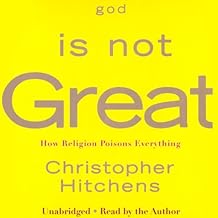
God Is Not Great: How Religion Poisons Everything
Christopher Hitchens and Hachette Audio
4.7 on Amazon
10 HN comments

This Is Your Brain on Music: The Science of a Human Obsession
Daniel J. Levitin
4.6 on Amazon
10 HN comments

Why Buddhism Is True: The Science and Philosophy of Meditation and Enlightenment
Robert Wright, Fred Sanders, et al.
4.5 on Amazon
10 HN comments

Genghis Khan and the Making of the Modern World
Jack Weatherford, Jonathan Davis, et al.
4.6 on Amazon
9 HN comments

joe_bleauonJan 6, 2009
aridiculousonOct 26, 2016
I previously thought music was composed without any rules.
StevenOttoonFeb 2, 2014
guscostonMar 28, 2011
t0mmyb0yonAug 19, 2020
jvvwonMar 18, 2021
I'm still trying to make sense of this all myself - you've got Karl Friston's Free Energy Principle essentially saying that the brain is trying to minimise surprise. And yet if you look at the explore-exploit dilemma then 'optimism in the face of uncertainty' is a possible strategy. I'm sure there is a way to reconcile these - I don't understand the Karl Friston stuff properly yet.
smoeonApr 22, 2020
E.g.:
https://learning.blogs.nytimes.com/2011/05/25/is-14-a-magic-...
https://www.nytimes.com/2018/02/10/opinion/sunday/favorite-s...
I think the book "This Is Your Brain on Music" also talks about it, but I haven't read it yet.
https://www.amazon.com/This-Your-Brain-Music-Obsession/dp/04...
I have never dug deeper on it, but it rings very true for my own case and friends I talked with about it. To the music that awed me when I was a teenager, most intensely so Scandinavian melodic death metal, I still to this day have a stronger emotional reaction than anything I listen to before or after that period of my life. Even tough I don't listen to those songs anymore that often and there are plenty of modern songs in similar styles that I do think are better in many aspects, that just don't have the same goosebumps effect anymore.
And I think the main difference here is me, not the music that has changed, that has gotten better or worse.
computatoronMar 2, 2021
That's a fascinating idea; I googled and found what might be the story you're looking for:
[quote]
In the best seller “This is your brain on music” by Daniel Levitin, he talks about John R. Pierce (inventor of the travelling wave vacuum tube and the first telecommunications satellite) who, interested to discover rock music, asked him to summarize the genre in a concise list of six songs. Levitin ended up with a list of songs from Little Richards, the Beatles, Jimi Hendrix, Eric Clapton, Prince and the Sex Pistols.
Interestingly, while listening, Pierce was not really interested by the songs themselves, their melodies, their harmonic structures or their rhythm characteristics, but he said he found the “timbres” to be remarkable and described them as being new, unfamiliar, and exciting.
Levitin concludes his story by saying: “The way in which instruments were combined to create a unified whole - bass, drums, electric and acoustic guitars, and voice – that was something he (Pierce) had never heard before. Timbre was what defined rock for Pierce. And it was a revelation for both of us.”
Quoted from "An Overview of the Concept of Timbre and its Use in Contemporary Music and Record Production" by Mathieu Bedwani
dougk16onApr 15, 2013
Some interesting points/arguments that I remember from reading it several years ago:
- In many languages, the word "sing" is the same as the word "dance".
- It's relatively recently in our history that the majority of people have become only listeners of music, instead of creators.
- As humans evolved, one's ability to sing, dance, and play instruments well displayed good physical, intellectual, and emotional health to the opposite sex, and so gave you an evolutionary edge.
- Something about how even the most non-musically-inclined people can extract the beat from a song better than a computer and repeat it later perfectly (memory is hazy on this one...I'm probably saying something stupid here).
That's all I remember for now...references are in the book of course. Very good read.
m0nasticonDec 10, 2011
Fiction-
- Reamde (Bought it when it came out, but had to wait to start until I finished some other stuff on my list)
- The Big Blowdown by George Pelecanos
Nonfiction-
- Russian Criminal Tattoo Encyclopedia (Volume 1) -- primarily for research, but it's fascinating.
- Dark Markets by Misha Glenny
- How to Live on Mars by robert Zubrin
- The Lightness of Being by Frank Wilczek
- This is Your Brain on Music by Daniel Levitin
- Towards a New Architecture by Le Corbusier
- and Strange Things Happen by Stewart Copeland
Technical-
- Tangled Web (I saw someone else mention it, and it's really really good so far)
- Skiena's Algorithms book (making slower progress than I'd like).