Adventures of Huckleberry Finn
Mark Twain
4.6 on Amazon
12 HN comments
It
Stephen King, Steven Weber, et al.
4.7 on Amazon
12 HN comments

Invisible: A Novel
Danielle Steel
4 on Amazon
12 HN comments
Dark Matter: A Novel
Blake Crouch
4.5 on Amazon
12 HN comments

Leviathan Wakes
James S. A. Corey
4.7 on Amazon
12 HN comments

American Psycho
Bret Easton Ellis, Pablo Schreiber, et al.
4.5 on Amazon
11 HN comments

The Overstory: A Novel
Richard Powers
4.4 on Amazon
11 HN comments

The Fifth Season: The Broken Earth, Book 1
N. K. Jemisin, Robin Miles, et al.
4.5 on Amazon
11 HN comments
And Then There Were None
Agatha Christie
4.5 on Amazon
11 HN comments

All Quiet on the Western Front
Erich Maria Remarque, Frank Muller, et al.
4.7 on Amazon
11 HN comments

1Q84
Haruki Murakami, Allison Hiroto, et al.
4.4 on Amazon
10 HN comments

The Kite Runner
Khaled Hosseini
4.7 on Amazon
10 HN comments
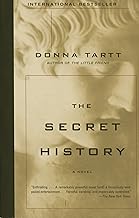
The Secret History
Donna Tartt
4.3 on Amazon
10 HN comments

Gone Girl
Gillian Flynn
4 on Amazon
10 HN comments

Beloved
Toni Morrison
4.5 on Amazon
9 HN comments

jeffFrom18FonDec 23, 2018
self_awarenessonJuly 8, 2020
fouralarmfireonSep 16, 2019
(and then the rest of the Broken Earth series)
great dystopian sci-fi
throw1234651234onJuly 23, 2021
Other than that, it used to be a trusted resource: https://en.wikipedia.org/wiki/Nebula_Award_for_Best_Novel
AndrewStephensonJuly 2, 2019
I also enjoyed reading Ignition! by John D Clark. It is a dated (written in the 70s) but fascinating look at all the different chemicals tried to make rockets during the space race. Very interesting even if, like me, you only have a simple understanding of chemistry. There are some hair-raising (or hair razing) anecdotes.
I keep a list of books I've liked to answer questions like this:
https://sheep.horse/tagcloud.html#book
nlonJuly 8, 2020
It's not uncommon for series to win like that (getting a Hugo award for the first book means people will start the series, and since the awards are popular voting having people read your book is half the struggle).
I think the first two books (The Fifth Season and the Stone Sky) were great, but I didn't love the final book. I think Ann Leckie's Provenance should have won that year - it's in the (Hugo award winning!) Ancillary Justice universe, and deals with lots of issues around AI that I think many at HN would enjoy.
And as for the dead comments complaining that her winning is some kind of conspiracy because it's not hard SF: Fantasy has long won Hugo awards.
Also: (a) go read it - it's got a system of magic that is as hard as any magical faster than light technology in a space opera, and (b) Gaiman won with American Gods and The Graveyard Book. The Yiddish Policemen’s Union won in 2008. Harry Potter and the Goblet of Fire won.
AndrewStephensonDec 12, 2018
The Murderbot Diaries by Martha Welles --> kind of trashy but fun and enjoyable.
Priest by Matthew Colville --> terrible, don't read this.
It's Behind You - The Making of a Game by Bob Pape --> Interesting if you grew up in the 8bit era
Jade City by Fonda Lee --> Basically Jedi street gangs, pretty great
Spin by Robert Charles Wilson --> Near future hard sci-fi with a Big Dumb Object, excellent
Making the Monster by Kathryn Harkup --> Non-fiction about Mary Shelley, disappointing
Annihilation by Jeff VanderMeer --> Effectively creepy and well written
The Fifth Season by N. K. Jemisin --> Absolutely fantastic, highly recommended
[0] https://sheep.horse/tagcloud.html#book
int_19honFeb 6, 2019
“This book is about slavery, a false oppression narrative that equates having legitimately dangerous magical powers that kill people with being an oppressed minority, like a person of color. This whole story is absolutely repulsive.”
It immediately reminded me of Jemisin's "The Fifth Season", because that's pretty much the central plot device there: people with dangerous magical powers being discriminated against, out of fear, in ways that directly and obviously parallel racial discrimination of blacks in real world USA.
Except that book won Hugo for best novel in 2016.
So, what was actually so offensive about this book? I'm genuinely curious to see for myself now.
jasteronJuly 8, 2020
I read the Broken Earth books and thoroughly enjoyed them (especially the first). I found Jemisin's worldbuilding and protagonists writing to be very compelling.
I strongly recommend to read at least the Fifth Season to see if her writings are to your taste.
The fact that some would object that she is a Sci-fi writer seems... rather reductive to me at the least. Sure Jemisin does not write "hard" SF, and the Broken Earth has some strong fantasy tropes. But so did Frank Herbert and Ursula Le Guin, two among the most revered writers of the genre.
[EDIT] I should not even say that she does not write hard SF, since I did not read her other books (yet). I should have kept it at "The Broken Earth trilogy is not hard SF"
CodeMageonFeb 16, 2018
- "Hello Summer, Goodbye" by Michael Coney
- "Oryx and Crake" by Margaret Atwood (the first book in the Maddaddam trilogy)
- "The Fifth Season" by N. K. Jemisin (the first book in the Broken Earth trilogy)
- "The Mechanical" by Ian Tregillis (the first book in the Alchemy Wars trilogy)
- "Nexus" by Ramez Naam (the first book in the Nexus trilogy)
- "Snow Crash" by Neal Stephenson
- "Pandora's Star" by Peter F. Hamilton (part of the Commonwealth Saga)
- "Hyperion" and "Fall of Hyperion" by Dan Simmons
- "Lock In" by John Scalzi
- "Blindsight" by Peter Watts
kelnageonDec 13, 2020
The latter is particularly strange to me, since Douglas Adams was a huge fan of Wodehouse, used very similar humour, and even wrote forewords for Wodehouse re-printings.