Adventures of Huckleberry Finn
Mark Twain
4.6 on Amazon
12 HN comments
It
Stephen King, Steven Weber, et al.
4.7 on Amazon
12 HN comments

Invisible: A Novel
Danielle Steel
4 on Amazon
12 HN comments
Dark Matter: A Novel
Blake Crouch
4.5 on Amazon
12 HN comments

Leviathan Wakes
James S. A. Corey
4.7 on Amazon
12 HN comments

American Psycho
Bret Easton Ellis, Pablo Schreiber, et al.
4.5 on Amazon
11 HN comments

The Overstory: A Novel
Richard Powers
4.4 on Amazon
11 HN comments

The Fifth Season: The Broken Earth, Book 1
N. K. Jemisin, Robin Miles, et al.
4.5 on Amazon
11 HN comments
And Then There Were None
Agatha Christie
4.5 on Amazon
11 HN comments

All Quiet on the Western Front
Erich Maria Remarque, Frank Muller, et al.
4.7 on Amazon
11 HN comments

1Q84
Haruki Murakami, Allison Hiroto, et al.
4.4 on Amazon
10 HN comments

The Kite Runner
Khaled Hosseini
4.7 on Amazon
10 HN comments
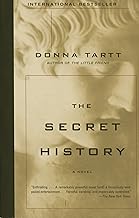
The Secret History
Donna Tartt
4.3 on Amazon
10 HN comments

Gone Girl
Gillian Flynn
4 on Amazon
10 HN comments

Beloved
Toni Morrison
4.5 on Amazon
9 HN comments

ghuntleyonJan 4, 2016
- https://www.youtube.com/watch?v=Agu6jipKfYw - Controlling Time and Space: understanding the many formulations of FRP by Evan Czaplicki (Elm language designer/Prezi)
- https://www.youtube.com/watch?v=1XNATGjqM6U - FRP In Practice: Taking a look at Reactive[UI/Cocoa] by Paul Betts (Slack/GitHub)
- https://www.youtube.com/watch?v=HPyKHxy7X0w&t=18 - ReactiveUI - It's pretty neat by Brendan Forster (GitHub)
legoheadonDec 19, 2017
* Flowers for Algernon
* Going Rogue: Spells, Swords, & Stealth
* Split the Party: Spells, Swords, & Stealth
* NPCs
* Children of Time
* Death's End
* The Shining
* IT
* All 7+1 books of The Dark Tower
tpmxonAug 2, 2021
https://www.scientificamerican.com/article/its-time-to-end-t...
Classic article.
It's Time to End the War on Salt - The zealous drive by politicians to limit our salt intake has little basis in science
baschonDec 11, 2016
http://www.businessinsider.com/facebook-stock-letter-shareho...
The entire company was structured so he had control, forever. The only reason to buy stock is if you think he will continue to print money. I think it is refreshing to have a company built to be able to completely ignore quarterly profits and activist investors fighting for short term gains.
sogradyonApr 13, 2015
Analyst
## Who is RedMonk
We're the analyst firm that thinks developers are the most important constituency in technology. Our work shows up here on HN from time to time.
## What You Need to Have
- A rational, fact-based based approach. Opinions are fine. Data is better.
- The ability to synthesize disparate data from different sources, both quantitative and qualitative.
- Excellent communication skills, and ideally experience presenting.
- The ability to write clear, digestible and insightful analysis of complex technology – and not take months to do it.
- A reasonable online presence. You don’t need to be Taylor Swift, but if you don’t know what Twitter is there’s a problem.
- Deep and relevant technical expertise in technology infrastructure.
- A personality that both we and our clients enjoy working with. You can call this the no assholes rule.
- The ability to travel regularly to industry events and client sites.
- A passion for developers.
## It’d Be Nice If You Had
- A background in statistics, economics or both.
- Exposure to/training with statistical programming languages (R or Python if you must).
- Experience as a developer, whether as a hobby or profession.
- A broad range of technology exposure (as opposed to being
expert in a tiny niche).
- Familiarity with media creation and editing; audio, video or both.
- An affinity for craft beer.
To apply for the position, please submit a cover letter, project samples, resume and anything else you think we should consider to hiring@redmonk.com.
eternalbanonAug 31, 2019
In my experience, people who say silly things about Java -- the technology, which certainly includes the Java Language Semantics, and JVM -- actually do not know what you can do with Java (the language).
So yes, you Lisp nerds have you homoiconic 'mash' of syntax and thus AST manipulation, and we have first class Class Loaders and Byte Code Engineering and the sky is the limit there. Magic.
But the sad reality of programmers' lives is the disconnect between the required cognitive capabilities of workers and the actual (domain) task at hand.
tldr;/ its your job that is uncool not the tech.
unaloneonOct 12, 2009
Finnegans Wake - This book can't be explained until you've seen it. The pinnacle of the English language.
tmm84onJan 20, 2021
organsnyderonJune 28, 2017
My belief—shaped by many at the forefront of the DevOps movement—is that it is a cultural focus rather than a technical one. In many ways, it's an extension of agile philosophies, with a focus on fast feedback, transparency, heightened interactions between teams, etc. There is also a heavy focus on automation (CICD), but the automation is there to serve the cultural goals. Just because you do CICD doesn't mean you're necessarily doing DevOps, and you can adopt a lot of DevOps principles without doing full CICD.
Books:
* The Phoenix Project— introduces a lot of concepts (such as lean principles) that are foundational to the movement
* Effective DevOps (Oreilly)
* The DevOps Handbook
Podcasts:
* Arrested DevOps
* DevOps Cafe
Blogs:
* IT Revolution
Events:
* DevOpsDays conferences
* Local meetups
* Velocity conferences
* DevOps Enterprise Summit
Having a good grasp of both development and operations skills is helpful. But it's far from complete. If you solely focus on the technical aspects without examining the cultural, you're missing the foundation of the movement.
kthejoker2onMar 8, 2021
A pattern language is an organized and coherent set of patterns. They are developed holistically to work in relation with each other. They're designed to be combined together - as sequences, in parallel, as contrasts - and also to be as "platform-agnostic" as possible.
For example, Alexander's book helpfully includes a ton of points on how to combine the various patterns in the book, and a healthy "see also:" section to get alternative ideas or just areas of overlap between them all.
And the patterns in the book are about the physical, environmental, and social needs of humans (the problems) and how they can be met trough architecture and infrastructure.
It's very distinct from just "a list of patterns." They're always described in service to the whole, in relation to the others.
For the English language, I would say Aristotle's Rhetoric is closest in spirit; whereas Elements of Style is clearly more a "list of patterns"
Other "pattern language"-style books I can think of are The Prince by Machiavelli; Capital by Marx; 22 Immutable Laws of Marketing by Ries and Trout; Diffusion of Innovations by Rogers; and High Output Management by Andrew Grove.
I would also say the original C2 Wiki comes closest to creating a "bottoms-up" pattern language. Here's the entry on A Pattern Language - https://wiki.c2.com/?PatternLanguage
But these books aren't explicitly set up as pattern language books - nor are many others. Very few books (not even the GoF) are put together so well and as comprehensively as A Pattern Language. It's truly a masterpiece.
dansoonJan 1, 2013
Books:
* Winston Churchill, A History of the English-Speaking Peoples, Volume I and Volume II
* Philip K. Dick, Minority Report
* Ian Fleming, Diamonds are Forever
* Fred Gibson, Old Yeller
* Billie Holiday, Lady Sings the Blues
* Alan Lerner, My Fair Lady
* Eugene O’Neill, Long Day’s Journey into Night
* John Osborne, Look Back in Anger
* Dodie Smith, 101 Dalmatians
-
Movie titles:
* Around the World in 80 Days
* The Best Things in Life are Free
* Forbidden Planet
* Godzilla, King of the Monsters!
* It Conquered the World
* The King and I
* The Man Who Knew Too Much (1956 remake by Alfred Hitchcock
of his 1934 British film)
* Moby Dick
* The Searchers (1956 film version with John Wayne from Alan Le May’s 1954 novel)
* The Ten Commandments (1956 version by Cecil B. DeMille, who also directed a similar film in 1923)
pjonAug 10, 2009
With examination I see "Infected," left self third from the top. I notice IT and The Stand on the left shelf second from the bottom. Must be the Stephen King shelf. Lots of sci-fi on the shelf above that. Textbooks in the shelf on the right...
http://www.randsinrepose.com/assets/randsshelf.jpg
Do you recognize any other books?