
The Great Gatsby: The Original 1925 Edition (A F. Scott Fitzgerald Classic Novel)
F. Scott Fitzgerald
4.9 on Amazon
57 HN comments

The Brothers Karamazov
Fyodor Dostoevsky, Richard Pevear, et al.
4.7 on Amazon
33 HN comments

Anna Karenina
Leo Tolstoy , Richard Pevear, et al.
4.7 on Amazon
28 HN comments

Nightfall: Devil's Night #4
Penelope Douglas
4.7 on Amazon
20 HN comments

Fifty Shades of Grey: Book One of the Fifty Shades Trilogy
Becca Battoe, E. L. James, et al.
3.9 on Amazon
19 HN comments

Persuasion: A Jane Austen's Classic Novel (200th Anniversary Collection Edition)
Jane Austen
4.5 on Amazon
12 HN comments

The Scarlet Letter
Nathaniel Hawthorne
4.3 on Amazon
11 HN comments

The Witness
Nora Roberts, Julia Whelan, et al.
4.7 on Amazon
8 HN comments
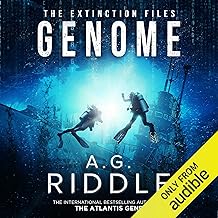
Genome: The Extinction Files, Book 2
A. G. Riddle, Edoardo Ballerini, et al.
4.5 on Amazon
6 HN comments

Secrets and Lies
Selena Montgomery
4.5 on Amazon
6 HN comments

You Just Don't Understand: Women and Men in Conversation
Deborah Tannen
4.3 on Amazon
6 HN comments

Complications: A Novel
Danielle Steel
? on Amazon
6 HN comments

Gone with the Wind
Margaret Mitchell, Linda Stephens, et al.
4.8 on Amazon
6 HN comments

Lone Wolf
Diana Palmer, Kate Pearce, et al.
4.5 on Amazon
5 HN comments

Ship of Theseus
J. J. Abrams and Doug Dorst
4.6 on Amazon
5 HN comments

ahelweronJan 2, 2021
rayineronFeb 19, 2016
rocketpastsixonMay 29, 2020
"The Great Gatsby" - F. Scott Fitzgerald
MichaelCrawfordonJuly 22, 2015
SandB0xonAug 2, 2010
The Great Gatsby by F. Scott Fitzgerald
Generation X: Tales for an Accelerated Culture by Douglas Coupland
Any friend of Gatsby is a friend of mine.
omarchowdhuryonDec 22, 2008
The Great Gatsby by F. Scott Fitzgerald
One Flew Over The Cuckoo's Nest by Ken Kesey
Nonfiction:
Market Wizards: Interviews with Top Traders by Jack D. Schwager (1993)
Guns, Germs, and Steel by Jared Diamond (history)
mahmudonDec 7, 2011
scytheonMay 14, 2011
steveseareronNov 9, 2015
shawndumasonDec 21, 2010
mjevansonSep 3, 2018
At least it's not The Great Gatsby (blegh) 8 chapters of annoyance and one lonely chapter of actual non-world building.
paleotropeonJune 3, 2021
I actually read it again 30 years later and it's a pretty good book. Terrible people in it though.
mynameishereonJan 28, 2010
treebogonJan 2, 2021
pen2lonFeb 20, 2016
Read the Great Gatsby last year, was shocked at how much I liked it. Will definitely give My Antonia a read.
soperjonSep 10, 2014
TalanesonJan 2, 2021
ansyonAug 22, 2011
acabalonFeb 10, 2021
jmmcdonFeb 14, 2017
That remark is from a highly favourable review, but you have to actually read it: http://www.chicagotribune.com/lifestyles/books/ct-prj-great-...
nostalgkonJune 20, 2019
dalkeonJan 31, 2013
iuguyonFeb 14, 2011
The worst thing is it doesn't seem to be that bad a platformer either!
digisthonAug 25, 2016
What really helped advance my understanding from zero to knowledgeable novice was rewriting some existing code line by line (using expanded variable names and comments), and thinking about each line and what it does as you go. It's the software development equivalent of Hunter S. Thompson re-typing The Great Gatsby just to get the feel of writing a great novel. Here's one I did based on Denny Britz's tutorial:
Britz's Original: http://www.wildml.com/2015/09/implementing-a-neural-network-...
My version: https://gist.github.com/sthware/c47824c116e6a61a56d9
HTH
infectoidonFeb 3, 2014
> While working, he used a typewriter to copy F. Scott Fitzgerald's The Great Gatsby and Ernest Hemingway's A Farewell to Arms in order to learn about the writing styles of the authors.
Source: http://en.wikipedia.org/wiki/Hunter_S._Thompson#Early_journa...
ambivalentsonMar 5, 2018
And if you don't trust your own judgment, you could look up some of the time-tested classics. Some of my favorites: The Great Gatsby, To Kill A Mockingbird, 1984 (fiction); Warren Buffett/Berkshire Hathaway shareholder letters (business/sales writing).
WorldMakeronAug 28, 2018
Part of the reason I started joking that a/c was a mistake was a friend noted how much of the drama of Southern US literature surrounds hot weather and commenting on such. There was an idea that all of the "best plays" such as Gone With the Wind, some of August Wilson's plays, and seemingly the majority of Tennessee Williams' plays, devote _a lot_ of the dialog to just how hot it is. That often leads to character's own tensions and dramas boiling out. It shows up in a lot of books at the time too, like Fitzgerald's works (The Great Gatsby). That lead to me joking that maybe a/c has lead to a great suppression of our emotions and a lack of good drama in our lives. It's obviously more a correlation in those works than a causation, but in its own way an amusing thought experiment in the different tempos of life in such places before and after a/c.
cousin_itonJuly 18, 2019
Yes, and that difference is the whole point of art vs entertainment. After consuming entertainment, you want more entertainment. But after consuming art - after reading The Great Gatsby - your eyes get yanked back to your own life. You start thinking "what doomed dreams do I have?", not "when will they release Great Gatsby 2?"
bfrancom01onFeb 19, 2016
klodolphonJan 19, 2021
Even if you like reading, the experience of being forced to read some particular book can make it feel like the book itself has wronged you.
polka_haunts_usonJan 15, 2021
I just want to say that of every book I was required to read in high school, The Great Gatsby is the only one that I never understood why we read it. The only thing I got out of it is "Being a vapid rich asshole isn't all it's cracked up to be". I understand it as a product of its time and a portrait into the Roaring 20s, but that subtext works better in an actual History class than an English class.
telonDec 6, 2007
The Life of Pi by Yann Martel
the McSweeney's Quarterly Concern (Not a book per se, but
very enjoyable)
Shakespeare (Everything, I'm surprised he's only been mentioned once so far)
The Great Gatsby by F. Scott Fitzgerald
The Book of the New Sun by Gene Wolfe
Shogun by James Clavell
Then, of course, the regular hodgepodge of Card, Asimov, Adams, Gaiman, Pratchet, Stephenson, Feynman, and that LOTR guy, Tolkey or sommat. (In all seriousness, though, all of these authors are phenomenal, if well-known for being such)
ebiesteronSep 10, 2014
First, the books that introduce us to the world of literature tend to stay with us, especially those we choose on our own. This is opposed to the books we are forced to read because they are "great." For example, I still hate "The Great Gatsby" even if it is objectively great because I was forced to read it in a class with a teacher whom I did not respect.
So, I'm going to say Piers Anthony was more memorable to me than Hemingway. I'm sure that Harry Potter would have stayed with me if I'd read it at 12.
I watched through these lists and noticed that some of my best read friends still had YA books on their lists, so it doesn't seem to be "just" a matter of people who don't read much.
hristovonAug 29, 2009
Also my favorite authors like Nabakov, Heller, Vonnegut, PKD, Chandler, Hammet, etc. always had pretty interesting plots. They were not idiotic "made for tv plots" where every single conflict had to be neatly resolved by the end of the book, but they were interesting and absorbing. They were also very critically acclaimed.
I think really the problem is that there is a subjanre of novels that emerged that is intended exclusively to be read as assignments in college classes. These tend to be incredibly boring, so that literature professors so that lit profs can justify their existence and because most readers are essentially forced to read them. If those types of books are dead, good riddance.
luxonOct 12, 2009
2. The Great Gatsby
And yet I read mostly non-fiction... :)
It's hard to say these are my absolute top two (that's probably an eight-way tie in reality), but Gatsby definitely hit me at a pivotal time and became a subtle but big influence, and Monte Cristo was just a brilliantly entertaining yet very deep and touching story.
mslaonApr 30, 2020
[snip]
> The books remain in school libraries, but will no longer be taught.
> According to a flier from the district’s Office of Instruction, Angelou’s memoir had been challenged over its “sexually explicit material, such as the sexual abuse the author suffered as a child, and its ‘anti-white’ messaging”, while Fitzgerald’s classic novel was pulled for “language and sexual references”. Invisible Man was marked for containing “language, rape and incest”, while Catch-22 was included for its violence, “a handful of racial slurs” and the fact the characters “speak with typical ‘military men’ misogyny and racist attitudes of the time”.
Here's the full flier as a PDF:
https://go.boarddocs.com/ak/matsu/Board.nsf/files/BNQSWL743B...
sramsayonDec 9, 2020
This is not a problem confined to ancient texts. If you read The Great Gatsby any time before the 1990s, you probably read a quite "corrupt" version of it. And, of course, there's Hamlet -- a textual situation so complicated, that some scholars have spent most of their careers trying to work it out.
Jun8onDec 14, 2012
"During this time he worked briefly for Time, as a copy boy for $51 a week. While working, he used a typewriter to copy F. Scott Fitzgerald's The Great Gatsby and Ernest Hemingway's A Farewell to Arms in order to learn about the writing styles of the authors."
aidianonNov 25, 2012
As far as 'process', play with different stuff and find what works for you. I find it does help to outline a bit -- but only in the most informal way. I edit better on paper. Hunter Thompson actually typed The Great Gatsby to get a feel for Fitzgerald's rhythms. Fuck around until something fits.
Edit your copy ruthlessly. I will routinely change 90% of my copy between first and final drafts.
Keep your audience in mind: who you're writing for should affect every word.
Write as tight as possible.
pseudolusonFeb 10, 2021
[0] https://www.biblio.com/moby-dick-by-melville-herman/work/550...
nhebbonDec 24, 2012
Also, if you're reading Kafka, In the Penal Colony is a short story I enjoyed that I don't see mentioned much.
madrafionSep 3, 2017
bravuraonOct 6, 2020
HST: "If you type out somebody's work, you learn a lot about it. Amazingly it's like music. And from typing out parts of Faulkner, Hemingway, Fitzgerald - these were writers that were very big in my life and the lives of the people around me - so yea I wanted to learn from the best I guess."
http://brianjohnspencer.blogspot.com/2014/06/hunter-s-thomps...
qeorgeonJan 28, 2010
I enjoyed "The Great Gatsby" as a story, but it didn't connect with me in the way it seems to connect with others. However, I suspect that read in a different moment of my life its impact could be profoundly different.
crooked-vonJune 9, 2021
> I admit I'm limited to the sample I've experienced personally but it's over 90%.
You need to read a wider selection of books, then. Try, say, The Great Gatsby, Pride and Prejudice, Of Mice and Men, Frankenstein, Jane Eyre, A Christmas Carol, The Grapes of Wrath, The Time Machine, Dune, The Hitchhiker's Guide to the Galaxy, the Foundation series, anything by Ray Bradbury... there's a very long list of books that are not driven by simplistic good vs. evil conflicts.
karatestomponMay 12, 2020
I guess if I had any advice to offer to someone wanting to achieve that (if it's an achievement) it'd be to try older popular literature (try King Solomon's Mines, it's amazing, then work your way to even older stuff) to get used to older English (nb not Old English, which is another thing entirely and you're not likely to encounter much of it in anything but an extremely deep reading of English lit) and to read short, relatively easy "literary" works that are more recent. Vonnegut's way at the easy end. Maybe try Fitzgerald's The Great Gatsby or his short stories? Salinger's Nine Stories? I'm not sure—at this point I have trouble judging what's approachable. I'd make a terrible teacher of literature.
Lots of things kinda work this way. Jazz and "classical" music usually take some work on the listener's part, to personally learn and develop, before they yield their greatest fruits. Most folks have trouble enjoying silent films, but there are some damn good ones out there. Just takes effort and time.
alexandercrohdeonFeb 21, 2020
This is probably true. If I was the person to write this, and post this on my personal blog, and submitted it to HN, nobody would give a fuck.
Of course, that may not indicate anything, because that could be said for Newton's Principia, Einstein's Relativity, The Great Gatsby, Proof of Fermat's last theorom...
I think the question isn't "Would the world appreciate this if it weren't by PG?" but "SHOULD the world appreciate this, even if it weren't PG?"
mjevansonSep 17, 2016
1984: A HORRID read, but a very telling archetype of distopia.
The Great Gatsby: It really took 8 chapters to cover the thin vain outer shell before cracking in to the empty but interesting destruction of it all? Maybe a good metaphor for market crashes and corrections, but not a good read.
The discussion part; I don't recall having a single meaningful actual /discussion/ of the books in class. That might have actually helped make the mindless drudgery of reading them have more meaning and allowed for deeper reflection about the meaning of the content we head read.
lionheartedonAug 2, 2010
I read Gatsby and came away with two thoughts:
1. How incredibly well constructed. Almost every paragraph weaves a story together that starts off slow and then accelerates incredibly rapidly.
2. I think it's so popular because it paints a picture of rich people as actually unsuccessful at what really matters to them, depraved, inconsiderate, immoral, and miserable and hollow on the inside. Note how frequently the book is recommended by English professors with no money who generally hate wealthy people - it's like, "see, they're like us, just even worse!"
Worth reading, though, at the very least to see what the fuss is about. It is incredibly well-constructed from a writing standpoint.
prewettonOct 8, 2015
These "high-performers" mentioned by the parent post, do you want to live the lives they did? O. Henry died when he was 47, in part due to liver cirrhosis. [1] F. Scott Fitzgerald died when he was 44, in large part because of his drinking. [2] Frankly "The Great Gatsby" feels kind of dingy and depressing, and I, personally, do not want to have the kind of experiences in my life that would enable me to write such a book. Hemingway had four marriages and ended up committing suicide. [3] All the people I know that have been through a divorce describe it as extremely painful; to do it three times must leave a huge emotional scar. Is that the kind of "happier lives" you want to lead? Is it really high-performing to die at 44? How much greater could they have been if they weren't depressed, addicted, and/or lived twice as long? Have you read about the kind of lives alcoholics and their families have, let alone addicts of heavier drugs? Do you like being out of control (because when you are addicted, the addiction controls you, not the other way around)?
Be wise. Don't believe the lie that you would be free if only those taboos weren't holding you back. What if there is a very good reason those taboos are there?
[1] https://en.wikipedia.org/wiki/O._Henry
[2] https://en.wikipedia.org/wiki/F._Scott_Fitzgerald
[3] https://en.wikipedia.org/wiki/Ernest_Hemingway
LarryMade2onMay 11, 2020
- All these decisions I call shopping, where you do a lot of research but never commit. At some point you have to start working on something.
- I bet you have a few candidates for what things you want to do/use. Pick one, start using it. Only then can you figure out if that's the right choice or whether you need to do/try something else on your short list.
If you are too nervous about something because it all matters too much, then start with some throwaway thing that is related that you won't mind if it turns out a mess. Usually I pick something with a problem area that I have mainly been "shopping" for, and put the tool/language/data/etc through it's paces.
If you don't know where to start, re-create/copy something that already exists. That will reduce the need for planning for your first steps.
It's been said novelist Jack Kerouac re-typed F. Scott Fitzgerald's the Great Gatsby twice because he that it was favorite book and wanted to write like a book like that, by actively putting those words on paper he got a better understanding of how to write.
voidhorseonFeb 13, 2017
It's ridiculous it's assigned as high school level reading. Yes the prose is appropriate for high school understanding, and the base themes are comprehensible enough, but man, the entire subject matter of this book largely revolves around scenarios, concepts, and behaviors one usually doesn't become aware of, or have any direct experience of, until adulthood.
Worse still, forcing students to read the book in high-school/ end of junior high probably just turns them off from it, or leads them to falsely feel like its not worth as much as it actually is because so much of it is attuned to adult experiences teenagers can't quite sync up with yet, even if they were born into a rich family or use the fullest powers of their imagination.
There's a tremendous gulf between the social landscapes of adults and those of children. (Though you could perhaps argue part of the point is to maybe show this isn't the case--nonetheless, I think certain things defy comprehension until we've experienced them ourselves, or until we've at least encountered sufficient analogues or had enough time to synthesize a variety of other proxy experiences into an equivalent)
barglonMay 17, 2016
THAT was how he proved that he went to Oxford. Nowadays, if you want to know where someone went to school you'd do a quick search and take the first thing you find. If you are more diligent you'd dig deeper.
It's also very clear that Gatsby treasures his anonymity and the reputation he's built around being mysterious.
The reason I bring this up, is that it represents (in my mind) an indicator that there is an argument to be made that public anonymity has already changed so much in the past 20 years. Granted there were still ways of verifying all of this information before it was just a lot slower.
This post just stirred up some thoughts that I had this morning while reading. The internet more drastically technology have changed our culture so much it's almost impossible to realize the effect.
Just thought I'd share some musings I had this morning that tied into the current topic.
jeffersonheardonSep 2, 2017
Getting Things Done - David Allen. If you have adult ADHD like me, and you haven't read this, it's the first system that's really worked for productivity for me.
Man's Search for Meaning - Victor Frankl.
Living Buddha, Living Christ - Thich Nhat Hanh.
Cosmos - Carl Sagan.
The Left Hand of Darkness - Ursula K. LeGuin.
The One who Walks Away from Omelas - U.K. LeGuin.
Wild Seed - Octavia Butler.
The Heike Monogatari - (tr. Helen Craig McCullough) “The sound of the Gion Shoja temple bells echoes the impermanence of all things; the color of the sala flowers reveals the truth that to flourish is to fall. The proud do not endure, like a passing dream on a night in spring; the mighty fall at last, to be no more than dust before the wind.” If you need a comparison. this is the Japanese historical equivalent of Game of Thrones combined with a bit of MacBeth. The rise and fall of two shogunate families, and an analysis of the tragic flaws of character that brought their fall about.
Les Miserables - Victor Hugo.
Small Gods - Terry Pratchett.
Heart of Darkness - Joseph Conrad.
The Guide - R. K. Narayan.
Evidence - Mary Oliver.
All of Us - The Collected Poetry of Raymond Carver.
Silence - Shusaku Endo.
The Great Gatsby - F Scott Fitzgerald.
The Wind-Up Bird Chronicle - Murakami Haruki. This and the next four are odd choices, perhaps, since it's a surrealist book, but IMO books that force your imagination to work hard do as much for creativity and fresh ideas as any of the more popular methods.
The Well-Built City (The Physiognomy / Memoranda / The Beyond) Jeffery Ford - Surrealist novellas best described as about the protagonist living and achieving agency within the constructs, dreams, and nightmares of a "Great Man's" mind.
Snow Crash - Neal Stephenson.
Gravity's Rainbow - Thomas Pynchon.
Dhalgren - Samuel L. "Chip" Delany.
larryfreemanonJune 14, 2009
It's a story that seeks to describe the great divide between the middle and the upper classes.
I'm really not clear what you mean by "something is about to be said...but isn't."
It's a novel. Do you mean that you didn't understand the purpose of certain story events or do you literally mean that nothing is revealed in the story.
techopolyonFeb 26, 2020
Carrie should be on the bookshelf next to other somewhat recent masterpieces like the Grapes of Wrath, Invisible Man (Ellison's), Lord of the Flies, the Great Gatsby, and Ulysses.
ernesthonMay 9, 2013
the USA, Mexico, Guatemala, Honduras, Samoa, Saint Vincent and Grenadines, and Ivory Coast.
All countries except the USA apply a law that states that books enter the public domain a given number of years after the death of the author. In Europe, it is 70 years, in Canada 50, in Mexico 100. See http://en.wikipedia.org/wiki/List_of_countries_copyright_len...