
The Great Gatsby: The Original 1925 Edition (A F. Scott Fitzgerald Classic Novel)
F. Scott Fitzgerald
4.9 on Amazon
57 HN comments

The Brothers Karamazov
Fyodor Dostoevsky, Richard Pevear, et al.
4.7 on Amazon
33 HN comments

Anna Karenina
Leo Tolstoy , Richard Pevear, et al.
4.7 on Amazon
28 HN comments

Nightfall: Devil's Night #4
Penelope Douglas
4.7 on Amazon
20 HN comments

Fifty Shades of Grey: Book One of the Fifty Shades Trilogy
Becca Battoe, E. L. James, et al.
3.9 on Amazon
19 HN comments

Persuasion: A Jane Austen's Classic Novel (200th Anniversary Collection Edition)
Jane Austen
4.5 on Amazon
12 HN comments

The Scarlet Letter
Nathaniel Hawthorne
4.3 on Amazon
11 HN comments

The Witness
Nora Roberts, Julia Whelan, et al.
4.7 on Amazon
8 HN comments
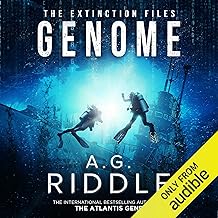
Genome: The Extinction Files, Book 2
A. G. Riddle, Edoardo Ballerini, et al.
4.5 on Amazon
6 HN comments

Secrets and Lies
Selena Montgomery
4.5 on Amazon
6 HN comments

You Just Don't Understand: Women and Men in Conversation
Deborah Tannen
4.3 on Amazon
6 HN comments

Complications: A Novel
Danielle Steel
? on Amazon
6 HN comments

Gone with the Wind
Margaret Mitchell, Linda Stephens, et al.
4.8 on Amazon
6 HN comments

Lone Wolf
Diana Palmer, Kate Pearce, et al.
4.5 on Amazon
5 HN comments

Ship of Theseus
J. J. Abrams and Doug Dorst
4.6 on Amazon
5 HN comments

divkakwanionDec 16, 2019
* The Intelligent Investor by Benjamin Graham
* Complications by Atul Gawande
* The Structures of Everyday Life: Civilization and Capitalism, 15th-18th Century by Fernand Braudel
prakashkonDec 16, 2011
captaincrowbaronDec 15, 2019
Michael Benson - Space Odyssey - The detailed story of the making of 2001: A Space Odyssey. If you're a fan of the movie, or of Stanley Kubrick and/or Arthur C. Clarke in general, you should read this.
Atul Gawande - Complications - Fascinating look at life in the medical profession.
Christina Thompson - Sea People - Detailed, well-researched history of Polynesian-Western contact and relations. As a New Zealander I was interested in this, although American or European readers with no personal connection may be less so.
Peter Singer - Marx: A Very Short Introduction - What it says on the tin.
Robert C Allen - Global Economic History: A Very Short Introduction - Also good, but inaccurately titled; it should have said "Global Economic History Since the Industrial Revolution".
Fraser A Sherman - Now and Then We Time Travel - A thorough if somewhat superficial survey of time travel in the movies.
Alec Nevala-Lee - Astounding - A history of the magazine Astounding Stories, and the four men most closely associated with it: John Campbell, Robert Heinlein, Isaac Asimov, and Ron Hubbard. Very thoroughly researched and annotated; it reveals a lot of new information and debunks a lot of old myths. (Whichever version of the "FBI visits Campbell to complain about A-bomb stories" you've heard, I can pretty much guarantee it wasn't the real one.)
Elizabeth Sandifer - Tardis Eruditorum 1: William Hartnell - The first volume of a thorough study of Doctor Who, with a combined fannish and scholarly point of view that I enjoyed.
Randall Munroe - How To - It's by Randall Munroe, what else do you need to know?
sosa2konApr 3, 2017
Sorry about the lack of technical knowledge into the CS stuff, first post here and I haven't really put in the time to learn about CS and AI yet.
ThripticonAug 7, 2016
sundarurfriendonAug 2, 2016
* 'Better' by Atul Gawande (also his 'Complications' and of course 'The Checklist Manifesto')
* 'A Short History of Nearly Everything' by Bill Bryson.
Fiction:
* 'Fragile Things: Short Fictions and Wonders' by Neil Gaiman
* 'The Name of the Wind' by Patrick Rothfuss
Graphic novels ("comics"):
* 'Watchmen' by Alan Moore
* 'Promethea' by Alan Moore (actually I'm halfway through this, and loving every bit of it)
Special mentions:
* 'How to Fail at Almost Everything and Still Win Big' by Scott Adams - I only gave this a 4-star rating on Goodreads when I finished it, but I'm finding that I'm usefully applying more and more of the things I learnt from this book as the months go by.
* 'Yoga Benefits Are in Breathing Less' by Artour Rakhimov - to be considered more of an article, taught me useful stuff about O2/CO2 balance in the body, their respective effects, and hence ultimately the effects of different rates of breathing.