
Guns, Germs, and Steel: The Fates of Human Societies
Jared Diamond Ph.D.
4.5 on Amazon
239 HN comments
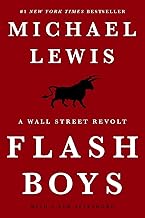
Flash Boys: A Wall Street Revolt
Michael Lewis
4.6 on Amazon
89 HN comments

The Making of the Atomic Bomb: 25th Anniversary Edition
Richard Rhodes, Holter Graham, et al.
4.6 on Amazon
84 HN comments
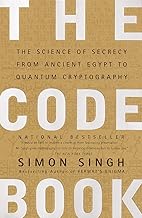
The Code Book: The Science of Secrecy from Ancient Egypt to Quantum Cryptography
Simon Singh
4.7 on Amazon
82 HN comments

The Signal and the Noise: Why So Many Predictions Fail - but Some Don't
Nate Silver, Mike Chamberlain, et al.
4.4 on Amazon
53 HN comments

Homo Deus: A Brief History of Tomorrow
Yuval Noah Harari
4.6 on Amazon
40 HN comments

Collapse: How Societies Choose to Fail or Succeed: Revised Edition
Jared Diamond
4.5 on Amazon
38 HN comments

Barbarians at the Gate: The Fall of RJR Nabisco
Bryan Burrough and John Helyar
4.7 on Amazon
38 HN comments
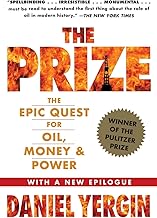
The Prize: The Epic Quest for Oil, Money & Power
Daniel Yergin
4.7 on Amazon
36 HN comments

The Rise and Fall of the Third Reich: A History of Nazi Germany
William L. Shirer, Grover Gardner, et al.
4.7 on Amazon
27 HN comments

Einstein: His Life and Universe
Walter Isaacson, Edward Herrmann, et al.
4.6 on Amazon
26 HN comments

Nothing to Envy: Ordinary Lives in North Korea
Barbara Demick
4.7 on Amazon
20 HN comments

Common Sense: The Origin and Design of Government
Thomas Paine and Coventry House Publishing
4.8 on Amazon
19 HN comments

Bowling Alone: Revised and Updated: The Collapse and Revival of American Community
Robert D. Putnam
4.3 on Amazon
19 HN comments

The Road Less Traveled: The Secret Battle to End the Great War, 1916-1917
Philip Zelikow
4.7 on Amazon
19 HN comments

tsothaonJan 21, 2015
encodereronDec 8, 2014
PankajGhoshonSep 15, 2013
Currently reading: The Rise and Fall of the Third Reich (one of the comprehensive and popular works on the topic)
IsamuonFeb 4, 2017
neiconDec 22, 2016
Harry Potter and the Methods of Rationality by Eliezer Yudkowsky
The Martian by Andy Weir
The Rise and Fall of the Third Reich by William L. Shirer
Cryptonomicon by Neal Stephenson
Honorable mention from 2015: Sapiens by Yuval Noah Harari. I have just started Homo Deus and my first impression is that is is a worthy sequel.
krishna2onApr 9, 2015
Would appreciate more suggestions for World War 1, World War 2 histories, especially Russian History books.
Already on my reading list (a few related to the above):
- Gulag
- Guns of August
- Churchill
randycupertinoonDec 18, 2020
merceronNov 9, 2019
I can't speak for its accuracy, but as a sidenote I found it fascinating and somewhat painful to read how the writer deals with homosexuality (quite negative). I suppose in its time this was a common enough sentiment, but it was still rather jarring.
0xmohitonDec 16, 2019
- How Democracies Die https://en.wikipedia.org/wiki/How_Democracies_Die
- The Rise and Fall of the Third Reich: A History of Nazi Germany https://en.wikipedia.org/wiki/The_Rise_and_Fall_of_the_Third...
tatersolidonFeb 22, 2019
She was wearing a T-shirt bearing the face of noted mass-murderer Che Guevara.
fenderbluesjronFeb 26, 2021
I read a lot of biographies of legendary figures. Whether its Stalin, Oppenheimer, Teddy Roosevelt or Robert Moses, they are nearly always big readers. They tend to treat it quite seriously too. Not a few books per year, but 50-100+.. Teddy Roosevelt had 4 hours~ of his days' schedule blocked off for reading particular books, during an election campaign!
For me (and I believe, for them too), reading is serious business and the rewards really are great. This is not 'curl up by the fire with a nice story' and I will suddenly incur some magical benefits. Rather there are some things that are not easily achieved otherwise. Books allow you to efficiently deep dive and when you dedicate lots of hours to it, you can really make staggering progress. Reading all of the books on a particular topic becomes an achievable task. I could spend some hours scouring the internet trying to learn about a particular topic, or I could blast through a 200-300 page book on the topic. When you start treating books as your primary source of learning about new topics, and you build up a sort of grit for getting through books, you become a bit of an information processing machine and it is a bit magical.
I nearly always have a stack of books on my desk now and I just plow through them one after another. I would never absorb so much useful information reading articles on the internet or watching videos. Books are #1 for efficiency..
Right now I'm primarily reading Shirer's The Rise And Fall of The Third Reich.. It's a massive book (1100+ pages) and will take me over 2 weeks. It's hard to imagine how I could possibly get this much information on the same topic any other way. Try and find some documentary series? Follow my nose on wikipedia clicking around? Crap options, mostly. If I do this with two or three more books, by almost any measure, I have become somebody who knows a lot about WW2 and nazi germany. Now follow process with many other topics..
dopeboyonOct 24, 2016
I grew up when the History Channel was nicknamed the "Hitler channel". I've read Manchester's the Last Lion, Shirer's The Rise and Fall of the Third Reich, and will soon be ordering Ullrich's Hitler - Ascent. Saving Private Ryan is in my top 5 favorite movies of all time.
This is currently my wallpaper: https://upload.wikimedia.org/wikipedia/en/thumb/5/59/US_Army...
jszymborskionApr 3, 2017
While Luddendorf was certainly in agreement of Hitler's rhetoric re: restoring Germany's former military might, my understanding was that Luddendorf's role in the Beer Hall Putsch consisted of Hitler waving a gun at him, putting him in another room when he refused to join his movement, and announcing to the audience gathered at the Beer Hall that he Luddendorf had agreed to lead the rebellion.
Luddendorf then agreed to it when he saw the support, and the following day when shooting broke out at a police standoff with some couple thousand Nazi's, Luddendorf strode through the volley of bullets to the police line where he surrendered himself promptly.
Or atleast that was the narrative that was presented to me in William L. Shirer's The Rise and Fall of the Third Reich.
It still amazes me today how anyone could walk away from such an incredibly embarrassing failure as the Beer Hall Putsch, but it seems to have been something of an acceptable occurrence at the time. I mean, Hitler often spoke as death as the only alternative to him achieving his revolution, but ran off after the first shot was fired to his country home!
Hitler was even received well when he was tried, and given a very lenient sentence. I guess for Germany coming out of WWI, violence was a far more acceptable and commonplace thing than it is in my world
c0nfusedonJune 11, 2013
The Nazi's managed to document things exhaustively, so it serves as a jumping off point into a bunch of other places you will very likely find interesting books and articles about most of the aspects of the regime.
hsodonJune 16, 2020
Hitler saw this and built a political movement around it.
mapsteronSep 26, 2017
scrumperonNov 6, 2019
The best trawl through this marterial is the gargantuan (but highly readable) "The Rise and Fall of the Third Reich" by William Shirer, an American journalist living in Europe during Hitler's rise to power and the second world war.
ptaipaleonFeb 10, 2015
The start of this thread was a comment with a link that described how Hitler defied the bankers. That stuff is nonsense. The Nazi economic policy was bonkers, or would have been if it weren’t just a preparation for a war of conquest, which it was. It couldn’t have sustained in peace.
It started with a massive monetary expansion by issuing the so-called "Mefo bills", and went on nicely for a few years. Expropriating the wealth of Jews – and non-Jewish but pacifist or socialist businessmen like Hugo Junkers – helped in the beginning, of course. In just five years after gaining power, the Nazis were annexing their neighbours and confiscating the wealth of Austria and Czechoslovakia, which enabled them to keep going for another year or two.
"How Hitler defied bankers" was more a policy of expropriation – justified by hate and rancour – and then military expansion, rather than economics. Nazi Germany couldn’t operate in peace mode; it had to start a war of conquest and resort to slave labour to keep its economics working.
Drawing parallels with "bankers" and "World Jewry" is a tool in the classic anti-Semitist kit. Hitler hated Jews, as he documented his idea of cleaning Jews away in Mein Kampf. It is disgusting to imply that this is sort of okay because originally Jews were just to be deported, not exterminated, and then Jews brought their misfortune on themselves by some "declaration of war" by "World Jewry" that then "provoked" the extermination.
Yes, read Hillberg. Read Shirer’s The Rise and Fall of the Third Reich, particularly chapter 7 about nazification of Germany. And please read the book to the very deserved end.
Not everything that Nazis did was bad or crazy, but much of it was. The economics certainly was. "How Hitler defied the bankers" is no model to build an economic policy, unless you plan to make war.
therealdrag0onAug 27, 2019
I peaked (according to Goodreads) in 2012 when I read 75 books (including many large tomes! Godel Escher Bach, Rise and Fall of the Third Reich, Catch-22, Hyperion, Brothers Karamazov, Thinking Fast and Slow). But after all that, I felt like a hollow/vain effort. I felt like I spent TOO much time in books, time not investing in relationships or skills.
Now I read ~25 a year, and that seems like a sweet spot (though I still feel like I spend too much time on reddit/HN heh).
Anyways the OP article resonated with me. I've been taking the bus for the first time in my life this year and am wanting to start writing while on it.
JadeNBonApr 22, 2020
Mathematics offers an opportunity here that history doesn't: there is a definite starting point, namely, the axioms. Not every course can or should start at the axioms, but it is there as an option, as it isn't with history.
Even so, this point is a very interesting one. I hated history in grade school, but then stumbled upon Shirer's Rise and Fall of the Third Reich while browsing the shelves one day. It hooked me, but made reference to a lot of WWI history that I didn't know, so I started reading about WWI history. But, to understand the antipathies in WWI, you have to go back even further in European history ….
This hunt backwards for first causes has led me to Wilson's Heart of Europe, which traces the history of the Holy Roman Empire. It's a struggle, because it's much more on the scholarly than the popular side of things to which I am accustomed, but I'm engaged in it because it's helping me answer questions that I posed, rather than ones that my history teachers both posed and, all too soon, answered.
I think that the best education, lies or no, is the one that both leaves students asking their own questions, and equips them with the tools to seek out the answers to those questions themselves.
rattrayonJune 16, 2020
I think there's a moral component and a practical component. The latter becomes very difficult when taking a stand against a government entity in your home jurisdiction, since the offending government may put you out of business or something.
For example, in Nazi Germany (which I agree is a useful example to reference), a company that refused service to the Nazis would have had its executives murdered and been taken over by the state within a day. (My guess based on my recent read of The Rise and Fall of the Third Reich, but I may be off).
On the other hand, refusing service to North Korea (sanctions aside) is a clearly ethically correct thing and offers little practical risk for companies based in the West.
anigbrowlonDec 13, 2016
rattrayonJune 16, 2020
After Trump took office, I began reading The Rise and Fall of the Third Reich, to be on guard – I was afraid. The ICE camps are evil, scary, cruel, and probably illegal, but not indicative of the sort of fascism we saw under the Nazis. After all, they functioned similarly under the previous US president, who did not seem to have fascist tendencies. As others have mentioned, the detainment of the Uighurs rings much, much closer to Nazi Germany. In some ways scarier.
We have the freedom to leave work and sit in front of courthouses in protest until those responsible for ICE atrocities are prosecuted. We have other similar such freedoms.
Demanding your employer to take a foolhardy action which will register as a minor inconvenience in the target's IT department is... just silly. It's grasping at the closest power center you can find instead of making the effort to find a relevant one.
old-greggonAug 7, 2016
It's a book I wish everyone would read, particularly everyone in a public office and the media. It's a shame that comparing politicians and their actions to Hitler has became a cliche everyone now is quick to ignore. Meanwhile there's plenty of stuff happening in the world straight from the Nazi playbook of the 30s.
fjarlqonJan 2, 2017
http://webcache.googleusercontent.com/search?q=cache%3Ahttps...
"What books would be entering the public domain if we had the pre-1978 copyright laws?"
"Consider the films and television shows from 1960 that would have become available this year."
Also listed: songs from 1960 (e.g. Elvis's "It's Now or Never"), and copyrighted scientific research from 1960 still behind paywalls (e.g. 1960 papers on the structure of hemoglobin and myoglobin).
hoziywonFeb 12, 2017
Also, I highly suggest everyone making the Hitler comparison actually read the definitive work "The Rise and Fall of the Third Reich: A History of Nazi Germany," so we can perhaps have some more intelligent comparisons than: "You know who else used repetition? Hitler."
Every article I read seems to have become a fun little exercise in "How can I put both Trump and Hitler into this seemingly innocuous article about cognitive fusion?"
It's obnoxious and old. If you want to actually do a Trump-Hitler comparison, read a book on the topic and write an actual paper about it instead of just flinging it out willy-nilly so you can fear-monger your readership into believing that actual dystopian eugeno-fascism is just on the horizon.
jnsaff2onJan 2, 2014
SA was in essence a gang of lowlifes that used murder, intimidation and terror to get rid of opponents.
Hitler had amazing abilities to lie to everyone to get to the result he wanted.
That said, one can not fail drawing up parallels with some of the aspects how The Third Reich got to power and how the people running it operated with what's going on in the world today.
http://www.amazon.com/Rise-Fall-Third-Reich-ebook/dp/B005Z57...