
Guns, Germs, and Steel: The Fates of Human Societies
Jared Diamond Ph.D.
4.5 on Amazon
239 HN comments
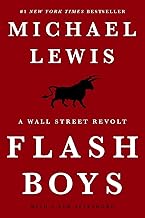
Flash Boys: A Wall Street Revolt
Michael Lewis
4.6 on Amazon
89 HN comments

The Making of the Atomic Bomb: 25th Anniversary Edition
Richard Rhodes, Holter Graham, et al.
4.6 on Amazon
84 HN comments
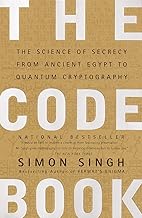
The Code Book: The Science of Secrecy from Ancient Egypt to Quantum Cryptography
Simon Singh
4.7 on Amazon
82 HN comments

The Signal and the Noise: Why So Many Predictions Fail - but Some Don't
Nate Silver, Mike Chamberlain, et al.
4.4 on Amazon
53 HN comments

Homo Deus: A Brief History of Tomorrow
Yuval Noah Harari
4.6 on Amazon
40 HN comments

Collapse: How Societies Choose to Fail or Succeed: Revised Edition
Jared Diamond
4.5 on Amazon
38 HN comments

Barbarians at the Gate: The Fall of RJR Nabisco
Bryan Burrough and John Helyar
4.7 on Amazon
38 HN comments
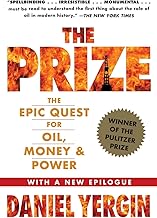
The Prize: The Epic Quest for Oil, Money & Power
Daniel Yergin
4.7 on Amazon
36 HN comments

The Rise and Fall of the Third Reich: A History of Nazi Germany
William L. Shirer, Grover Gardner, et al.
4.7 on Amazon
27 HN comments

Einstein: His Life and Universe
Walter Isaacson, Edward Herrmann, et al.
4.6 on Amazon
26 HN comments

Nothing to Envy: Ordinary Lives in North Korea
Barbara Demick
4.7 on Amazon
20 HN comments

Common Sense: The Origin and Design of Government
Thomas Paine and Coventry House Publishing
4.8 on Amazon
19 HN comments

Bowling Alone: Revised and Updated: The Collapse and Revival of American Community
Robert D. Putnam
4.3 on Amazon
19 HN comments

The Road Less Traveled: The Secret Battle to End the Great War, 1916-1917
Philip Zelikow
4.7 on Amazon
19 HN comments

asp742onAug 17, 2009
nabla9onDec 4, 2018
You might want to jump directly to point: https://youtu.be/NXdQfPrU64g?t=704
hardfireonMay 22, 2019
I will pick Einstein at some point in the future. This was my first read from Issacson.
WalterBrightonSep 5, 2014
nabla9onNov 28, 2018
https://www.youtube.com/watch?v=NXdQfPrU64g
submitted few days ago: https://news.ycombinator.com/item?id=18523667
m-watsononNov 2, 2020
Einstein: His Life and Universe by Walter Isaacson. It's worth a read.
CamperBobonOct 31, 2011
I've got copies of both Einstein: His Life and Universe and Steve Jobs on my nightstand right now, awaiting their respective time slices, and I've got to say that this article didn't make me optimistic about diving into them.
edwonNov 29, 2019
SuperChihuahuaonDec 23, 2015
The books I liked the most were:
- The Unthinkable: Who Survives When Disaster Strikes - and Why
- On Intelligence
- The Martian
- The Innovators: How a Group of Hackers, Geniuses and Geeks Created the Digital Revolution
- Einstein: His Life and Universe
- Alan Turing: The Enigma
- Neuroscience for Dummies
- Thunder Run - (which is about the battle of Baghdad in 2003)
pranay01onJan 2, 2017
1. Sapiens by Yuval Noah Harari
2. Einstein: His Life and Universe by Walter Isaacson - What was interesting for me to learn was that even though he was a great scientist, he was very humane in other aspects - and you can easily relate to.
3. The Hitchhiker's Guide to the Galaxy by Douglas Adams - Fun read which is also deeply philosophical at the same time. Got me interested in science fictions as a genre.
4. Meditations by Marcus Aurelius - Great intro to stoic philosophy
huijzeronOct 4, 2020
I think the question already starts off in the wrong direction. There are no tricks which solve the problems completely. It would be like asking for a trick to gain muscles or a trick to learn Spanish. The trick for both is: do the work. I'd argue that it is the same for focus. For example, Einstein was able to work through the sound of his crying baby [1]. Ignoring the questionable fatherhood practices, it shows that Einstein did not need a trick to get into the flow.
Doing the work implies that you optimize for doing the work. For one, that means reducing the number of possible distractions. Two great examples are Donald Knuth and Linus Torvalds. Knuth, doesn't read his emails or letters for extended periods of time and Linus' workplace is a desk staring straight to a white wall. Both people have clearly optimized for avoiding distractions and they seem to have come quite far with their lifes. If you want to hear a similar message about cutting distractions from an ex-Navy SEAL, then see Jocko [2].
Note that my examples do assume an, lets say, average Hacker News individual. Of course, if you have ADD or live under the poverty line then hearing that you "should just focus" is as unhelpful as telling a depressed person to be happy.
[1]: Einstein: His Life and Universe by Walter Isaacson
[2]: https://youtu.be/WAiZqtxbvYQ
DanielleMolloyonMar 16, 2018
I can not imagine listening to technical books though (popular science seems to be fine, I’m listening to Walter Isaacson’s Einstein biography right now), the reader must be a fit (Stephen Fry is gorgeous); and I can only use the times when my head is not engaged otherwise (commuting, groceries, food, housework).
To those unaware: Spotify has a huge audiobook collection now. I wish they would add increasing playback speed as a feature, if readers are too slow my thoughts will wander. I also have an Audible subscription, they have a quite convincing library now.
pmiller2onMay 11, 2020
I'm not sure how much credence I'd put in such an assertion given that Einstein himself wrote in a letter to Mileva:
> “When I read Helmholtz for the first time, it seemed so odd that you were not at my side and today, this is not getting better. I find the work we do together very good, healing and also easier.”
Emphasis added by me.
Having not read the book, Isaacson might have some additional evidence and insights I'm not aware of, but who knows?
playing_coloursonMay 14, 2015
Data Science from Scratch: First Principles with Python [1]
Going through it as an introduction into Data Science and ML, that are hot topics now. As someone whose daily job is building infrastructure to process sensors' data, I would like to learn more how to make sense of them.
[0] https://www.goodreads.com/book/show/10884.Einstein
[1] https://www.goodreads.com/book/show/25407018-data-science-fr...
nabla9onDec 5, 2018
This is wrong. Spinoza's god is not deistic god, transcendent being. Spinoza's god is "a dynamic nature in action", or substance. Closer to pantheism than deism. The problem arises because Einstein renounced atheism because he never considered his denial of a personal God as a denial of God. Einstein also said that "Mere unbelief in a personal God is no philosophy at all." and it helps to clarify why he did reject atheist label.
>I’m not an atheist, and I don’t think I can call myself a
pantheist. We are in the position of a little child entering
a huge library filled with books in many languages. The
child knows someone must have written those books. It does
not know how. It does not understand the languages in which
they are written. The child dimly suspects a mysterious order
in the arrangement of the books but doesn’t know what it is.
That, it seems to me, is the attitude of even the most
intelligent human being toward God. We see the universe
marvelously arranged and obeying certain laws
but only dimly understand these laws. Our limited
minds grasp the mysterious force that moves the constellations.
I am fascinated by Spinoza’s pantheism,
but admire even more his contribution to modern
thought because he is the first philosopher to deal
with the soul and body as one, and not two separate
things.
G. S. Viereck, Glimpses of the Great (Macauley, New York, 1930), quoted by D. Brian, Einstein—A Life, p. 186.
fslothonDec 30, 2018
What I mean by this - it's great you are wondering how to to live your life so it' fullfilling - but an online group is not necessarily the best place to gauge the quality of your life in the general context as there is no single optimum for human experience as people are very different. And some people learn to cherish the things that make their life painfull. And some people have toxic personalities yet are terribly good at persuading others.
Social proof is an immensly powerfull force yet it is easily manufactured in this day an age.
That said, many have adviced trying some group sport and I think that's a great advice. You don't need to like it, and can the stop the experience, but there is no way to know except by trying.
It's great you are partaking in art. This already gives you a wider context than just your technical interests.
While wondering how to live your life, you might enjoy reading biographies of technical people. I would warmly recommend Walter Isaacsons magnificient books- Innovators, Leonardo da Vinci, Jobs, Einstein and Benjamin Franklins biographies give a vivid and human description how other technical people with artistic qualities lived their life.
You don't know what your life will be like, and you are a being of your own, but often peoples lives have more things in common than not - even across centuries.
alexandercrohdeonFeb 21, 2020
This is probably true. If I was the person to write this, and post this on my personal blog, and submitted it to HN, nobody would give a fuck.
Of course, that may not indicate anything, because that could be said for Newton's Principia, Einstein's Relativity, The Great Gatsby, Proof of Fermat's last theorom...
I think the question isn't "Would the world appreciate this if it weren't by PG?" but "SHOULD the world appreciate this, even if it weren't PG?"
fjkonAug 5, 2013
My favorites by Glass are Glassworks[2] and Einstein on the Beach[3].
[1]http://www.youtube.com/watch?v=3K9P8gG_MHE
[2] http://www.youtube.com/watch?v=6Stu7h7Qup8
[3] http://www.youtube.com/watch?v=ezOI3sPqWPU&list=PL37FBBBABCF...
Edit: I just stumbled upon the IBM Glass Engine... This will keep me occupied for a while: http://www.philipglass.com/glassengine/
oferzeligonFeb 22, 2017
When asked how he learned about rockets, Musk reportedly said, "I read books."
Here are eight books that shaped the revolutionary entrepreneur:
1. "Structures: Or Why Things Don't Fall Down" by J.E. Gordon
"It is really, really good if you want a primer on structural design," Musk says
2. "Benjamin Franklin: An American Life" by Walter Isaacson
"You can see how [Franklin] was an entrepreneur," Musk says.
3. "Einstein: His Life and Universe" by Walter Isaacson
Musk tells Rose he was influenced by the biography of theoretical physicist Albert Einstein
4. "Superintelligence: Paths, Dangers, Strategies" by Nick Bostrom
"worth reading" Musk tweeted in 2014.
5. "Merchants of Doubt" by Erik M. Conway and Naomi Oreskes
6. "Lord of the Flies" by William Golding
"The heroes of the books I read always felt a duty to save the world," he says
7. "Zero to One: Notes on Startups, or How to Build the Future" by Peter Thiel
Musk says that his Paypal co-founder's book offers an interesting exploration of the process of building super successful companies.
8. The "Foundation" trilogy by Isaac Asimov
Musk says Asimov's books taught him that "civilizations move in cycles," a lesson that encouraged the entrepreneur to pursue his radical ambitions. "Given that this is the first time in 4.5 billion years where it's been possible for humanity to extend life beyond Earth," he says, "it seems like we'd be wise to act while the window was open and not count on the fact it will be open a long time."
lazyjonesonMay 31, 2020
No, there's a written statement by somebody (a contemporary) who "thought" Einstein said it. He may have said it in person. He may have communicated it in an unpreserved publication. We will probably never know. But we can't disprove it. We just have a (weak) testimony from someone with better access to Einstein than we have today.
Honestly, these attempts to "fact-check" and label something as "true" or "false" based on our limited perspective today or even based on studies labeled "scientific" (while studies claiming the exact opposite frequently exist...) are obnoxious and often plain misleading. Reality is uncertain.
> The evidence against it is that the vast majority of our food doesn't require bees. Grains and staples like corn, wheat, rice, and soybean aren't pollinated by insects.
You're trying to disprove your quote, not the one originally attributed to Einstein by Ernest A. Fortin, which isn't about mankind. And how was the situation 100 years ago, without all the carefully bred industrial grain types?
Besides, who wants to try for some empiric evidence?
fuddleonJune 2, 2015
kristofferRonAug 15, 2011
Walter Isaacson is a great biographer. His Einstein and Benjamin Franklin biographies are amazing, definitely worth a read.
Since this is Isaacson's first biography of a living person, I'm really looking forward to reading the result. I guess it'll cover a lot of things we didn't know about Jobs and go even more in depth than his previous biographies have.
A lot of both positive and negative things can be said about Jobs, but no one can dispute that he is an interesting character with an astonishing record. November 21 can't come soon enough.
provlemonDec 26, 2018
2) Talk to people . Your parents , your siblings , your teachers. When you discover people around you , you will find someone who can listen more and answer you .
3) GET A HOBBY . one in SPORTS and one in music or Art. This will help you get away from endless talks in mind . Basically depression is nothing but THINKING same thing AGAIN and AGAIN
5) Set yourself goals to achieve . That will give you confidence and strong spirit. AND that will give you everything
6) Learn to meditate . and read BHAGWAD GEETA . Einstein to STEVE JOBS to Abdul KALAM all have read it and found peace . Its not a book of some God, in my opinion , its a book of Spiritual life
Taken from here - https://provlem.com/i-need-help-im-depressed-because-i-think...
milhousonOct 2, 2014
Currently reading:
"Zero to One" by Peter Thiel
"Discover Meteor: Building Real-Time JavaScript Web Apps" by Tom Coleman & Sacha Greif
Reading next:
"Benjamin Franklin: An American Life" by Walter Isaacson
Overall, I like Isaacson's writing style, and for someone with a non-scientific background, did a pretty good job at describing physical concepts such as a relativity and space-time.
It was exciting to read his bio on Steve Jobs the day it came out, but in retrospect seemed to lack depth. I'm not sure if I learned anything new about him as a person, than just someone following Apple and his career over the years.
phlakatononDec 8, 2020
Glass’s music is maybe not consistently on the edge, but his avant-garde reputation comes from works like the “opera” Einstein On the Beach, which is a formidable listening and performing experience, even if it’s heavily diatonic and based on familiar major/minor modalities. It is a sui generis approach to musical structure and musical theater.
andosonAug 1, 2011
There might be a little truth here but, nonetheless, his devotion to those books made him a legend of our field. And to think people—well, I!—brag so much about so much less. His humility is disconcerting.