
Breakfast of Champions: A Novel
Kurt Vonnegut
4.5 on Amazon
3 HN comments

Hyperion
Dan Simmons, Marc Vietor, et al.
4.5 on Amazon
3 HN comments

Gravity's Rainbow
Thomas Pynchon, Frank Miller (cover design), et al.
4.3 on Amazon
3 HN comments

One Hundred Years of Solitude
Gabriel Garcia Marquez and Gregory Rabassa
4.3 on Amazon
3 HN comments
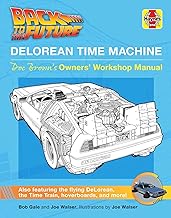
Back to the Future: DeLorean Time Machine: Doc Brown's Owner's Workshop Manual (Haynes Manual)
Bob Gale and Joe Walser
4.8 on Amazon
2 HN comments

Kafka on the Shore
Haruki Murakami, Sean Barrett, et al.
4.6 on Amazon
2 HN comments

The Wind-Up Bird Chronicle: A Novel
Haruki Murakami and Jay Rubin
4.5 on Amazon
2 HN comments

The Fifth Science
Exurb1a
4.7 on Amazon
2 HN comments

The Time Machine
H. G. Wells
4.4 on Amazon
2 HN comments

Warbreaker
Brandon Sanderson, Alyssa Bresnahan, et al.
4.7 on Amazon
2 HN comments

I, Robot
Isaac Asimov, Scott Brick, et al.
4.5 on Amazon
2 HN comments

The Handmaid's Tale
Margaret Atwood
4.4 on Amazon
1 HN comments

Red Rising
Pierce Brown, Tim Gerard Reynolds, et al.
4.6 on Amazon
1 HN comments

The Secret
, Ted Mann, et al.
4.5 on Amazon
1 HN comments

The Lord of the Rings
J. R. R. Tolkien and Alan Lee
4.9 on Amazon
1 HN comments

coder-3onMay 25, 2021
AnIdiotOnTheNetonJuly 23, 2021
Anything by Greg Egan is probably going to be the hardest sci-fi you've ever read. Dude wrote a book where he considered the ramifications of a universe built on a positive-definite Riemannian metric, and another one where the universe has 2 time dimensions.
Robert L. Forward's Dragon's Egg explores what life might look like if it evolved on a neutron star.
Adrian Tchaikovsky's Children of Time and Children of Ruin explore the evolution of other earth species if they were given a kick towards sapience.
Vernor Vinge's A Fire Upon the Deep is half space adventure (not very hard) and half an exploration of a lifeform which only achieves sapience in small groups. A Deepness in the Sky is generally harder and explores a lot of things, including the power of focused human attention, the difficulty of galactic scale civilization, and alien life evolved in a star system where the star periodically dims.
Steven Baxter and Clarke collaborated on The Light of Other Days, which explores the technical and sociological consequences of a device which allows you to see the past.
With a broad interpretation of 'hard' I can highly recommend Ursula Le Guin's The Left Hand of Darkness and The Dispossessed, which have soft science but hard humanity.
Similarly The Long Earth series, a collaboration between Pratchett and Baxter, where it seems Baxter handles the sociological and technological consequences of the science while Pratchett handles the characters and philosophy.
Asimov's I, Robot is an exploration of what happens when you try to constrain intelligence with rules.
Asimov's Foundation Trilogy gets a lot of hype, but it isn't very hard and I also found it utterly mediocre. Instead I recommend The God's Themselves, which is so good it's like Asimov was channeling a much better writer to get his ideas down. It explores the limited interaction of our universe with one that has slightly different physical properties.
Also perhaps stretching the definition of 'hard', but I want to recommend it because it's relatively unknown, is Leonard Richardson's Constellation Games, in which an incredibly advanced multi-species anarchic alien civilization makes first contact with humanity, and the protagonist really just wants to play their video games. It's actually harder sci-fi than it sounds.