
Parenting: 14 Gospel Principles That Can Radically Change Your Family
Paul David Tripp
4.9 on Amazon
3 HN comments

Conversations With God : An Uncommon Dialogue
Neale Donald Walsch
4.6 on Amazon
2 HN comments

Whisper: How to Hear the Voice of God
Mark Batterson
4.8 on Amazon
2 HN comments

The Rainbow Fish
Marcus Pfister and J Alison James
4.8 on Amazon
2 HN comments

Triggers: Exchanging Parents' Angry Reactions for Gentle Biblical Responses
Amber Lia and Wendy Speake
4.8 on Amazon
2 HN comments

Fault Lines: The Social Justice Movement and Evangelicalism's Looming Catastrophe
Voddie T. Baucham Jr.
4.9 on Amazon
2 HN comments

Diary: Divine Mercy in My Soul
Maria Faustina Kowalska
4.9 on Amazon
1 HN comments
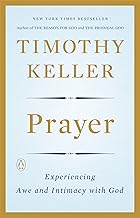
Prayer: Experiencing Awe and Intimacy with God
Timothy Keller
4.8 on Amazon
1 HN comments

Infiltration: The Plot to Destroy the Church from Within
Taylor Marshall
4.8 on Amazon
1 HN comments

Strong Fathers, Strong Daughters: 10 Secrets Every Father Should Know
Meg Meeker
4.7 on Amazon
1 HN comments

Embodied: Transgender Identities, the Church, and What the Bible Has to Say
Preston Sprinkle
4.7 on Amazon
1 HN comments
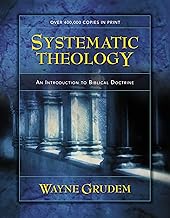
Systematic Theology: An Introduction to Biblical Doctrine
Wayne Grudem
4.8 on Amazon
1 HN comments

Unwanted: How Sexual Brokenness Reveals Our Way to Healing
Jay Stringer
4.8 on Amazon
1 HN comments

Evidence That Demands a Verdict: Life-Changing Truth for a Skeptical World
Josh McDowell and Sean McDowell
4.8 on Amazon
1 HN comments

Awaken: 90 Days with the God who Speaks
Priscilla Shirer
4.8 on Amazon
1 HN comments

AndrewOMartinonNov 7, 2018
The new people accuse the old of being too hand-wavy and airy fairy, the old people accuse the new of not taking the new ideas seriously enough, and not accepting the criticism of their entrenched views. From this comes progress.
For my money, the best philosophy comes from Dan Hutto, best book being Radicalizing Enactivism (Hutto and Myin, 2012). The best neuroanatomy with regards to consciousness and intelligence came from Walter J. Freeman III, best book being How Brains Make Up Their Minds (Freeman, 1999) and the best up-to the minute AI research is from Tom Froese. See "Referential communication as a collective property of a brain-body-environment-body-brain system: A minimal cognitive model" (Campos and Froese, 2017), and his (personally very interesting) work on the possibility of self-organising governance in Teotihuacan.
If you just want to have an introduction to the distinction between the two approaches to AI then you can do no better than read the snappily named paper "Why Heideggerian AI Failed and How Fixing it Would Require Making it More Heideggerian" (Dreyfus, 2007). It's true this paper appears to skip straight from Symbolic GOFAI to radically embodied dynamical systems, skipping Connectionism, but the issues raised in the paper can easily be used see that neural networks will fail to reach anything like intelligent behaviour unless they begin to draw strongly on the embodiment literature.
I can see from the dates of my recommended publications that I've not been keeping up particularly well, but I've been writing up my thesis on a slightly different subject.