
Metropolis: A History of the City, Humankind's Greatest Invention
Ben Wilson
4.5 on Amazon
6 HN comments

In the Garden of Beasts: Love, Terror, and an American Family in Hitler's Berlin
Erik Larson, Stephen Hoye, et al.
4.5 on Amazon
6 HN comments

The Poisoner's Handbook: Murder and the Birth of Forensic Medicine in Jazz Age New York
Deborah Blum
4.6 on Amazon
6 HN comments

These Truths: A History of the United States
Jill Lepore and Recorded Books
4.6 on Amazon
6 HN comments

In the Heart of the Sea: The Tragedy of the Whaleship Essex
Nathaniel Philbrick
4.6 on Amazon
6 HN comments
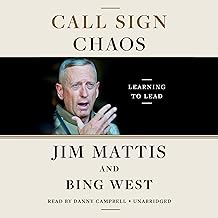
Call Sign Chaos: Learning to Lead
Jim Mattis, Bing West, et al.
4.7 on Amazon
6 HN comments

Band of Brothers: E Company, 506th Regiment, 101st Airborne from Normandy to Hitler's Eagle's Nest
Stephen E. Ambrose
4.8 on Amazon
5 HN comments

A World Undone: The Story of the Great War, 1914 to 1918
G. J. Meyer, Robin Sachs, et al.
4.7 on Amazon
5 HN comments

The Emperor's Handbook: A New Translation of The Meditations
Marcus Aurelius , David Hicks, et al.
4.7 on Amazon
4 HN comments

The Butchering Art: Joseph Lister's Quest to Transform the Grisly World of Victorian Medicine
Lindsey Fitzharris
4.8 on Amazon
4 HN comments

White Trash: The 400-Year Untold History of Class in America
Nancy Isenberg
4.4 on Amazon
4 HN comments

The Rise of Theodore Roosevelt
Edmund Morris, Mark Deakins, et al.
4.7 on Amazon
4 HN comments

The Billion Dollar Spy: A True Story of Cold War Espionage and Betrayal
David E. Hoffman
4.7 on Amazon
4 HN comments

The House of Morgan: An American Banking Dynasty and the Rise of Modern Finance
Ron Chernow, Robertson Dean, et al.
4.5 on Amazon
4 HN comments

The Vietnam War: The Definitive Illustrated History
DK and Smithsonian Institution
4.8 on Amazon
3 HN comments

dghughesonFeb 7, 2021
https://www.pbs.org/wgbh/americanexperience/films/poisoners/
smacktowardonJune 6, 2019
Worse still, Midgely worked actively to cover the risks of lead up. He even held a press conference in 1924 where, to assure reporters that TEL was safe, he washed his hands in a bowl of the stuff (https://www.bbc.com/news/business-40593353)!
Deborah Blum covered the whole story in her excellent 2011 book, The Poisoner's Handbook (https://www.amazon.com/Poisoners-Handbook-Murder-Forensic-Me...). Blum excerpted the story of TEL for a piece in Wired, which can be read here: https://www.wired.com/2013/01/looney-gas-and-lead-poisoning-...
smacktowardonJune 27, 2019
If you prefer to watch your history, PBS’ American Experience documentary series did an episode based on Blum’s book (see http://www.pbs.org/wgbh/americanexperience/films/poisoners ); it can be streamed via a bunch of different video services.
barbeonJuly 4, 2020
The Food Explorer by Daniel Stone--about David Fairchild, the man who changed what we eat in the U.S. over 100 years ago
Regeneration by Pat Barker, a novel based on real facts about WWI
The Poisoner’s Handbook by Deborah Blum--the origin of modern forensic medicine
barbeonMay 9, 2020
Another great book about WWII is Citizens of London by Lynne Olson.
One of the best books I've read recently is Peter Frankopan's The Silk Roads that fills in the gaps of history for Westerners. Jaw-dropping details on almost every page--such as the real meaning of the Italian greeting ciao ("I am your slave") because Italian ports were the ceneter of the Roaman slave trade--they had to import 450,000-500,000 per year to keep the empire humming...and the origin of the word slave from the Slavs who were captured by the red-haired Vikings as they moved south...knowns as the Russes, who became known as the Russians..
some others--
The Swerve by Stephen Greenblatt
The Food Explorer by Daniel Stone
anything by Erik Larson but especially Isaac's Storm (about the Galveston hurricane of 1900) and In the Garden of Beasts (about the American ambassort to 1930s Nazi Germany)
Travels with Herodotus and Shah of Shas by Ryszard Kapuscinski
The Poisoner’s Handbook by Deborah Blum
Parisians by Graham Robb
sethrinonOct 23, 2012
One source [0] seems to suggest that deaths were lower but rising. Deaths from poisoned alcohol tripled between 1920 and 1925.[1] The author of the latter paper (Mark Thorton) has written extensively on the subject, his book The Economics of Prohibition may be informative.
[0] http://druglibrary.org/prohibitionresults1.htm
[1] https://www.cato.org/pubs/pas/pa-157.html