
The DevOps Handbook: How to Create World-Class Agility, Reliability, and Security in Technology Organizations
Gene Kim , Patrick Debois , et al.
4.6 on Amazon
2 HN comments

Deep Learning with Python
François Chollet
4.5 on Amazon
2 HN comments
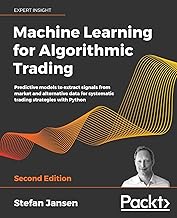
Machine Learning for Algorithmic Trading: Predictive models to extract signals from market and alternative data for systematic trading strategies with Python, 2nd Edition
Stefan Jansen
4.5 on Amazon
2 HN comments

Building Microservices: Designing Fine-Grained Systems
Sam Newman
4.5 on Amazon
2 HN comments

Team Topologies: Organizing Business and Technology Teams for Fast Flow
Matthew Skelton , Manuel Pais , et al.
4.6 on Amazon
2 HN comments

UNIX and Linux System Administration Handbook
Evi Nemeth, Garth Snyder, et al.
4.7 on Amazon
2 HN comments
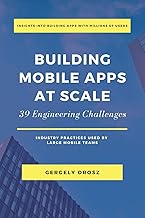
Building Mobile Apps at Scale: 39 Engineering Challenges
Gergely Orosz
5 on Amazon
2 HN comments

Release It!: Design and Deploy Production-Ready Software
Michael T. Nygard
4.7 on Amazon
2 HN comments

Advances in Financial Machine Learning
Marcos Lopez de Prado
4.5 on Amazon
2 HN comments

How Google Works
Eric Schmidt and Jonathan Rosenberg
4.5 on Amazon
2 HN comments

Start with Why: How Great Leaders Inspire Everyone to Take Action
Simon Sinek
4.6 on Amazon
1 HN comments

Press Reset: Ruin and Recovery in the Video Game Industry
Jason Schreier
4.4 on Amazon
1 HN comments

The Elder Scrolls: The Official Cookbook
Chelsea Monroe-Cassel
4.9 on Amazon
1 HN comments

Grokking Algorithms: An Illustrated Guide for Programmers and Other Curious People
Aditya Bhargava
4.6 on Amazon
1 HN comments

The Phoenix Project (A Novel About IT, DevOps, and Helping Your Business Win)
Gene Kim
4.7 on Amazon
1 HN comments

bwh2onJune 16, 2021
* Strategy Rules
* How Google Works
* Founders at Work
throwaway29303onMay 21, 2021
Companies, like customers, have requirements for their needs. If a company needs a potential employee to know how to invert a binary tree then it's in their right to find one.
In Google's case, as you're probably alluding to[0], although I might be mistaken, they've always had the reputation for seeking the best qualified people[1] for their work. I mean look at who's working for them - there's a lot of well-known people in their respective fields that are working for them.
Moreover, I think that the point of these tests is to help assess a potential employee's abstract thinking. And, probably, to understand one's thought process behind the solution - if there's one - to the given problem. (Which, by the way, might be helpful if you're trying to solve AI - something that's right up in Google's alley ;).
Despite the backlash over this, I believe companies will keep doing these types of tests for a long, long time. I don't think this is going away that easily. And I also think that, in the future, these tests might be done in a way you won't even know you're being tested for.
[0] - https://twitter.com/mxcl/status/608682016205344768
[1] - I understand that "best qualified" here might mean different things for different people, but you should take it literally, that is, people who are above the average in terms of abstract thinking. I suggest you read How Google Works[2], they've coined the term Smart Creative which is kind of(?) related to this.
[2] - https://www.howgoogleworks.net/