
Web Scalability for Startup Engineers
Artur Ejsmont
4.8 on Amazon
6 HN comments
Building Secure and Reliable Systems: Best Practices for Designing, Implementing, and Maintaining Systems
Heather Adkins, Betsy Beyer , et al.
4.7 on Amazon
6 HN comments
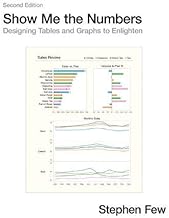
Show Me the Numbers: Designing Tables and Graphs to Enlighten
Stephen Few
4.5 on Amazon
6 HN comments

Database Internals: A Deep Dive into How Distributed Data Systems Work
Alex Petrov
4.7 on Amazon
6 HN comments

Whatever It Takes: Master the Habits to Transform Your Business, Relationships, and Life
Brandon Bornancin
4.8 on Amazon
6 HN comments

Kubernetes: Up and Running: Dive into the Future of Infrastructure
Brendan Burns , Joe Beda, et al.
4.6 on Amazon
6 HN comments

Python for Kids: A Playful Introduction to Programming
Jason R. Briggs
4.6 on Amazon
6 HN comments

The Phoenix Project (A Novel About IT, DevOps, and Helping Your Business Win)
Gene Kim
4.7 on Amazon
6 HN comments

Terraform: Up & Running: Writing Infrastructure as Code
Yevgeniy Brikman
4.6 on Amazon
6 HN comments

A World Without Email: Reimagining Work in an Age of Communication Overload
Cal Newport, Kevin R. Free, et al.
4.5 on Amazon
5 HN comments

Discovering Statistics Using R
Andy Field, Jeremy Miles , et al.
4.5 on Amazon
5 HN comments
C++ Crash Course: A Fast-Paced Introduction
Josh Lospinoso
4.7 on Amazon
5 HN comments

Irresistible: The Rise of Addictive Technology and the Business of Keeping Us Hooked
Adam Alter and Penguin Audio
4.6 on Amazon
5 HN comments
Kafka: The Definitive Guide: Real-Time Data and Stream Processing at Scale
Neha Narkhede , Gwen Shapira, et al.
4.4 on Amazon
5 HN comments

The Great Reset: How Big Tech Elites and the World's People Can Be Enslaved by China CCP or A.I.
Cyrus Parsa and The AI Organization
4.5 on Amazon
5 HN comments

davidivadavidonSep 6, 2020
nickpetersononMar 6, 2017
davidivadavidonOct 3, 2019
This just makes me waste my time compared to a table where I can sort/filter by different criteria.
Most of the time, "creative" visualizations tend to actually obscure meaning, or worse, mislead viewers.
Recommended reading: Show me the numbers by Stephen Few (his blog is also great: http://www.perceptualedge.com/blog/)
thingsilearnedonAug 10, 2013
Show me the Numbers - goes much more in depth about the details of the different chart types and visualization best practices. There's a chapter or two on each of the main chart types.
Now You See It - This is described as a companion book to Show me the Numbers and focuses on data analysis as opposed to pure visualization.
tom_bonMay 7, 2009
I've been an evangelist for Few's books and practices as a "best" starting place for those of us less naturally gifted at data visualization (especially for simpler data or business purposes). He has heavily influenced how I look at typical IT charts and graphs.
tom_bonSep 13, 2016
Few is heavily influenced (and cites) Edward Tufte - Tufte is probably the definitive reference for communicating data with visual techniques. If you are interested in pursuing scientific visualization, you probably need to spend some time with Tufte. I never have properly done this myself.
These sources will give you a solid foundation without being tied to specific tech. You'll probably find lots of libraries built on top of d3.js that implement the basic ideas of both authors. I have been meaning to look at data exploration examples (e.g., stuff with visualization examples in R) and translate to different front/backend. That might be neat too.
Build some examples where the visualization provides real insight to a defined business problem and you will probably score some new opportunities for yourself.
Good luck.